Whistleblower Retaliation Trends in Healthcare Companies

Whistleblower retaliation in healthcare is a growing issue that goes way beyond hurt feelings or office drama. Over half of healthcare workers who report patient safety concerns face real professional and personal consequences. You might think laws protect these truth-tellers at every turn, but many still feel forced into silence. What happens behind closed doors can impact every patient’s safety—and most people have no idea just how deep this problem goes.
Table of Contents
- What Is Whistleblower Retaliation In Healthcare?
- Why Whistleblower Protection Matters For Employees
- How Retaliation Affects The Healthcare Industry
- Key Laws Governing Whistleblower Protections
- Real-World Examples Of Retaliation Trends
Quick Summary
| Takeaway | Explanation |
|---|---|
| Whistleblower retaliation violates employee rights. | Healthcare professionals risk punitive actions for reporting unethical practices, affecting their careers and well-being. |
| Retaliation takes various damaging forms. | Common retaliatory actions include job termination, professional isolation, and negative evaluations unrelated to performance. |
| Legal protections are crucial for whistleblowers. | Federal and state laws exist to safeguard employees from retaliation when they report workplace misconduct. |
| Retaliation negatively impacts healthcare quality. | Organizational culture suffers as trust erodes, leading to suppressed reporting of errors and safety risks. |
| Addressing retaliation requires institutional commitment. | Comprehensive efforts are needed in healthcare organizations to foster transparency, ethics, and support for whistleblowers. |
What is Whistleblower Retaliation in Healthcare?
Whistleblower retaliation in healthcare represents a serious violation of employee rights where medical professionals who expose unethical, dangerous, or illegal practices face punitive actions from their employers. Research from the National Institutes of Health reveals that healthcare workers reporting patient safety concerns or workplace misconduct often encounter significant professional and personal consequences.
Understanding Whistleblower Retaliation Dynamics
Healthcare whistleblower retaliation can manifest in multiple forms, targeting employees who speak out against systemic problems. These retaliatory actions are designed to silence individuals and discourage future reporting of critical issues. Typical retaliatory behaviors include:
- Sudden job termination
- Demotion or reduction in work responsibilities
- Professional isolation and marginalization
- Harassment or hostile work environment creation
- Negative performance evaluations unrelated to actual job performance
Legal Protections and Consequences
Federal and state laws provide critical protections for healthcare whistleblowers. Employees who experience retaliation after reporting legitimate concerns can seek legal remedies through whistleblower protection statutes. These legal frameworks recognize that reporting workplace violations serves the public interest, particularly in healthcare settings where patient safety might be compromised.
Healthcare organizations engaging in retaliation not only violate employee rights but also potentially breach professional ethical standards. Such actions can result in substantial legal penalties, including financial damages, reinstatement of wrongfully terminated employees, and mandatory institutional reforms.
The psychological impact of whistleblower retaliation cannot be understated. Healthcare professionals who expose critical issues often face significant emotional and professional challenges, risking their careers to maintain ethical standards and protect patient welfare.
The following table summarizes different forms of whistleblower retaliation in healthcare and their potential impact on employees, providing a clear comparison between retaliatory actions and associated consequences.
| Type of Retaliation | Description | Potential Impact on Employee |
|---|---|---|
| Sudden Job Termination | Immediate dismissal from employment | Loss of income, career disruption |
| Demotion or Reduced Responsibilities | Employee is given lower-status work or responsibilities | Stalled career growth, diminished role |
| Professional Isolation | Exclusion from projects or teams | Loss of peer support, workplace stress |
| Harassment/Hostile Environment | Exposure to negative behavior from peers or supervisors | Psychological distress, anxiety |
| Negative Performance Evaluations | Unfounded poor reviews unrelated to actual job performance | Reputation damage, future job risk |
Why Whistleblower Protection Matters for Employees
Whistleblower protection serves as a critical safeguard for employees who courageously expose workplace misconduct, unethical practices, and potential public safety risks. Research from the Occupational Safety and Health Administration demonstrates that whistleblower protections are essential in maintaining organizational accountability and protecting individual workers from potential retaliation.
Protecting Individual Rights and Public Interest
Whistleblower protections fundamentally defend employees’ rights to report serious workplace violations without fear of professional or personal repercussions. These legal frameworks recognize that employees often serve as the first line of defense against:
- Fraudulent activities
- Safety violations
- Unethical business practices
- Potential legal non-compliance
- Health and environmental risks
Financial and Professional Security
Legal protections provide employees with critical safeguards that prevent employers from implementing punitive measures. These protections ensure workers can report concerns without risking their careers, financial stability, or professional reputation. Whistleblower protection laws offer comprehensive coverage that includes potential compensation and reinstatement for workers who experience retaliation.
Moreover, whistleblower protections contribute to broader societal benefits by creating transparent, accountable workplace environments. When employees feel secure in reporting misconduct, organizations become more likely to address internal problems proactively, ultimately protecting both worker interests and public welfare.
The psychological impact of these protections cannot be understated. By providing legal mechanisms that shield employees from potential professional harm, whistleblower laws empower individuals to speak truth to power without compromising their personal and professional well-being.
How Retaliation Affects the Healthcare Industry
Research from the National Center for Biotechnology Information reveals that whistleblower retaliation has profound and systemic implications for the healthcare industry, extending far beyond individual professional consequences. The complex dynamics of workplace retaliation create ripple effects that compromise patient safety, organizational integrity, and overall healthcare quality.
Organizational Culture and Professional Morale
Retaliation fundamentally erodes trust within healthcare institutions, creating a chilling effect that discourages transparency and open communication. When healthcare professionals fear professional repercussions, they become less likely to report critical issues, leading to potentially dangerous workplace environments. The consequences of this silent culture include:
- Suppressed reporting of medical errors
- Reduced accountability for systemic problems
- Increased risk of patient safety incidents
- Diminished collaborative workplace dynamics
- Higher employee turnover rates
Financial and Operational Consequences
Healthcare organizations experiencing persistent retaliation patterns face significant financial and operational challenges. These institutions often encounter increased legal expenses, potential regulatory penalties, and reputational damage. Workplace retaliation strategies can result in substantial institutional costs, including litigation expenses, decreased employee productivity, and potential loss of accreditation.
Moreover, the psychological impact on healthcare workers cannot be understated. Professionals experiencing retaliation often suffer from increased stress, reduced job satisfaction, and potential long-term career disruptions. This emotional toll contributes to broader workforce challenges, including recruitment difficulties and reduced overall healthcare system effectiveness.

Ultimately, whistleblower retaliation represents a critical systemic issue that threatens not just individual careers, but the fundamental integrity and safety of healthcare delivery. Addressing these challenges requires comprehensive institutional commitment to transparency, ethical practice, and robust protection mechanisms for employees who courageously speak out.
Key Laws Governing Whistleblower Protections
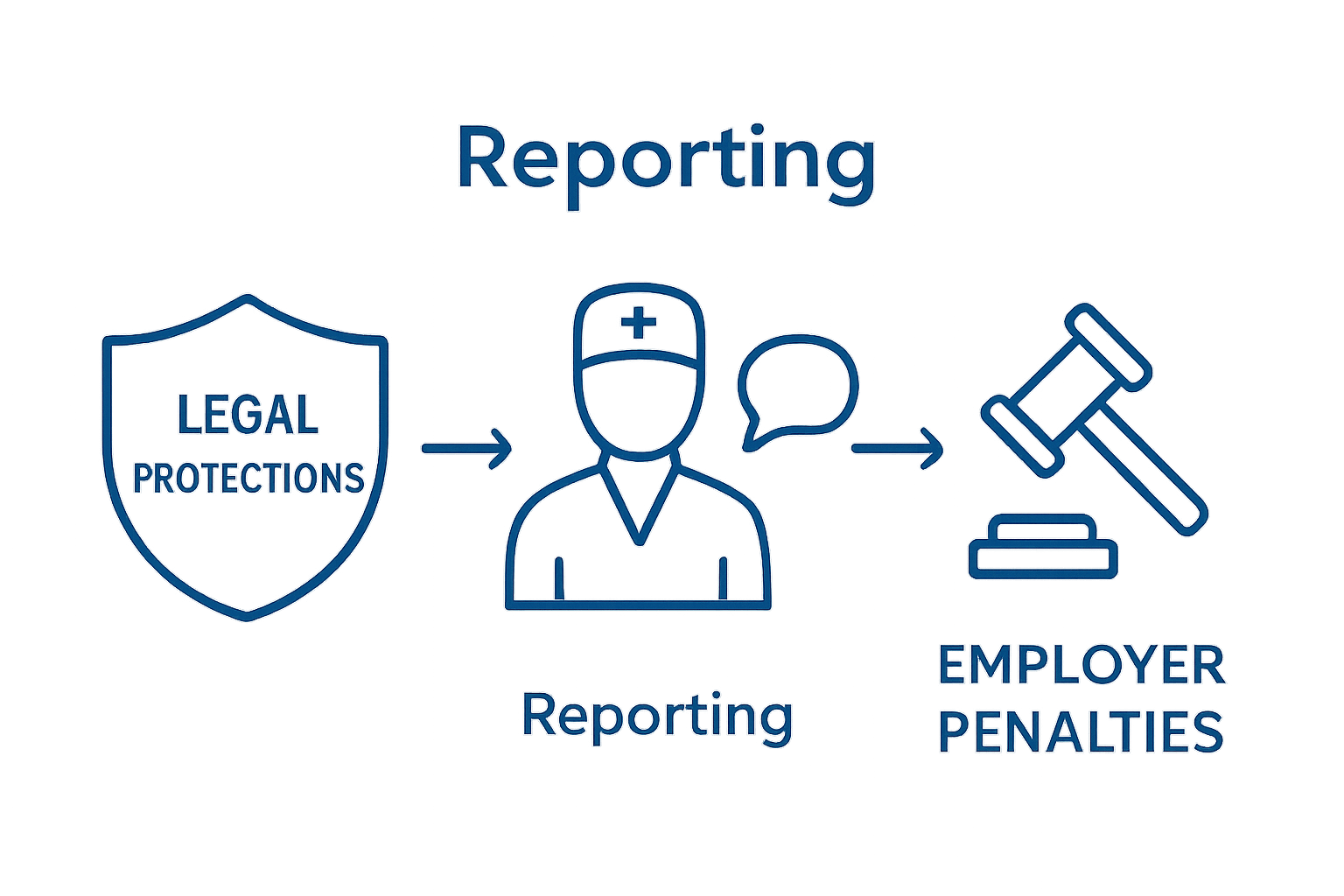
Comprehensive federal and state regulations provide robust legal frameworks designed to protect employees who report workplace misconduct, particularly in sensitive industries like healthcare. These laws establish critical mechanisms that defend workers against potential retaliation and ensure organizational accountability.
Federal Whistleblower Protection Laws
Multiple federal statutes offer comprehensive protection for healthcare workers reporting workplace violations. These legislative mechanisms are designed to create transparent and safe reporting environments. Key federal protections include:
- Occupational Safety and Health Act (OSHA)
- False Claims Act
- Sarbanes-Oxley Act
- Affordable Care Act whistleblower provisions
- Consumer Protection Act
State Level Legal Safeguards
In addition to federal protections, individual states have developed robust legislative frameworks that further shield healthcare whistleblowers. Whistleblower protection laws at the state level often provide additional layers of legal recourse, addressing nuanced workplace scenarios that federal statutes might not comprehensively cover.
These legal protections serve multiple crucial functions beyond individual employee defense. They create systemic accountability mechanisms that encourage ethical workplace practices, protect public safety, and establish clear consequences for organizations attempting to suppress critical information.
The complexity of whistleblower protection laws underscores the critical importance of understanding one’s legal rights. Healthcare professionals must recognize that these laws are not merely theoretical constructs but powerful tools designed to maintain institutional integrity and protect workers who demonstrate moral courage in challenging workplace environments.
This table compares key federal and state legal frameworks that protect healthcare whistleblowers, illustrating their coverage and main features for easier understanding.
| Law/Framework | Coverage Area | Primary Features |
|---|---|---|
| Occupational Safety and Health Act | Federal | Protects against retaliation for safety complaints |
| False Claims Act | Federal | Provides legal recourse for reporting fraud |
| Sarbanes-Oxley Act | Federal | Shields employees reporting securities violations |
| Affordable Care Act Whistleblower | Federal | Covers retaliation over patient safety concerns |
| State Whistleblower Protections | Varies by State | Additional, sometimes broader, workplace safeguards |
Real-World Examples of Retaliation Trends
Research from the National Center for Biotechnology Information reveals alarming patterns of workplace retaliation in healthcare settings, demonstrating the pervasive nature of professional intimidation and systemic suppression of critical information. These real-world scenarios highlight the complex challenges healthcare professionals face when attempting to expose organizational misconduct.
Patient Safety Reporting Consequences
Healthcare professionals who report patient safety concerns often encounter significant professional risks. These retaliation trends frequently manifest through subtle yet destructive workplace strategies designed to marginalize and discourage future reporting. Common retaliation patterns include:
- Unexpected negative performance evaluations
- Systematic professional isolation
- Unexplained schedule changes
- Reduction in clinical responsibilities
- Targeted harassment through administrative channels
Institutional Response Mechanisms
Healthcare organizations frequently develop sophisticated strategies to discourage whistleblowing, often implementing seemingly neutral but strategically punitive actions. Workplace retaliation documentation demonstrates that these responses are carefully calibrated to create psychological and professional pressure without overtly violating employment laws.
The psychological impact of these retaliation strategies extends beyond individual experiences, creating a broader chilling effect within healthcare institutions. Professionals witnessing such treatment become less likely to report critical issues, potentially compromising patient safety and institutional integrity. This systemic suppression represents a profound ethical challenge that undermines the fundamental principles of transparent and accountable healthcare delivery.
Protect Yourself from Whistleblower Retaliation in Healthcare
If you are worried about facing sudden job loss, unfair treatment, or isolation after reporting misconduct in your workplace, you are not alone. The challenges described in “Understanding Whistleblower Retaliation Trends in Healthcare Companies” highlight just how often dedicated employees become targets for standing up for patient safety and ethical care. The risks of demotion, harassment, or even wrongful termination can feel overwhelming, especially when your reputation and career are at stake.
You deserve to work in an environment where your voice is protected. Our team at Serendib Law Firm has years of experience guiding healthcare professionals through complex employment disputes and retaliation cases. We understand the emotional and financial strain that comes with these battles. If you are experiencing any form of workplace retaliation for whistleblowing, learn more about your rights on our Whistleblower Protection page or discover how we protect employees from retaliation practices. Take control of your situation today. Reach out to us for a confidential consultation and let our experienced attorneys fight for your security and peace of mind.
Frequently Asked Questions
What is whistleblower retaliation in healthcare?
Whistleblower retaliation in healthcare occurs when medical professionals face punitive actions from employers for exposing unethical or illegal practices in their workplace.
What forms can retaliation take for healthcare whistleblowers?
Retaliation can manifest as sudden job termination, demotion, professional isolation, harassment, or negative performance evaluations unrelated to actual job performance.
What legal protections exist for healthcare whistleblowers?
Federal and state laws provide protections for whistleblowers, allowing them to seek legal remedies if they face retaliation for reporting legitimate workplace concerns.
How does retaliation affect the healthcare industry?
Retaliation undermines trust, suppresses reporting of critical issues, increases risks to patient safety, and can lead to significant financial and operational consequences for healthcare organizations.
Recommended
- Whistleblowing Retaliation | Serendib Law Firm
- Whistleblower Protection | Serendib Law Firm
- Whistleblower Retaliation | Serendib Law Firm
- Whistleblower Retaliation California: What You Need To Know
- California Employer Retaliation Law - File a Claim
https://www.serendiblaw.com/care-whistleblower-retaliation/?fsp_sid=50


Comments
Post a Comment