Understanding Religious Discrimination in Vaccination Policies

Religious discrimination at work is not just rare legal drama. In fact, employees have legal protection under Title VII of the Civil Rights Act, which requires employers to make religious accommodations unless it causes undue hardship. Many assume religious conflict only shows up in obvious situations, like prayer breaks or head coverings. Yet the real flashpoint now is company vaccination policies, putting religious freedoms and public health measures on a direct collision course.
Table of Contents
- Defining Religious Discrimination In The Workplace
- The Importance Of Vaccination Policies And Rights
- Legal Framework: How Laws Address Religious Exemptions
- Real-World Impacts: Cases And Examples Of Discrimination
- Strategies For Addressing Discrimination Concerns
Quick Summary
| Takeaway | Explanation |
|---|---|
| Understand your legal rights | Employees should familiarize themselves with protections under laws like Title VII against religious discrimination. |
| Employers must provide reasonable accommodations | Companies are required to adjust policies to respect employees’ sincerely held religious practices unless it causes undue hardship. |
| Document religious beliefs clearly | Employees seeking exemptions should provide detailed documentation explaining how vaccination conflicts with their religious beliefs. |
| Develop inclusive vaccination policies | Employers must create vaccination policies that consider both public health and individual religious rights. |
| Engage in open dialogue | Organizations benefit from constructive discussions with employees regarding accommodation requests to ensure a fair process. |
Defining Religious Discrimination in the Workplace
Religious discrimination in the workplace represents a serious violation of employees’ fundamental civil rights and legal protections. At its core, this form of discrimination occurs when an employee experiences unfavorable treatment based on their religious beliefs, practices, or affiliations. Religious discrimination fundamentally challenges the principles of workplace equality and individual freedom of belief.
Understanding Legal Definitions
The legal framework surrounding religious discrimination is complex and multifaceted. Workplace religious discrimination can manifest in various ways, including direct disparate treatment, failure to provide reasonable accommodations, harassment, and systemic bias. Employers are legally obligated to create an environment that respects diverse religious practices and prevents discriminatory actions.
Key aspects of religious discrimination include:
- Treating employees differently due to their religious beliefs
- Refusing to accommodate reasonable religious practices
- Making employment decisions based on religious affiliations
- Creating a hostile work environment through religious intolerance
Practical Implications and Protections
Federal laws like Title VII of the Civil Rights Act provide robust protections against religious discrimination. These regulations mandate that employers cannot make employment decisions based on an individual’s religious background. Reasonable accommodations are a critical component of these protections, requiring employers to adjust workplace policies to respect employees’ sincerely held religious beliefs unless doing so would cause undue hardship.
For workers experiencing religious discrimination, understanding your legal rights is crucial. Our legal team specializes in helping employees navigate these complex workplace challenges, ensuring their rights are protected and respected.
The following table summarizes how federal laws and key protections apply to religious discrimination and vaccination policies to clarify the similarities and differences between their legal features.
| Legal Principle | Religious Discrimination (General Work Context) | Vaccination Policies (With Religious Exemptions) |
|---|---|---|
| Protected By | Title VII of the Civil Rights Act | Title VII, ADA, Relevant State Laws |
| Basis for Protection | Sincerely held religious beliefs/practices | Sincerely held religious beliefs conflicting with vaccination |
| Employer Obligation | Must offer reasonable accommodation unless undue hardship | Must offer exemption unless it causes undue hardship |
| Evaluation Criteria | Sincerity of belief, impact on workplace | Sincerity of belief, impact on health/safety operations |
| Possible Accommodations | Schedule changes, attire allowances, breaks | Exemptions, alternate safeguards, remote work |
| Legal Consequences of Non-Compliance | Discrimination claims, legal action, damages | Discrimination claims, legal action, damages |
The Importance of Vaccination Policies and Rights
Vaccination policies represent a critical intersection between public health imperatives and individual personal freedoms. These policies aim to protect both workplace safety and employee autonomy while navigating complex legal and ethical considerations. Research from the National Institutes of Health highlights the delicate balance between protecting collective health and respecting individual rights.
Balancing Public Health and Individual Autonomy
Workplace vaccination policies are designed to mitigate health risks and prevent potential disease transmission in professional environments. Employers must carefully craft policies that protect employee health without infringing on personal beliefs or legal protections. This involves creating nuanced guidelines that consider medical exemptions, religious accommodations, and scientific evidence.
Key considerations in developing effective vaccination policies include:
- Protecting overall workplace safety
- Respecting individual medical and religious rights
- Ensuring legal compliance with anti-discrimination regulations
- Providing clear communication about policy rationales
Legal and Ethical Framework
The legal landscape surrounding vaccination policies is complex and continually evolving. Employers must navigate federal and state regulations that protect both public health and individual rights. This includes understanding requirements under the Americans with Disabilities Act (ADA), Title VII of the Civil Rights Act, and other relevant employment laws.
Our comprehensive employment law guide provides deeper insights into the intricate legal considerations surrounding workplace vaccination policies. Employees and employers alike must understand their rights and responsibilities in creating fair and effective health protection strategies.
Legal Framework: How Laws Address Religious Exemptions
The legal landscape surrounding religious exemptions is complex and multifaceted, requiring a delicate balance between individual religious freedoms and broader public health considerations. State legislatures across the United States have developed nuanced approaches to managing religious exemption requests in various institutional settings.
Constitutional and Civil Rights Protections
Religious exemptions are rooted in fundamental constitutional protections that guarantee individuals the right to practice their religious beliefs without government interference. Title VII of the Civil Rights Act provides critical legal mechanisms for protecting employees’ religious practices, requiring employers to provide reasonable accommodations unless such accommodations would create undue hardship.
Key legal principles governing religious exemptions include:
- Requiring sincerity of religious beliefs
- Demonstrating that accommodation does not create substantial organizational burden
- Protecting against discriminatory treatment based on religious practices
- Maintaining a balanced approach between individual rights and collective responsibilities
Evaluating Religious Exemption Claims
Courts and regulatory bodies employ specific criteria when assessing religious exemption requests. Religious beliefs must be genuinely held and central to an individual’s spiritual practice, not merely a convenient strategy to avoid requirements. Employers and institutions must conduct individualized assessments, examining the specific nature of the religious belief and its potential impact on workplace or organizational operations.
title="YouTube Video"
style="position: absolute; left: 0; top: 0; height: 100%; width: 100%; border: none;"
allow="accelerometer; autoplay; clipboard-write; encrypted-media; gyroscope; picture-in-picture"
allowfullscreen
>
Our employment law resources provide comprehensive guidance for navigating these complex legal considerations. Understanding the intricate balance between personal religious freedoms and organizational responsibilities is crucial for both employees and employers seeking to maintain respectful and legally compliant environments.
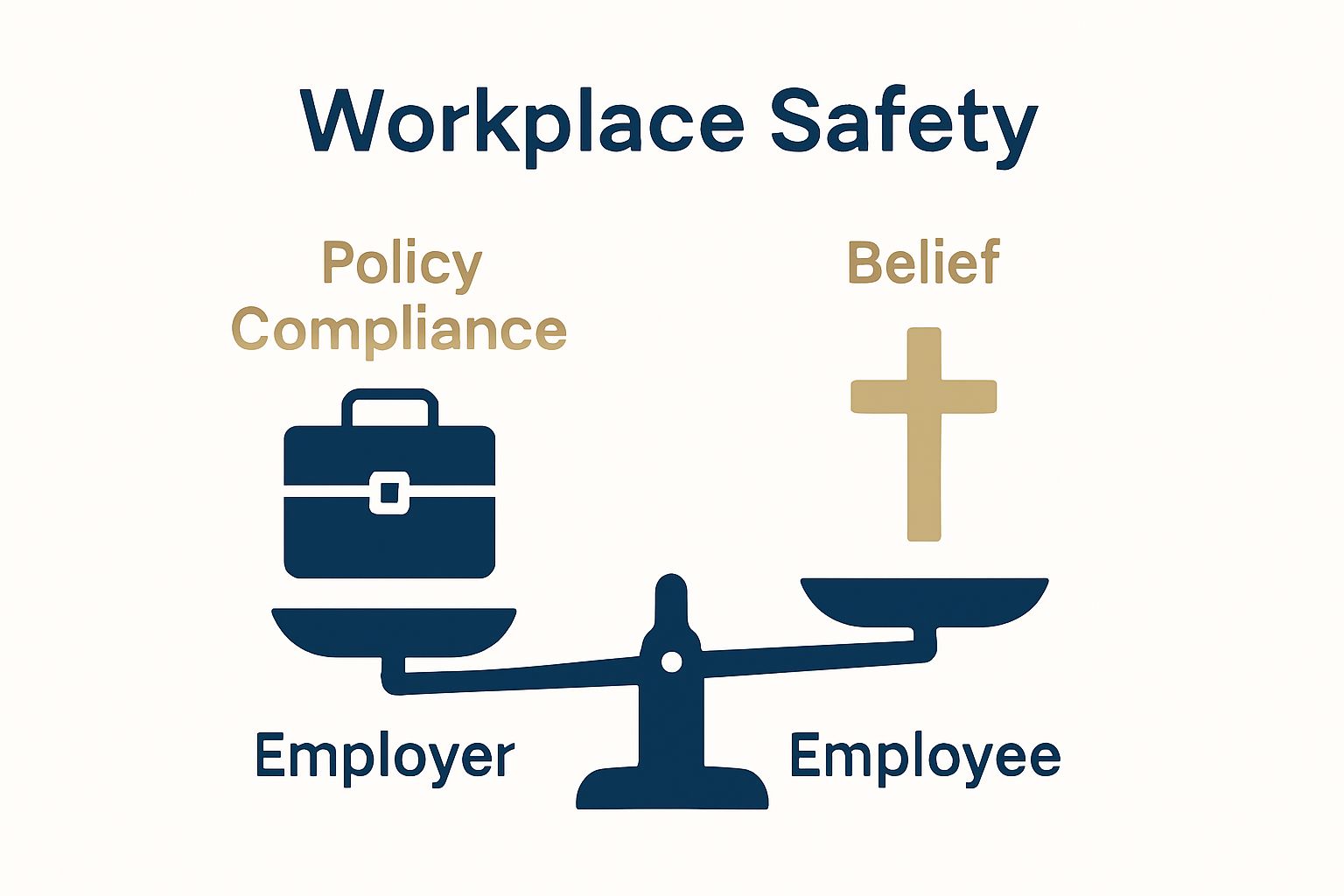
Real-World Impacts: Cases and Examples of Discrimination
Religious discrimination in vaccination policies manifests through tangible workplace experiences that highlight the complex challenges employees face. Research examining health care worker experiences reveals the profound personal and professional consequences of unresolved religious accommodation disputes.
Workplace Discrimination Scenarios
Discrimination related to vaccination policies can emerge through various subtle and direct mechanisms. Employees may experience differential treatment when requesting religious exemptions, including increased scrutiny, professional marginalization, or potential termination. These scenarios demonstrate how vaccination policies can intersect with deeply personal religious beliefs.
This table identifies common forms of religious discrimination in workplace vaccination policy settings, explaining what they involve and why they matter for employees seeking exemptions.
| Discriminatory Practice | Description | Impact on Employees |
|---|---|---|
| Selective Enforcement of Vaccination Requirements | Applying rules inconsistently to those seeking exemptions | Feelings of unfairness and marginalization |
| Burdensome Requirements on Exempt Employees | Imposing extra steps or scrutiny for exemption approval | Increased stress and obstacles |
| Hostile Work Environment | Creating an unwelcoming or intolerant atmosphere | Emotional distress, isolation |
| Retaliation for Requesting Accommodation | Penalizing or taking adverse action for rights assertion | Fear of job loss or professional backlash |
Common discriminatory practices include:
- Selectively enforcing vaccination requirements
- Imposing additional burdensome requirements on religiously exempt employees
- Creating hostile work environments for those seeking accommodations
- Retaliating against employees who assert their religious rights
Legal and Professional Consequences
The repercussions of religious discrimination extend beyond immediate workplace interactions. Employees who face unfair treatment may experience significant professional setbacks, including reduced career opportunities, potential job loss, and long-term career disruptions. Courts increasingly recognize the nuanced nature of religious discrimination, requiring employers to demonstrate legitimate, non-discriminatory reasons for their policy implementations.
Our experienced employment law attorneys specialize in addressing these complex workplace challenges, providing comprehensive legal support for employees navigating religious discrimination issues in vaccination policies.
Strategies for Addressing Discrimination Concerns
Addressing religious discrimination in vaccination policies requires a proactive and strategic approach that balances employee rights with organizational responsibilities. Research from workplace discrimination studies highlights the importance of clear communication, documented processes, and systematic evaluation of accommodation requests.
Documenting and Communicating Religious Beliefs
Employees seeking religious exemptions must provide clear, substantive documentation of their sincere religious beliefs. This documentation should articulate how vaccination requirements conflict with fundamental religious practices. Employers must create accessible, transparent mechanisms for employees to submit detailed exemption requests, ensuring a fair and consistent review process.
Key elements of effective documentation include:
- Specific explanation of religious belief conflict
- Personal statement of belief sincerity
- Description of how vaccination violates religious principles
- Supporting documentation from religious leadership if available
Navigating Organizational Accommodation Processes
Successful religious exemption strategies involve collaborative dialogue between employees and employers. Organizations should develop comprehensive accommodation frameworks that offer alternative solutions, such as modified work arrangements, additional protective equipment, or periodic testing options. These alternatives demonstrate a good faith effort to respect religious beliefs while maintaining workplace safety standards.
Our comprehensive discrimination resources provide additional guidance for employees and employers navigating complex religious accommodation challenges. Understanding your rights and responsibilities is crucial in developing effective, legally compliant workplace strategies.
Protect Your Rights Against Religious Discrimination in Vaccination Policies
Struggling with vaccine mandates that conflict with your sincerely held religious beliefs can be stressful, isolating, and confusing. If you feel your requests for religious exemption are ignored or you face unfair treatment at work, you are not alone. Cases of religious discrimination in vaccination policies are growing, and employees just like you deserve strong protection backed by experienced legal support. Visit our Religious Discrimination Archives for helpful resources and up-to-date guidance on these complex employment law issues.
You do not have to face these challenges by yourself. At Serendib Law Firm, our dedicated attorneys know how to fight for your values while ensuring you are treated with fairness and respect. If you suspect discrimination or need help understanding your legal options, reach out today for a consultation and take the next step toward safeguarding your workplace rights.
Frequently Asked Questions
What constitutes religious discrimination in workplace vaccination policies?
Religious discrimination in workplace vaccination policies occurs when an employee is treated unfavorably due to their religious beliefs regarding vaccinations. This includes not accommodating requests for religious exemptions or creating a hostile work environment for those who seek to exercise their rights.
How can I request a religious exemption from vaccination requirements at work?
To request a religious exemption, employees should provide clear documentation outlining their sincerely held religious beliefs and how vaccination conflicts with those beliefs. It’s essential to articulate this in a written format and submit it through the proper channels within the organization.
What legal protections exist against religious discrimination in vaccination policies?
Federal laws, such as Title VII of the Civil Rights Act, provide strong protections against religious discrimination. Employers are required to make reasonable accommodations for employees’ religious beliefs unless doing so would impose an undue hardship on the organization.
What should I do if I experience discrimination related to my religious beliefs and vaccination?
If you experience discrimination, document the incidents and communicate your concerns to your employer’s HR department. If the issue persists, consider seeking legal advice or assistance from employment law specialists to understand your rights and options for recourse.
Recommended
- COVID – 19 Mandatory Workplace Vaccinations | Serendib Law Firm
- COVID – 19 Mandatory Workplace Vaccinations | Serendib Law Firm
- Religious Discrimination | Serendib Law Firm
- Understanding Religious Discrimination Lawsuits and Holiday Observances | Serendib Law Firm
https://www.serendiblaw.com/understanding-religious-discrimination-issues-around-workplace-vaccination-policies/?fsp_sid=174


Comments
Post a Comment