Employer Retaliation for Workers’ Compensation Claims: Complete Guide

Did you know that over one in five employees fear losing their job after reporting a workplace injury? This worry is not unfounded, as employer retaliation happens more often than many realize. Understanding how retaliation can threaten your job security and well-being after filing a workers’ compensation claim is crucial. By learning about your rights and how to recognize subtle signs of retaliation, you can protect yourself and take informed action if you suspect unfair treatment.
Key Takeaways
| Point | Details |
|---|---|
| Understanding Retaliation | Employer retaliation in workers’ compensation claims includes actions like termination, demotion, and hostile work environments, all of which are illegal in most states. |
| Legal Protections | Employees are protected from retaliation when filing valid workers’ compensation claims and can pursue complaints with OSHA and state labor boards. |
| Documenting Incidents | To prove retaliation, maintain detailed records, including incident logs and performance reviews, to establish a connection between your claim and negative actions. |
| Seeking Legal Advice | Consult an employment law professional if you suspect retaliation to understand your rights and explore potential remedies effectively. |
Table of Contents
- Defining Employer Retaliation In Workers’ Compensation
- Common Forms Of Workplace Retaliation
- Legal Protections For Injured Workers
- How To Identify And Prove Retaliation
- Employee Rights, Remedies, And Next Steps
Defining Employer Retaliation in Workers’ Compensation
Employer retaliation in workers’ compensation claims occurs when an employer takes negative actions against an employee who has filed a legitimate workers’ compensation claim. According to research from legal experts, these retaliatory behaviors range from obvious actions like termination to more subtle forms of workplace punishment.
Retaliation can manifest in multiple ways that might not be immediately apparent. Some common examples include:
- Reducing work hours without justification
- Demoting an employee from their current position
- Creating a hostile work environment
- Providing sudden negative performance reviews inconsistent with prior work history
- Excluding the employee from important meetings or professional opportunities
- Harassment or intimidation tactics
Understanding these nuanced forms of retaliation is crucial because they are illegal in most states. Our guide on whistleblower retaliation provides additional context about workplace protections. Employees have legal rights that shield them from punitive actions when they legitimately seek workers’ compensation benefits after a workplace injury or illness. If you suspect you’re experiencing retaliation, documenting each incident carefully and seeking professional legal consultation can help protect your rights and workplace standing.

Common Forms of Workplace Retaliation
Workplace retaliation can take many subtle and overt forms that employees might not immediately recognize. According to research from legal experts, employers have numerous ways of punishing workers who file legitimate workers’ compensation claims, extending far beyond simple termination.
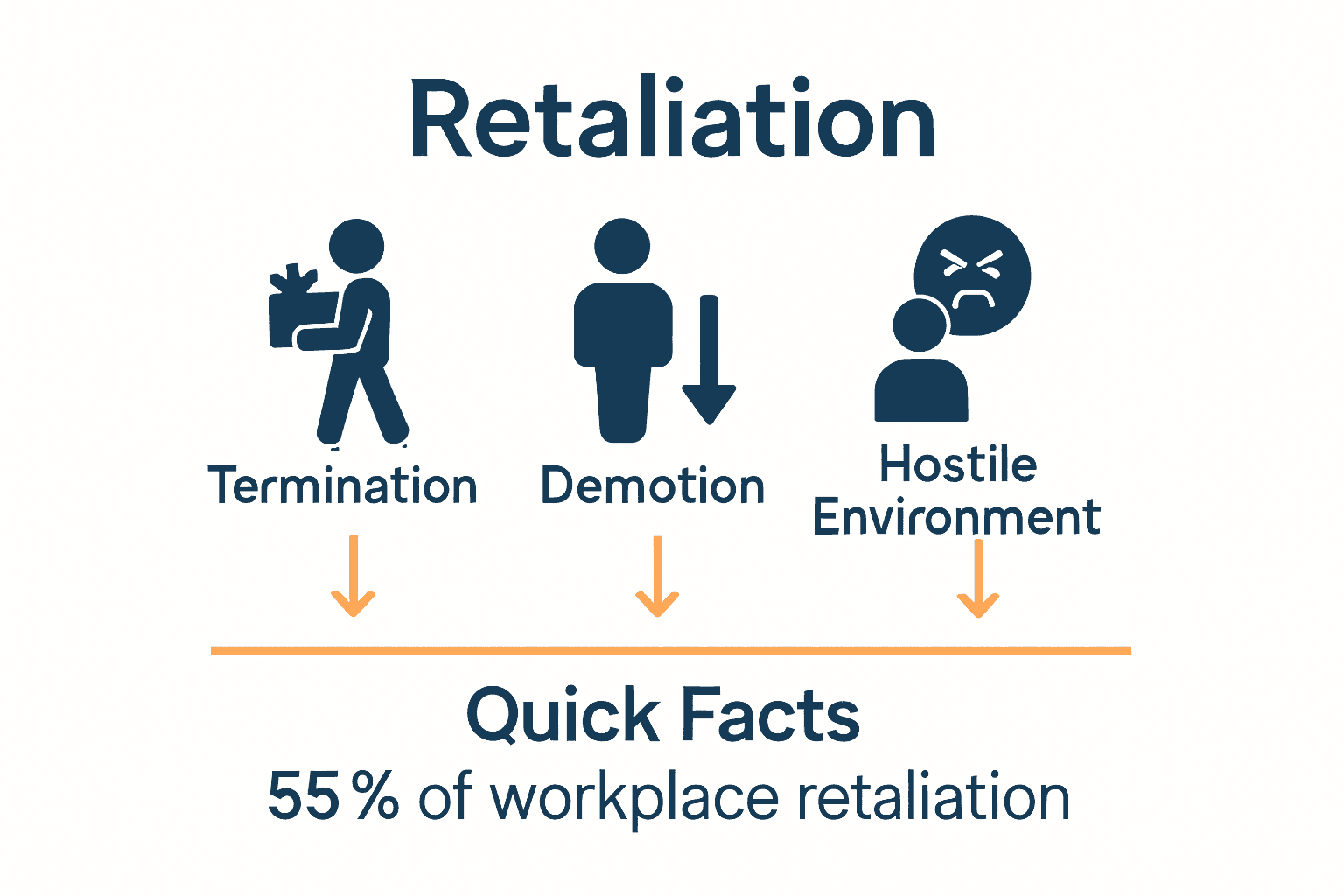
The most prevalent forms of workplace retaliation include:
Here’s a summary of the most common forms of workplace retaliation:
| Retaliation Type | Example Behavior | Potential Impact |
|---|---|---|
| Termination | Sudden firing | Loss of income Career disruption |
| Demotion | Moving to lower position | Reduced responsibilities Lower pay |
| Work Hour Reduction | Less scheduled time | Lower earnings Job insecurity |
| Hostile Environment | Increased scrutiny Harassment | Emotional stress Lower morale |
| Exclusion | Left out of meetings Denied opportunities | Hindered professional growth |
| Negative Reviews | Inconsistent performance evaluations | Damaged reputation Justification for further action |
| Denied Benefits | No overtime Unfavorable assignments | Loss of advancement Financial setback |
- Unexpected job termination
- Demotion to a lower position
- Significant reduction in work hours or pay
- Deliberate schedule changes designed to inconvenience the employee
- Exclusion from critical meetings or professional opportunities
- Creating a hostile work environment through increased scrutiny or harassment
- Issuing unexpectedly negative performance reviews that contradict previous evaluations
- Denying overtime opportunities
- Reassigning employees to less desirable positions or schedules
These retaliatory actions are not just unethical but often illegal. Our guide on hostile work environments provides additional context about workplace protections. Documenting each incident meticulously is crucial for building a potential legal case, as these subtle forms of retaliation can be challenging to prove without comprehensive evidence. If you suspect you’re experiencing workplace retaliation, consulting with an employment law professional can help protect your rights and professional standing.
Legal Protections for Injured Workers
Injured workers have robust legal protections against employer retaliation when filing workers’ compensation claims. According to research on workplace injury laws, most states have specific statutes prohibiting employers from taking punitive actions against employees who exercise their legal rights to seek compensation for workplace injuries.
Employees have multiple avenues for protection and recourse:
- Filing complaints with federal OSHA for workplace injury-related retaliation
- Submitting claims to state-level labor boards
- Pursuing action through workers’ compensation commissions
- Seeking remedies that may include lost wages
- Requesting job reinstatement
- Pursuing compensation for emotional distress
- Obtaining potential punitive damages
Our guide on disability and workers’ compensation offers additional insights into employee rights. These legal protections are designed to ensure workers can report workplace injuries without fear of professional repercussions. If you believe your rights have been violated, documenting all interactions and consulting with an employment law professional can help protect your interests and hold employers accountable for illegal retaliatory actions.
How to Identify and Prove Retaliation
Proving workplace retaliation requires a strategic and methodical approach to documenting evidence. According to research on employment law, employees must establish a clear causal connection between their workers’ compensation claim and subsequent negative employment actions.
Key steps to identify and document potential retaliation include:
- Maintaining a detailed journal of all workplace incidents
- Collecting and preserving all communication records (emails, memos, messages)
- Gathering witness statements from colleagues who observed retaliatory behavior
- Tracking the chronological timeline of events, especially actions taken after filing a claim
- Documenting performance reviews and comparing them to previous evaluations
- Saving any written communications that demonstrate changes in treatment
- Keeping copies of your original workers’ compensation claim documentation
Our guide on workplace disability discrimination provides additional context for understanding employer misconduct. The most compelling evidence typically demonstrates a direct temporal relationship between filing a workers’ compensation claim and subsequent adverse employment actions. If you suspect retaliation, consulting with an employment law professional can help you assess the strength of your case and determine the most appropriate course of action.
Employee Rights, Remedies, and Next Steps
Employees facing workplace retaliation have several powerful legal protections and potential remedies available. According to research on workers’ compensation laws, workers can pursue multiple strategies to address and combat retaliatory actions by their employers.
Key legal remedies and next steps include:
- Filing formal complaints with the Equal Employment Opportunity Commission (EEOC)
- Submitting claims to state labor agencies
- Pursuing litigation to recover lost wages
- Seeking compensation for emotional distress
- Requesting potential punitive damages
- Demanding job reinstatement
- Obtaining legal representation to protect professional rights
Our guide on wage and hour claims provides additional context for understanding workplace legal protections. The primary goal is to restore the employee’s professional standing and hold employers accountable for illegal retaliatory actions. Documenting all incidents, preserving communication records, and consulting with an experienced employment attorney can significantly strengthen your ability to successfully challenge workplace retaliation and protect your legal rights.
Protect Yourself from Employer Retaliation—Get Expert Legal Support Today
Employer retaliation after filing a workers’ compensation claim can leave you feeling singled out and vulnerable. If you are facing sudden job loss, unfair demotion, or a hostile work environment as described in the guide, you are not alone. These tactics are not just discouraging, they are often illegal. The Employment Law practice area at Serendib Law Firm is here to help employees like you understand and enforce your rights when confronted with unfair employer actions. If you need information tailored to whistleblower or retaliation issues, visit our Whistleblower Retaliation resource for more details on workplace protections.
You deserve an advocate who will stand up against retaliation and fight for your peace of mind. Do not wait until your situation gets worse. Reach out now at https://www.serendiblaw.com/ for a confidential and free consultation. Get the answers and support you need to claim your rightful protections today.
Frequently Asked Questions
What constitutes employer retaliation in workers’ compensation claims?
Employer retaliation in workers’ compensation claims refers to negative actions taken by an employer against an employee who has filed a legitimate claim. This can include termination, demotion, reduced work hours, or creating a hostile work environment.
How can I identify signs of retaliation at work?
Signs of workplace retaliation can include unexpected job termination, demotion, significant reductions in work hours, negative performance reviews, or exclusion from important meetings. Keeping a journal of workplace incidents can help identify these signs.
What should I do if I suspect I’m a victim of workplace retaliation?
If you suspect workplace retaliation, document each incident meticulously, including dates and details. Consult with an employment law professional to discuss your rights and the potential next steps you can take to protect yourself.
What legal protections do I have against retaliation after filing a workers’ compensation claim?
Injured workers are protected by various laws that prohibit employer retaliation for filing a claim. Legal protections may include filing complaints with federal agencies, pursuing claims through state labor boards, and seeking remedies such as job reinstatement or compensation for lost wages.
Recommended
https://www.serendiblaw.com/employer-retaliation-workers-comp-claims/?fsp_sid=20


Comments
Post a Comment