Sexual Harassment Training Failures: Orange CA Hospitality

Nearly 80 percent of hospitality workers have experienced some form of sexual harassment on the job, a figure that shocks many and signals a pressing workplace crisis. The hospitality industry’s constant guest interaction and unique power dynamics make staff vulnerable to unwanted advances, inappropriate touches, and offensive comments. Understanding the full scope of sexual harassment, knowing legal obligations, and learning about effective prevention measures empowers both employees and employers to foster safer, more respectful workplaces.
Table of Contents
- Defining Sexual Harassment In Hospitality
- Legal Training Requirements In California Hotels
- Common Failures In Harassment Prevention Training
- Impacts On Employees And Employer Liability
- Employee Rights And Recourse Options
Key Takeaways
| Point | Details |
|---|---|
| Understanding Sexual Harassment | Sexual harassment encompasses unwelcome sexual advances and conduct that creates an intimidating work environment, particularly prevalent in hospitality settings. |
| California Training Requirements | Hotels in California must comply with stringent sexual harassment training requirements, including bi-annual training for staff based on their roles. |
| Common Failures in Training | Many harassment prevention programs lack engagement and real-world relevance, focusing on compliance rather than cultural transformation. |
| Employee Rights and Recourse | Employees have legal protections against harassment, with multiple recourse options, including internal reporting and formal complaints, though fear of retaliation often inhibits reporting. |
Defining Sexual Harassment in Hospitality
Sexual harassment in the hospitality industry represents a pervasive and complex workplace issue that extends far beyond simple misconduct. According to Wikipedia, sexual harassment encompasses “unwelcome sexual advances, requests for sexual favors, and other verbal or physical conduct of a sexual nature” that creates an intimidating or offensive work environment.
In hospitality settings, this harassment can manifest through multiple problematic interactions involving staff, supervisors, and even customers. Inappropriate behaviors might include persistent unwanted comments about physical appearance, suggestive gestures, inappropriate touching, or creating sexually charged work environments that make employees feel uncomfortable and unsafe. Wikipedia notes that such conduct can “unreasonably interfere with an individual’s work performance” and generate significant workplace tension.
Specific examples of sexual harassment in hospitality environments frequently include:
- Unwanted sexual advances from colleagues or management
- Suggestive comments about an employee’s body or appearance
- Requests for sexual favors in exchange for workplace opportunities
- Persistent unwelcome physical contact
- Creating sexually explicit or offensive work environments
Recognizing these behaviors represents the critical first step toward preventing and addressing sexual harassment.
 Hospitality businesses must implement comprehensive training programs, clear reporting mechanisms, and zero-tolerance policies to protect their workforce and maintain a professional, respectful workplace culture.
Legal Training Requirements in California Hotels
In the hospitality industry, California has established stringent sexual harassment prevention training requirements that hotels must carefully follow. California Civil Rights Department mandates that employers with five or more employees provide comprehensive sexual harassment training on a specific schedule.
The training requirements differ based on an employee’s role. According to California Chamber of Commerce, hotels must ensure that all employees receive mandatory training within six months of hiring or promotion, with specific time allocations for different staff levels:
- Nonsupervisory employees: 1 hour of training
- Supervisory employees: 2 hours of training
- Retraining required every two years
These regulations apply universally across industries, with particular significance in hospitality settings where close interpersonal interactions and power dynamics can potentially create vulnerable workplace environments. Failure to comply with these training mandates can result in significant legal and financial consequences for hotel businesses.
To maintain compliance, hotels should develop comprehensive training programs that not only meet legal requirements but also create a culture of respect, understanding, and proactive prevention of sexual harassment. This includes documenting training sessions, maintaining accurate records, and ensuring all employees receive timely and effective education about their rights and responsibilities.
Common Failures in Harassment Prevention Training
Sexual harassment prevention training in the hospitality industry often falls short of meaningful impact, creating significant workplace risks. California Chamber of Commerce highlights that common shortcomings frequently stem from training approaches that lack genuine engagement and real-world relevance.
Most hospitality harassment prevention programs fail due to several critical issues:
- Generic, one-size-fits-all training modules
- Minimal interaction and participant engagement
- Absence of industry-specific scenario discussions
- Superficial coverage of reporting mechanisms
- Lack of clear consequences for inappropriate behavior
The most profound training failures occur when organizations treat sexual harassment prevention as a mere compliance checkbox rather than a critical cultural transformation. Effective training must move beyond passive lecture-style presentations and create interactive, meaningful experiences that help employees understand the nuanced dynamics of workplace harassment.
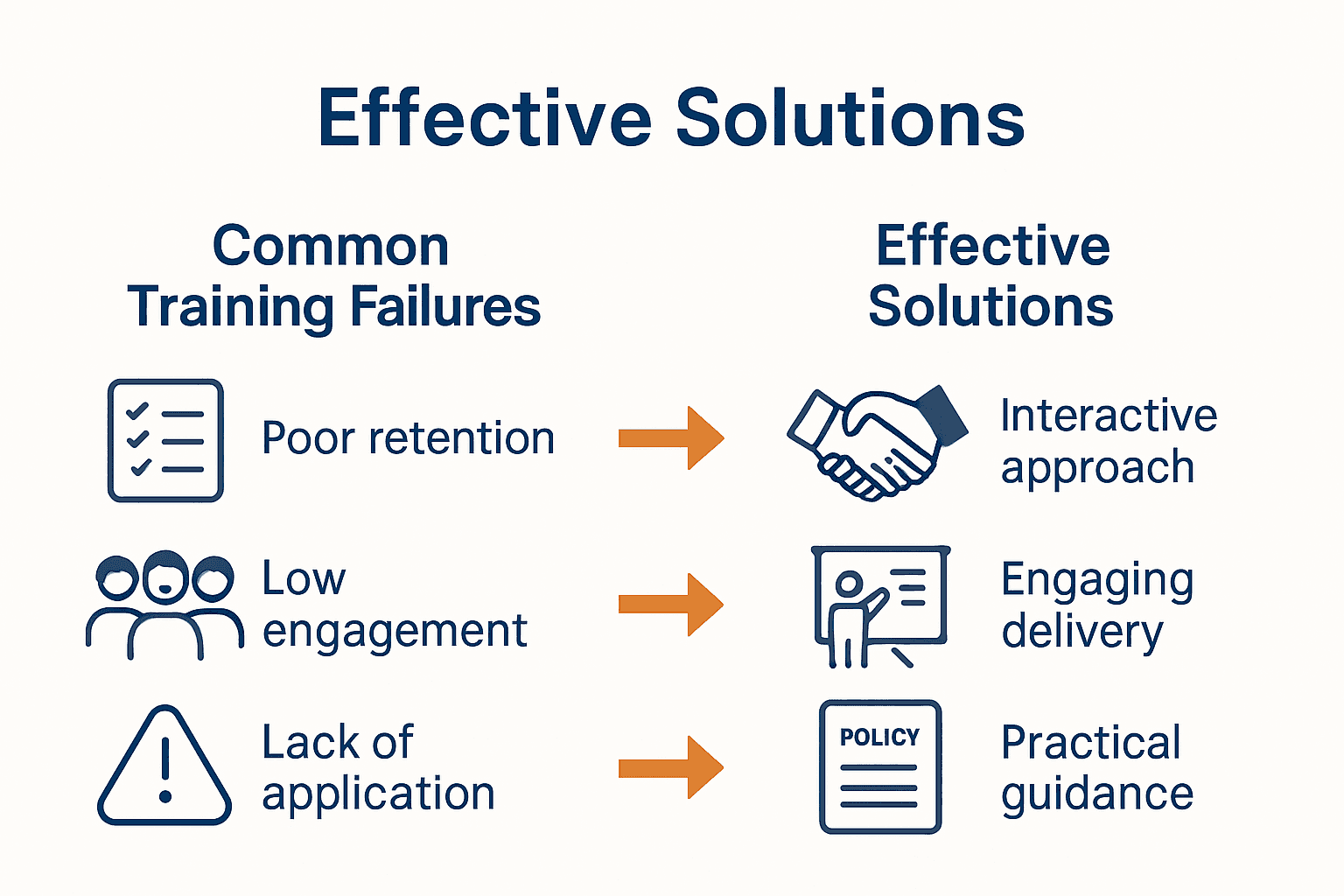
Here’s a summary of common issues and solutions for harassment prevention training in hospitality:
| Common Failures in Training | Impact | Effective Solutions |
|---|---|---|
| Generic, non-specific modules | Low engagement | Use industry-specific content |
| Minimal interaction | Poor retention | Interactive, scenario-based sessions |
| Lack of reporting details | Confused staff | Detailed reporting procedures |
| No clear consequences | Ongoing misconduct | Define and enforce policies |
| Compliance focus only | Weak workplace culture | Foster cultural change |
 |
|
Hotels and hospitality businesses must develop comprehensive training programs that not only meet legal requirements but also actively cultivate a culture of mutual respect. This means creating training sessions that are contextually relevant, emotionally intelligent, and designed to provoke genuine reflection and behavioral change among all staff members.
Impacts on Employees and Employer Liability
Sexual harassment in hospitality settings creates devastating consequences for both employees and employers. Wikipedia reveals that a hostile work environment can lead to significant negative outcomes, including dramatically decreased employee morale and increased workplace turnover.
The legal ramifications for hotels are particularly severe. According to Wikipedia, employers are legally obligated to maintain a workplace free from sexual harassment, with potential consequences including:
- Substantial financial penalties
- Costly legal lawsuits
- Severe reputational damage
- Potential loss of business licenses
- Significant employee turnover
Employees experiencing sexual harassment often suffer profound personal and professional impacts. These can include chronic stress, reduced job performance, career interruption, psychological trauma, and long-term career setbacks. The hospitality industry’s unique power dynamics and customer-facing nature can make reporting and addressing harassment particularly challenging.
With Experienced Orange Employment Law Attorneys, victims can understand their rights and pursue appropriate legal recourse. Comprehensive legal support becomes crucial in navigating the complex landscape of workplace harassment, ensuring both individual justice and systemic accountability in the hospitality sector.
Employee Rights and Recourse Options
In the hospitality industry, employees facing sexual harassment have critical legal protections and multiple avenues for seeking justice. California Civil Rights Department emphasizes that workers are legally entitled to a workplace free from harassment and have the right to file formal complaints against inappropriate conduct.
Employees experiencing sexual harassment can pursue several key recourse options:
- Internal reporting through company HR departments
- Filing complaints with the California Civil Rights Department
- Submitting claims to the Equal Employment Opportunity Commission
- Consulting with employment law attorneys
- Documenting all instances of harassment
Unfortunately, many hospitality workers fear retaliation and remain silent about harassment. California Civil Rights Department confirms that employees are entitled to receive sexual harassment prevention training and should be fully informed about internal and external reporting procedures. Protecting oneself legally requires understanding these rights and systematically documenting any inappropriate workplace interactions.
Employees facing potential whistleblower retaliation can seek specialized legal support to navigate complex workplace harassment scenarios. Professional legal guidance becomes crucial in helping workers understand their rights, collect evidence, and pursue appropriate legal strategies to address and resolve workplace sexual harassment incidents.
Protect Your Hospitality Business From Sexual Harassment Training Failures
Sexual harassment training failures in Orange County hospitality can leave your employees vulnerable and your business exposed to serious legal risks. If your current training is generic, lacks real engagement, or ignores the specific challenges faced in hospitality environments you are facing a ticking time bomb that could lead to costly lawsuits and damaged workplace morale. Key pain points include ineffective education, unclear reporting procedures, and a culture that does not truly discourage harassment.
You do not have to navigate this complex landscape alone. At Serendib Law Firm we specialize in Employment Law solutions tailored to California’s legal requirements. Our expert team helps businesses like yours develop comprehensive training programs, clear harassment policies, and strong legal defenses to protect both employees and employers. Take control now by visiting our CA Employment Law Archives | Serendib Law Firm for insights and reach out through our main site at https://www.serendiblaw.com/ to schedule your free consultation. Don’t wait until a failure turns into a crisis. Get trusted legal guidance and build a workplace culture of respect today.
Frequently Asked Questions
What are common failures in sexual harassment prevention training in hospitality?
Many hospitality training programs often fail due to generic one-size-fits-all modules, minimal interaction, absence of industry-specific scenarios, superficial coverage of reporting mechanisms, and lack of clear consequences for inappropriate behavior.
How often should hospitality employees receive sexual harassment training?
In hospitality settings, employees are required to receive initial training within six months of hire or promotion, followed by retraining every two years to ensure ongoing awareness and compliance.
What are the legal responsibilities of hospitality employers regarding sexual harassment?
Employers in the hospitality industry are legally obligated to maintain a workplace free from sexual harassment. They must implement comprehensive training, develop reporting systems, and ensure a respectful work environment to avoid significant legal consequences.
What recourse options do employees have if they experience sexual harassment?
Employees can report harassment internally to HR, file complaints with government agencies, consult with employment law attorneys, and document incidents. Understanding their rights and having clear reporting procedures are crucial for seeking justice.
Recommended
https://www.serendiblaw.com/sexual-harassment-training-orange-hospitality/?fsp_sid=65


Comments
Post a Comment