Misclassification of Managers: Complete Legal Guide

Did you know that over $3 billion in back wages have been recovered for misclassified employees in the United States? Many workers with the manager title miss out on overtime pay and crucial benefits because of simple job misclassification. Missteps in employee labeling can lead to costly lawsuits, lost income, and workplace confusion. Understanding what truly sets exempt and non-exempt roles apart helps workers protect their rights while keeping businesses compliant with federal law.
Table of Contents
- Defining Managerial Misclassification In Employment
- Legal Criteria For Exempt And Non-Exempt Roles
- Common Employer Practices And Tactics
- Employee Rights And Recourse Strategies
- Consequences And Liabilities For Employers
Key Takeaways
| Point | Details |
|---|---|
| Managerial Misclassification | Employers often improperly classify employees to avoid overtime and benefits, risking legal consequences. |
| Legal Criteria for Classification | Accurate classification relies on specific salary thresholds and job duties that must align with exemption criteria. |
| Employer Tactics | Deliberate misclassification through ambiguous job titles can lead to significant financial penalties for employers. |
| Employee Rights | Employees can challenge misclassification by documenting discrepancies and filing complaints with labor authorities for recourse. |
Defining Managerial Misclassification in Employment
Managerial misclassification is a complex legal issue where employers improperly categorize employees, often to avoid providing legally mandated benefits and overtime compensation. According to the Fair Labor Standards Act (FLSA), employers must carefully distinguish between exempt and non-exempt employees based on specific job duties, salary levels, and professional responsibilities.
The core challenge lies in understanding the nuanced criteria for classification. Research from Texas State University’s HR Department highlights that misclassification can occur when employees perform tasks that do not align with traditional executive, administrative, or professional exemption standards. This means that just having a manager title does not automatically qualify an employee as exempt from overtime pay.

Key indicators of potential misclassification include:
- Performing predominantly non-managerial tasks
- Earning a salary below the federal threshold for exemption
- Lacking genuine supervisory responsibilities over other employees
- Having limited decision-making authority within the organization
When misclassification occurs, employers can face significant legal consequences. As noted by Roosevelt University, violations of wage and hour laws can result in back pay claims, penalties, and potential litigation. Employees who suspect they have been incorrectly classified should carefully review their job duties, compensation structure, and actual workplace responsibilities to determine if they are being properly compensated under federal labor regulations.
Legal Criteria for Exempt and Non-Exempt Roles
Understanding the legal criteria for exempt and non-exempt roles is critical in preventing misclassification and ensuring fair workplace compensation. According to Cornell Law’s Federal Code of Regulations, employees must meet specific salary and job duty requirements to be considered exempt from overtime pay regulations.
For administrative employees, the criteria are particularly nuanced. As defined by federal regulations, an administrative employee must satisfy three primary conditions: performing office or non-manual work directly related to management or general business operations, receiving compensation on a salary basis, and exercising discretion and independent judgment on significant matters. This means simply having an administrative title does not automatically qualify an employee for exempt status.
Key components for determining exempt status include:
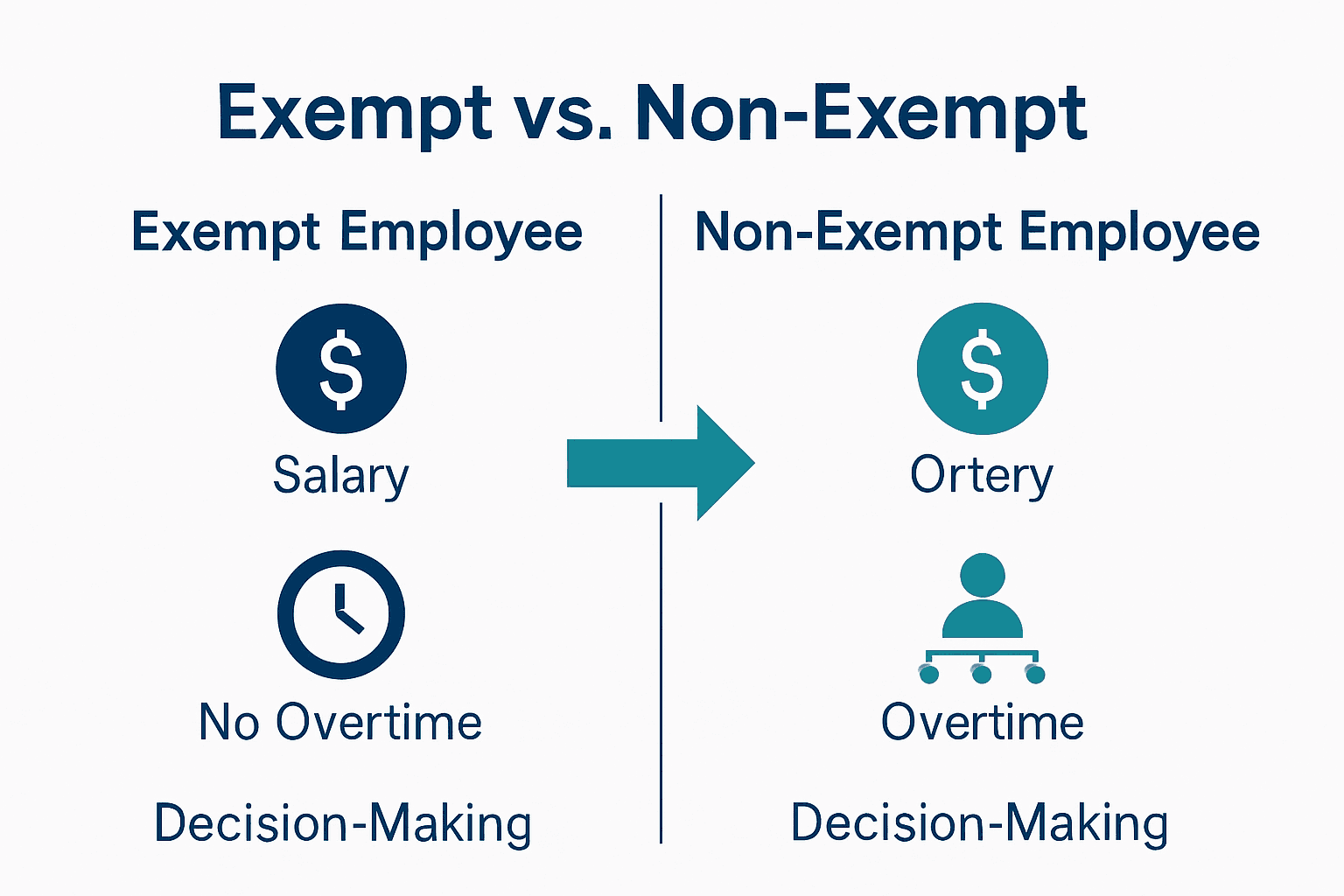
Here’s a comparison of exempt and non-exempt roles as defined by legal criteria:
| Criteria | Exempt Employee | Non-Exempt Employee |
|---|---|---|
| Minimum Salary Threshold | Meets threshold | May fall below threshold |
| Overtime Eligibility | Not entitled | Entitled (1.5x hourly rate) |
| Primary Duties | Executive Admin/Professional | Routine, manual, or support |
| Decision-Making Authority | Independent, significant | Limited Subordinate |
| Specialized Knowledge Needed | Required | Not required |
| Pay Structure | Salary-based | Hourly or salary |
- Minimum weekly salary threshold
- Primary job duties and responsibilities
- Level of independent decision-making authority
- Professional skill and specialized knowledge required
Non-exempt employees, by contrast, are entitled to overtime compensation at 1.5 times their regular hourly rate for hours worked beyond 40 per week. Employers must carefully evaluate each role’s specific responsibilities, compensation structure, and actual job performance to ensure accurate classification.
Misclassification can result in substantial financial penalties, back wage payments, and potential legal action against the organization.
Common Employer Practices and Tactics
Employee misclassification represents a strategic problem where employers deliberately manipulate classification systems to reduce labor costs and avoid providing legally mandated benefits. According to research from University of California, Santa Barbara, many employers engage in systematic misclassification by exploiting legal ambiguities in job categorization.
One prevalent tactic involves inappropriately assigning managerial titles without corresponding responsibilities. As documented by Boston University’s HR resources, some organizations create inflated job titles that suggest executive status while maintaining non-exempt job duties. This practice allows employers to circumvent overtime compensation requirements and reduce overall labor expenses.
Common misclassification strategies include:
- Creating ambiguous job descriptions that blur classification lines
- Assigning manager titles without genuine supervisory responsibilities
- Maintaining salary structures that minimize overtime compensation
- Implementing flexible job roles that obscure true employment classification
Employers often exploit legal gray areas by carefully crafting job descriptions that appear to meet exemption criteria while effectively maintaining non-exempt working conditions. Experienced Orange Employment Law Attorneys can help workers identify these sophisticated misclassification tactics and pursue appropriate legal remedies when workplace classifications do not align with actual job responsibilities and compensation structures.
Employee Rights and Recourse Strategies
Employee misclassification creates significant legal vulnerabilities that workers can challenge through multiple strategic approaches. According to guidance from the University of South Florida’s HR resources, workers have several critical pathways to address potential classification violations and protect their workplace rights.
Employees facing potential misclassification can initiate recourse through formal internal and external channels. This might involve documenting discrepancies between actual job responsibilities and current classification, consulting with human resources, or filing a complaint with the Department of Labor. The key is building a comprehensive record that demonstrates how job duties do not align with the current exempt status.
Key recourse strategies include:
- Documenting specific job responsibilities and actual work performed
- Collecting evidence of overtime hours worked without proper compensation
- Consulting with employment law specialists
- Filing formal complaints with state or federal labor authorities
For workers experiencing potential retaliation after challenging their classification, Whistleblower Retaliation protections provide critical legal safeguards. Employees have the right to challenge misclassification without fear of workplace punishment, with potential remedies including back wages, reinstated employment status, and compensation for damages resulting from improper classification practices.
Consequences and Liabilities for Employers
Employer misclassification can trigger substantial legal and financial repercussions that extend far beyond simple administrative errors. According to Cornell Law’s Federal Regulations, organizations found guilty of misclassifying employees face significant monetary penalties, including potential requirements to pay back wages, overtime compensation, and additional damages.
The financial implications of misclassification are multifaceted and can quickly escalate. Employers may be responsible for retroactive overtime payments, tax penalties, and potential civil litigation brought by affected employees. State-level regulations can compound these risks, with some jurisdictions imposing additional fines and mandating comprehensive classification reviews.
Key potential consequences include:
- Substantial financial penalties from federal and state labor authorities
- Mandatory back wage payments for unpaid overtime
- Potential civil lawsuits from misclassified employees
- Increased scrutiny from regulatory agencies
- Potential damage to organizational reputation and employee morale
For businesses navigating the complex landscape of employment classification, understanding these risks is critical. Expense Reimbursement regulations further underscore the importance of accurate employee classification, as improper designations can expose organizations to additional legal vulnerabilities and financial liabilities.
Protect Your Rights Against Managerial Misclassification Today
Misclassification of managers can leave you working overtime without fair pay or benefits. When your job title does not reflect your actual duties or you lack genuine supervisory authority, you might be facing improper classification. This issue often results in denied overtime compensation and lost workplace protections. If you suspect your role has been misclassified, it is important to act now before these violations cause lasting financial and professional harm.
Explore how our skilled team at Serendib Law Firm can help you navigate these complex legal challenges. Visit our Misclassification Archives to learn more about your rights and legal remedies. Do not let employer tactics blur the lines between your job title and actual responsibilities. Contact us today for a free consultation and take the first step toward fair treatment and rightful compensation.
Frequently Asked Questions
What is managerial misclassification in employment?
Managerial misclassification occurs when employers incorrectly categorize employees to avoid providing mandated benefits and overtime pay. It often relates to the misidentification of exempt versus non-exempt employees under the Fair Labor Standards Act (FLSA).
What are the legal criteria for determining if a role is exempt from overtime pay?
To qualify as exempt, an employee must meet certain criteria, including receiving a salary above the federal threshold, performing executive or administrative tasks, and exercising independent judgement on significant matters. Simply holding a managerial title does not guarantee exempt status.
What are common tactics employers use to misclassify employees?
Employers may misclassify employees by assigning inflated job titles without corresponding responsibilities, creating vague job descriptions, maintaining salary structures that minimize overtime eligibility, and obscuring true job functions through flexible role definitions.
What should employees do if they suspect they are misclassified?
Employees should document their actual job responsibilities, gather evidence of overtime hours worked, consult with HR or legal specialists, and consider filing formal complaints with labor authorities to address potential misclassification issues.
Recommended
- Experienced Orange Employment Law Attorneys
- Understanding Misclassification of Gig Workers
- Gig Workers Misclassification under California Law Updates
https://www.serendiblaw.com/misclassification-of-managers-overtime-guide/?fsp_sid=88


Comments
Post a Comment