Understanding Whistleblower Protections for Employees in Financial Services Firms

Whistleblower protections in financial services might sound dry, but they are anything but ordinary. Under the Dodd-Frank Act, whistleblowers can receive rewards of up to 30 percent of recovered sanctions. Most people picture these rules as a shield for employees, but there is far more at stake. These laws are quietly shaping the entire financial industry and changing how corruption gets exposed from the inside.
Table of Contents
- Defining Whistleblower Protections In Financial Services
- The Importance Of Whistleblower Protections For Employees
- How Whistleblower Protections Work In Practice
- Key Concepts Related To Whistleblower Protections
- Legal Framework Supporting Whistleblower Protections
Quick Summary
| Takeaway | Explanation |
|---|---|
| Whistleblower protection encourages reporting misconduct. | Legal safeguards empower employees to expose unethical practices without fear of retaliation or job loss. |
| Dodd-Frank Act provides comprehensive protections. | This legislation includes job security, confidentiality, and financial incentives for whistleblowers reporting financial misconduct. |
| Multiple reporting channels enhance safety. | Employees can report violations to the SEC, internal compliance, or through anonymous platforms, ensuring confidentiality. |
| Psychological safety reduces reporting anxiety. | Protections foster an environment where employees feel secure in reporting, leading to improved trust in leadership. |
| Legal standards ensure robust support for whistleblowers. | Employees must present credible evidence and demonstrate a connection between their reports and any potential retaliation. |
Defining Whistleblower Protections in Financial Services
Whistleblower protections represent critical legal safeguards designed to shield employees who expose unethical, illegal, or fraudulent activities within financial services firms. These protections are fundamental mechanisms that encourage transparency, accountability, and ethical conduct in the financial sector.
What Constitutes a Whistleblower in Financial Services
In the context of financial services, a whistleblower is an employee who reports potential violations of securities laws, financial misconduct, or unethical business practices to regulatory authorities like the Securities and Exchange Commission (SEC). Whistleblower protections ensure that these individuals can come forward without fear of professional retaliation or career damage.
Key characteristics of financial services whistleblowers include:
- Employees with direct knowledge of fraudulent activities
- Individuals who can provide substantial evidence of misconduct
- Workers committed to maintaining industry integrity
Legal Framework and Protections
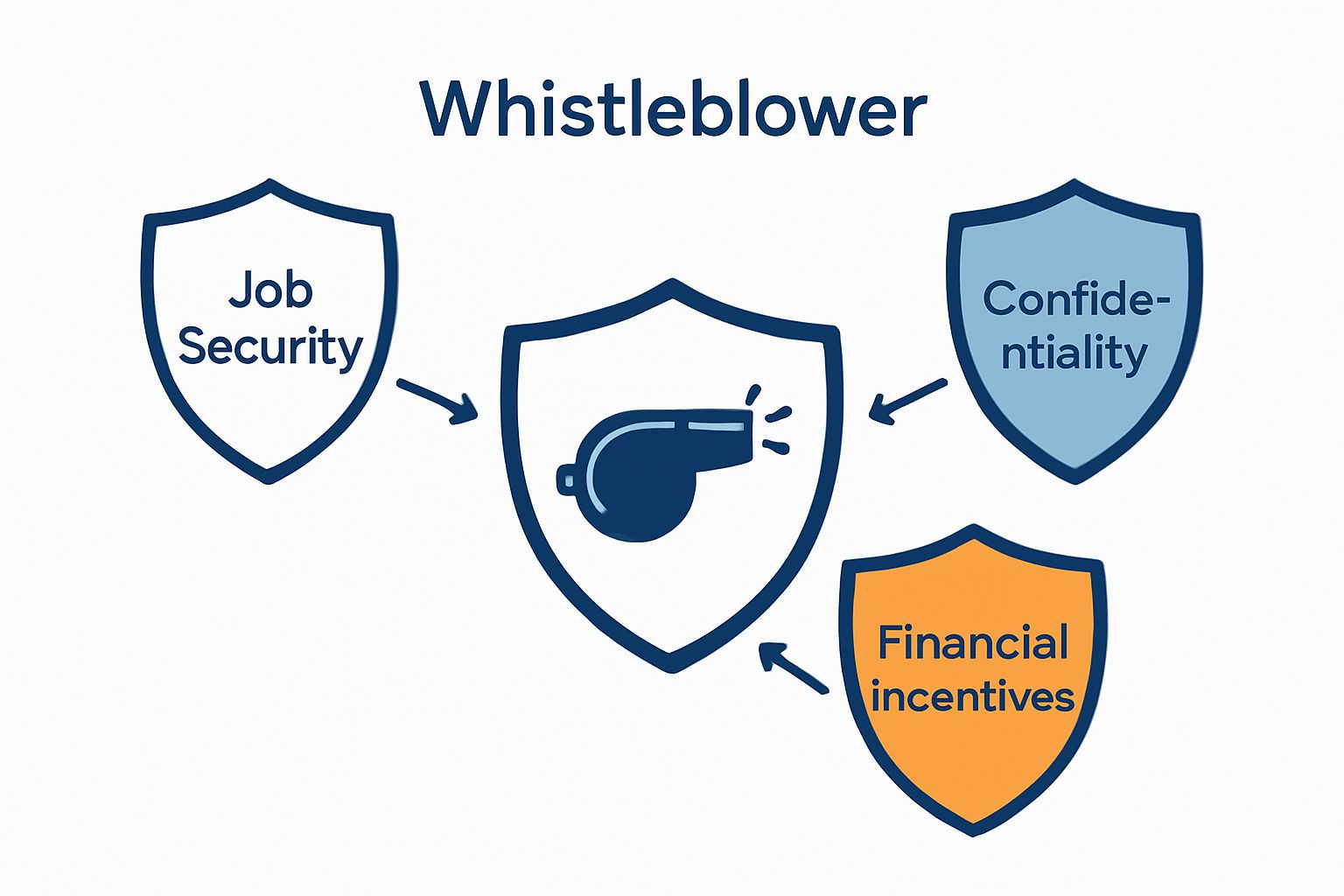
The Dodd-Frank Wall Street Reform and Consumer Protection Act established comprehensive legal protections for financial sector whistleblowers. These protections encompass several critical aspects:
- Job Security: Employers cannot terminate, demote, suspend, or discriminate against employees who report misconduct
- Confidentiality: Regulatory agencies are mandated to protect the identity of whistleblowers
- Financial Incentives: Whistleblowers may receive monetary rewards for providing actionable information leading to successful enforcement actions
These protections create a robust framework that encourages employees to report potential financial crimes without risking their professional careers. By offering legal safeguards and potential financial compensation, the system aims to promote transparency and ethical conduct within financial institutions.
Below is a table summarizing key legal protections provided to whistleblowers in financial services, offering a clear overview of their main features and benefits.
| Legal Protection | Description |
|---|---|
| Job Security | Employers cannot terminate, demote, or discriminate against employees for reporting misconduct. |
| Confidentiality | Whistleblower identities are protected by regulatory agencies. |
| Financial Incentives | Eligible whistleblowers may receive up to 30% of recovered sanctions as monetary rewards. |
The Importance of Whistleblower Protections for Employees
Whistleblower protections serve as a critical mechanism for maintaining ethical standards and preventing systemic misconduct within financial services organizations. These legal safeguards are not merely procedural requirements but fundamental instruments that protect individual employees and maintain the integrity of the entire financial ecosystem.
Preserving Organizational Integrity
By empowering employees to report unethical practices, whistleblower protections create a robust internal accountability system. Whistleblower protection mechanisms encourage workers to become active guardians of professional ethics, knowing they will not face professional repercussions for exposing potential wrongdoing.
Critical aspects of organizational integrity include:
- Preventing financial fraud and misconduct
- Maintaining transparent business practices
- Protecting shareholder and investor interests
Psychological and Professional Safety
According to research from the University of California, whistleblower protections significantly reduce employee anxiety and fear associated with reporting misconduct. These legal frameworks provide psychological safety by ensuring that employees who speak up are protected from potential retaliation.
Key psychological benefits include:
- Reduced workplace stress
- Enhanced sense of professional empowerment
- Increased trust in organizational leadership
Moreover, whistleblower protections serve a broader societal function by preventing large-scale financial misconduct that could potentially harm millions of investors and consumers. By creating a secure reporting environment, these protections transform individual employees into critical safeguards against systemic corruption and unethical business practices.
How Whistleblower Protections Work in Practice
In the financial services sector, whistleblower protections function through a complex legal framework that enables employees to report misconduct while ensuring their professional safety and potential financial compensation. Understanding the practical implementation of these protections is crucial for employees considering reporting unethical practices.
Reporting Mechanisms and Channels
According to SEC guidelines, employees have multiple formal channels to report potential securities law violations. These reporting mechanisms are designed to protect whistleblowers and facilitate thorough investigations of potential misconduct.
Key reporting channels include:

- Direct submissions to the Securities and Exchange Commission
- Internal reporting through designated compliance officers
- Anonymous reporting platforms within financial institutions
Legal Safeguards and Procedural Protections
When an employee decides to report misconduct, several legal protections are immediately activated. These safeguards are designed to prevent retaliation and ensure the whistleblower’s professional security. Employers are legally prohibited from taking adverse actions such as termination, demotion, harassment, or discrimination against employees who report potential violations in good faith.
Critical procedural protections include:
- Mandatory confidentiality of the whistleblower’s identity
- Protection from workplace retaliation
- Potential financial rewards for providing substantive information
Moreover, financial institutions are required to establish internal mechanisms that facilitate safe and confidential reporting. These systems must provide clear pathways for employees to communicate potential misconduct without fear of professional repercussions, thereby creating a culture of transparency and ethical accountability.
Key Concepts Related to Whistleblower Protections
Whistleblower protections encompass a sophisticated legal framework with nuanced principles designed to safeguard employees who expose organizational misconduct. Understanding these fundamental concepts is essential for comprehending the comprehensive nature of whistleblower regulations in financial services.
Protected Disclosures and Qualifying Violations
According to government guidelines, protected disclosures represent specific types of information that qualify for legal protection. In financial services, these typically include evidence of securities law violations, fraudulent accounting practices, insider trading, and substantial regulatory noncompliance.
Key characteristics of protected disclosures include:
- Direct evidence of intentional misconduct
- Documentation of systemic organizational failures
- Credible information about potential financial crimes
Burden of Proof and Legal Standards
Whistleblower protection cases require stringent legal standards for establishing both the validity of the disclosure and potential retaliatory actions. Employees must demonstrate that their disclosure was made in good faith and that subsequent adverse employment actions were directly connected to their whistleblowing activities.
Critical legal considerations include:
- Proving the substantive nature of the reported misconduct
- Establishing a clear causal link between disclosure and retaliation
- Providing credible and verifiable evidence of organizational wrongdoing
The complexity of these legal standards underscores the importance of comprehensive documentation and strategic reporting. Employees must carefully navigate these requirements to ensure their disclosures receive full legal protection and potential remediation.
Legal Framework Supporting Whistleblower Protections
The legal landscape surrounding whistleblower protections in financial services has evolved significantly, creating a comprehensive system of statutory safeguards designed to encourage ethical reporting and protect employees who expose organizational misconduct.
Key Legislative Foundations
The Sarbanes-Oxley Act represents a pivotal moment in whistleblower protection legislation. Enacted in response to major corporate accounting scandals, this law established fundamental protections for employees reporting potential financial frauds and misconduct in publicly traded companies.
Significant legislative milestones include:
- Introduction of comprehensive anti-retaliation provisions
- Mandatory reporting mechanisms for financial irregularities
- Enhanced legal remedies for whistleblowers
Regulatory Enforcement and Scope
Federal regulatory agencies like the Securities and Exchange Commission play a crucial role in implementing and enforcing whistleblower protection statutes. These agencies provide robust mechanisms for investigating reported misconduct and ensuring that employees who come forward are adequately protected from professional repercussions.
Key enforcement principles encompass:
- Strict confidentiality of whistleblower identities
- Comprehensive investigations of reported misconduct
- Potential monetary awards for substantive disclosures
The intricate legal framework demonstrates a systematic approach to creating an environment where employees can transparently report potential financial irregularities without fear of professional retaliation. By establishing clear statutory protections, these laws fundamentally transform the accountability landscape within financial services institutions.
The following table compares key aspects of the Sarbanes-Oxley Act and Dodd-Frank Act as foundational whistleblower protection laws, highlighting their main contributions to employee safety and industry transparency.
| Legislative Act | Year Enacted | Key Contributions |
|---|---|---|
| Sarbanes-Oxley Act | 2002 | Anti-retaliation provisions; mandatory reporting mechanisms; enhanced remedies for whistleblowers |
| Dodd-Frank Act | 2010 | Job security, confidentiality, and financial incentives for reporting financial misconduct |
Protect Your Rights as a Whistleblower in Financial Services
If you are concerned about facing retaliation after reporting financial misconduct or unethical practices, you are not alone. The challenges discussed in this article—such as fear of losing your job, workplace retaliation, or professional isolation—stem from the real risks employees face when standing up for what is right. Navigating whistleblower protections can be complex, especially when trying to ensure that your disclosures are legally covered and that your career is secure. Our dedicated team at Serendib Law Firm understands the importance of safeguarding whistleblowers and can help you address retaliation and protect your future.
Do not let uncertainty or anxiety hold you back from taking action. Explore our in-depth resources on Whistleblower Retaliation and learn how our experienced attorneys offer personalized guidance every step of the way. Your integrity matters and you deserve advocates who will defend your rights. Visit Serendib Law Firm today and book a free consultation to secure the protection you need now.
Frequently Asked Questions
What are the key protections available to whistleblowers in financial services?
Whistleblowers in financial services benefit from protections such as job security, confidentiality, and potential financial rewards. To leverage these protections, report any misconduct directly to the designated compliance officer or through authorized channels to ensure your disclosures are safeguarded.
How can I report unethical behavior while ensuring my identity remains confidential?
You can report unethical behavior through internal reporting systems or anonymous platforms provided by your financial firm. Make sure to utilize these channels to preserve your confidentiality while raising concerns about misconduct.
What kind of misconduct qualifies for whistleblower protections?
Qualifying misconduct includes securities law violations, fraudulent accounting practices, and insider trading. If you notice such activities, document your observations and report them to the appropriate authorities to activate your whistleblower protections.
What should I do if I face retaliation after reporting misconduct?
If you experience retaliation after reporting misconduct, document all incidents and seek legal advice to explore your options for recourse. Act quickly to strengthen your case, as timely action can help protect your rights under whistleblower protection laws.
How can I prepare to effectively document and report wrongdoing?
Start by gathering evidence such as emails, financial records, or witness accounts related to the misconduct. Organize this information clearly to facilitate a comprehensive report when you approach compliance or regulatory agencies.
What are the psychological benefits of whistleblower protections for employees?
Whistleblower protections enhance employees’ mental safety, reduce anxiety about reporting, and empower them to speak up against wrongdoing. To experience these benefits, familiarize yourself with your firm’s reporting mechanisms and the protections available to you.
Recommended
- Whistleblower Protection | Serendib Law Firm
- Whistleblower Protection in California 2025 You Need To Know
https://www.serendiblaw.com/understanding-whistleblower-protections-for-employees-in-financial-services-firms/?fsp_sid=101


Comments
Post a Comment