Complete Guide to Pregnancy Leave Denials for Warehouse Workers

Nearly one in five women report facing workplace challenges during pregnancy, and warehouse workers often encounter some of the hardest obstacles. Physically demanding tasks and long hours can intensify health risks, making fair treatment and access to leave absolutely vital. Knowing your legal rights could protect your job and your health, especially with recent updates improving federal and California laws for pregnant employees.
Table of Contents
- Pregnancy Leave Rights for Warehouse Workers
- Types of Leave Available Under California Law
- Common Reasons for Denial or Termination
- Legal Protections Against Wrongful Termination
- Steps to Take After a Leave Denial or Termination
Key Takeaways
| Point | Details |
|---|---|
| Legal Protections | Federal and state laws prohibit discrimination against pregnant warehouse workers, ensuring job protection and reasonable accommodations. |
| Types of Leave | California offers multiple pregnancy-related leave options, including Pregnancy Disability Leave (PDL) and Paid Family Leave (PFL), to support employee needs. |
| Denial Challenges | Employers may use discriminatory tactics to deny pregnancy leave; workers should document all interactions and gather evidence if facing denial. |
| Action Steps | After a leave denial or termination, workers should report to the EEOC or California Civil Rights Department and consult with an attorney to protect their rights. |
Pregnancy Leave Rights for Warehouse Workers
Warehouse workers face unique challenges when navigating pregnancy leave, but federal and state laws provide critical protections against workplace discrimination. According to the EEOC, the Pregnancy Discrimination Act (PDA) and the recently implemented Pregnant Workers Fairness Act (PWFA) establish important legal safeguards for pregnant employees.
Under these protections, warehouse employers cannot discriminate against workers due to pregnancy, childbirth, or related medical conditions. The PWFA, effective June 27, 2023, specifically requires employers to provide reasonable accommodations for pregnancy-related limitations unless doing so would cause undue hardship. For warehouse workers, these accommodations might include modified lifting duties, more frequent rest breaks, or temporary reassignment to less physically demanding roles.
In states like California, pregnancy leave rights extend even further. The California Department of Industrial Relations mandates up to four months of job-protected Pregnancy Disability Leave (PDL) for workers experiencing pregnancy-related medical conditions. This means warehouse workers can receive necessary medical leave without fear of losing their job or facing professional retaliation.
Key pregnancy leave rights for warehouse workers include:
- Job protection during medical leave
- Reasonable workplace accommodations
- Protection from discrimination based on pregnancy status
- Potential modified work assignments
- Guaranteed return to equivalent position after leave
Navigating these rights can be complex, which is why understanding your legal protections is crucial. For more detailed guidance on your specific situation, our pregnancy discrimination guide offers comprehensive insights into workplace pregnancy regulations.
Types of Leave Available Under California Law
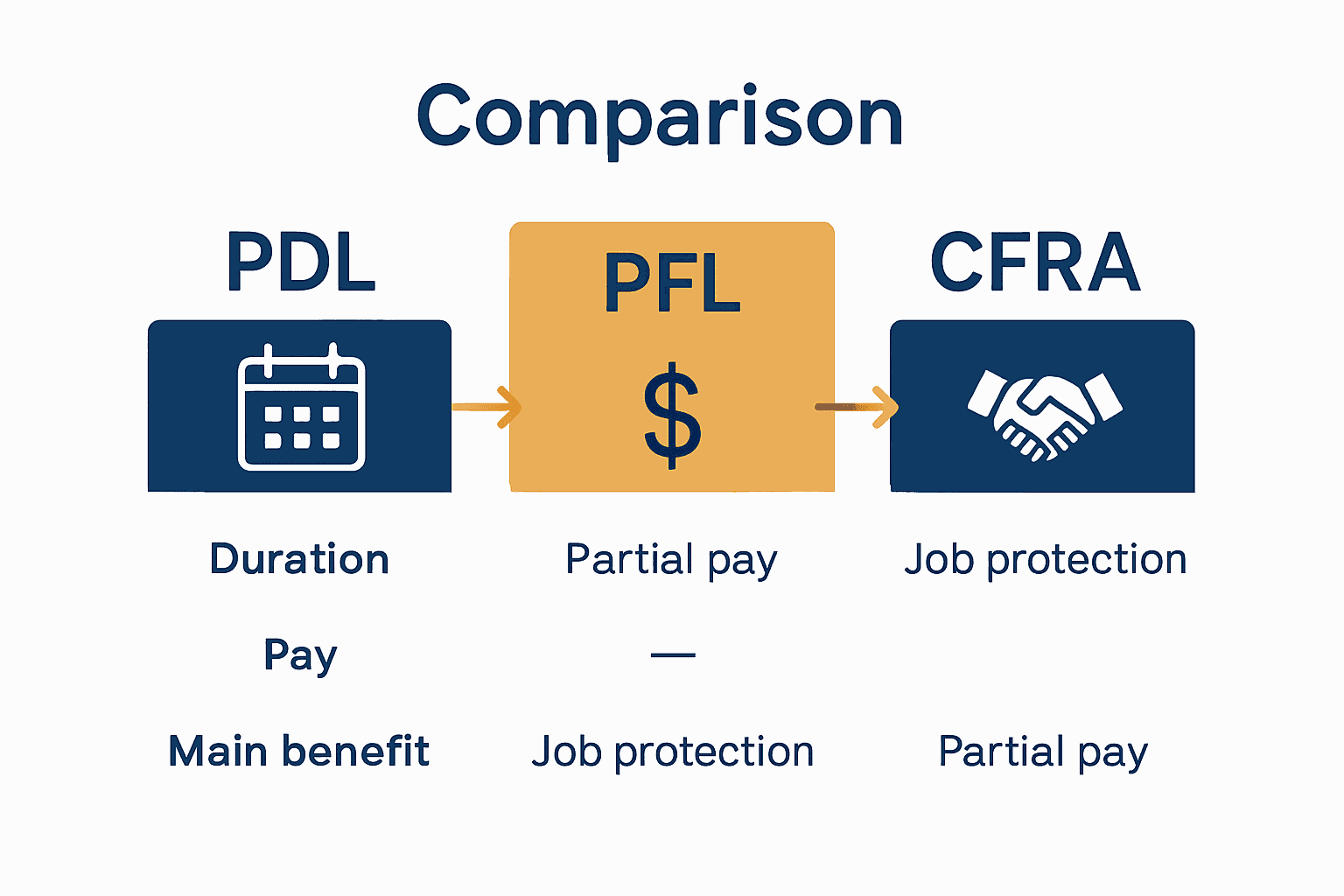
California offers comprehensive leave protections for pregnant workers, providing multiple options to support employees during pregnancy and early parenthood. WorkFamilyCA outlines three primary types of leave that warehouse workers and other employees can leverage: Pregnancy Disability Leave (PDL), Paid Family Leave (PFL), and the California Family Rights Act (CFRA).
Pregnancy Disability Leave is particularly crucial for warehouse workers experiencing pregnancy-related medical conditions. According to HR Manual, PDL allows up to four months of unpaid, job-protected leave that can be taken intermittently or continuously. This means warehouse workers can receive necessary medical accommodations without risking their employment status, which is especially important given the physically demanding nature of warehouse work.
Beyond PDL, California provides additional support through Paid Family Leave and CFRA. PFL offers up to eight weeks of partial wage replacement for bonding with a new child, while CFRA provides eligible employees with 12 weeks of unpaid, job-protected leave for family care and child bonding. These provisions ensure that warehouse workers can balance their professional responsibilities with important family needs.

Key types of pregnancy-related leave in California include:
Here’s a comparison of the main types of pregnancy-related leave available to warehouse workers in California:
| Leave Type | Duration | Pay | Key Features |
|---|---|---|---|
| Pregnancy Disability Leave (PDL) | Up to 4 months | Unpaid | Job protection Intermittent or continuous leave Medical certification required |
| Paid Family Leave (PFL) | Up to 8 weeks | Partial wage replacement | Child bonding Available to new parents Can be combined with other leaves |
| California Family Rights Act (CFRA) | Up to 12 weeks | Unpaid | Job-protected Family care or child bonding Applies to qualifying employers |
- Pregnancy Disability Leave (up to 4 months)
- Paid Family Leave (up to 8 weeks of partial wage replacement)
- California Family Rights Act Leave (up to 12 weeks)
- Intermittent or continuous leave options
- Job protection during leave periods
Navigating these leave options can be complex, which is why understanding your specific rights is critical. For more detailed information tailored to your situation, explore our comprehensive pregnancy leave guide to ensure you fully understand your legal protections.
Common Reasons for Denial or Termination
Warehouse workers face significant challenges when seeking pregnancy-related accommodations, with employers often finding sophisticated ways to circumvent legal protections. Reuters highlights that employers may deny pregnancy leave through various discriminatory practices, including claims of undue hardship or deliberate misinterpretation of legal obligations.
Some of the most prevalent reasons for pregnancy leave denial include direct workplace discrimination and subtle forms of retaliation. According to Reuters, common tactics include refusing to provide reasonable accommodations like modified duties, altered schedules, or necessary workplace adjustments. In some extreme cases, employers have even terminated pregnant workers after they requested simple accommodations such as part-time schedules or permission to sit during work shifts.
Critical reasons for pregnancy leave denial in warehouse settings often stem from employers’ misconceptions about productivity and workplace capabilities. These discriminatory practices can manifest through various mechanisms:
- Claiming pregnancy creates an undue hardship for business operations
- Refusing to modify physically demanding job requirements
- Imposing unreasonable performance standards
- Retaliating against workers who request accommodations
- Misrepresenting the scope of legal pregnancy protections
Navigating these complex workplace dynamics requires understanding your rights and being prepared to challenge unlawful practices. Explore our comprehensive pregnancy discrimination guide to learn more about protecting yourself against workplace discrimination and understanding your legal recourse.
Legal Protections Against Wrongful Termination
Warehouse workers experiencing pregnancy have robust legal protections against discriminatory termination under federal and state laws. According to the EEOC, the Pregnancy Discrimination Act (PDA) and the Americans with Disabilities Act (ADA) provide comprehensive safeguards that prohibit employers from firing, demoting, or taking adverse actions against employees based on pregnancy, childbirth, or related medical conditions.
In California, these protections are even more stringent. The California Department of Food and Agriculture mandates that employers cannot discriminate against or harass employees due to pregnancy-related circumstances. This means warehouse workers are legally entitled to continue their employment without fear of retaliation, and employers must provide reasonable accommodations to support pregnant employees.
Key legal protections for warehouse workers include:
- Prohibition of termination based on pregnancy status
- Requirement for reasonable workplace accommodations
- Protection from demotion or reduced job responsibilities
- Legal recourse for discriminatory employment practices
- Safeguards against harassment or retaliatory actions
Understanding these legal protections is crucial for warehouse workers navigating pregnancy in the workplace. Our comprehensive wrongful termination guide can provide additional insights into your rights and potential legal strategies if you’ve experienced discrimination.
Steps to Take After a Leave Denial or Termination
When facing pregnancy leave denial or wrongful termination, warehouse workers must act quickly and strategically to protect their legal rights. The EEOC recommends documenting all interactions with your employer and gathering evidence of potential discriminatory practices as the critical first step in challenging unlawful employment actions.
In California, workers have specific legal channels to address workplace discrimination. According to the California Civil Rights Department, employees can file formal complaints that may result in comprehensive workplace policy reviews and potential corrective actions against discriminatory employers. These complaints can lead to significant consequences for employers who violate pregnancy discrimination laws.
Key steps to take after leave denial or termination include:
Document all communication with your employer
Collect and preserve all relevant employment records
File a complaint with the EEOC or California Civil Rights Department
Gather witness statements or testimonies
Obtain medical documentation supporting your pregnancy-related accommodations
Consult with an employment law attorney
Preserve your job performance records
Maintain a detailed timeline of events
Our comprehensive FMLA and CFRA leave guide can provide additional insights into navigating the complex legal landscape of pregnancy-related workplace protections.
Protect Your Rights as a Pregnant Warehouse Worker Today
Facing pregnancy leave denial or discrimination at work can feel overwhelming and unfair. If you are a warehouse worker battling employer resistance to reasonable accommodations or wrongful termination, you deserve strong legal support to protect your rights under laws like the Pregnancy Discrimination Act and California’s Pregnancy Disability Leave. Key challenges include job security concerns, lack of accommodations for physical limitations, and retaliatory actions that can threaten your livelihood and wellbeing.
Don’t wait until the situation worsens. Explore our California Employment Law Archives | Serendib Law Firm to understand how the law works in your favor. Our experienced Orange County attorneys are ready to advocate for you with personalized attention and proven results. Reach out now for a free consultation at Serendib Law Firm and take the first step toward enforcement of your workplace protections. Learn how to challenge discrimination effectively through our detailed resources and let us help you secure fair treatment and peace of mind.
Frequently Asked Questions
What are the main protections for warehouse workers regarding pregnancy leave?
Warehouse workers are protected under the Pregnancy Discrimination Act (PDA) and the Pregnant Workers Fairness Act (PWFA), which prohibit discrimination based on pregnancy and require reasonable accommodations for pregnancy-related conditions.
How long can a warehouse worker take for Pregnancy Disability Leave (PDL)?
In California, a warehouse worker can take up to four months of job-protected Pregnancy Disability Leave (PDL) for pregnancy-related medical conditions, which can be taken intermittently or continuously.
What should I do if my pregnancy leave is denied by my employer?
If your pregnancy leave is denied, document all communications with your employer, gather employment records, and consider filing a complaint with the EEOC or your local civil rights department to address discriminatory practices.
Can I be terminated for requesting pregnancy accommodations as a warehouse worker?
No, under federal and state laws, it is illegal for employers to terminate or retaliate against employees for requesting pregnancy-related accommodations. Such actions are considered discriminatory and can be legally challenged.
Recommended
- California Workers’ Comp Claims Denied?
https://www.serendiblaw.com/pregnancy-leave-denials-warehouse-garden-grove/?fsp_sid=196


Comments
Post a Comment