Disability Accommodation Disputes for Long COVID: Complete Guide

Nearly one in five U.S. adults who had COVID-19 still experience lingering symptoms, a condition now known as Long COVID. This reality is reshaping how employers and employees think about disability rights at work. As awareness grows, understanding what counts as a reasonable accommodation becomes urgent for anyone navigating chronic health challenges on the job. Federal guidance has changed to protect those affected, impacting workplace policies, legal obligations, and day-to-day life for millions.
Key Takeaways
| Point | Details |
|---|---|
| Long COVID as a Disability | Long COVID may qualify as a disability under the ADA if it significantly limits major life activities. |
| Legal Protections | Employees with Long COVID are entitled to reasonable accommodations and protection against discrimination under federal laws. |
| Interactive Process | Employers and employees must engage in a collaborative process to identify effective accommodations tailored to individual needs. |
| Employer Responsibilities | Employers must explore accommodations, maintain confidentiality, and avoid discrimination, while employees should provide necessary medical documentation and communicate effectively. |
Table of Contents
- Defining Disability Accommodation And Long Covid
- Legal Protections For Long Covid Disabilities
- Reasonable Accommodations And Interactive Process
- Employer And Employee Responsibilities In Disputes
- Resolving Accommodation Disputes And Legal Remedies
Defining Disability Accommodation and Long COVID
Understanding Long COVID as a potential workplace disability requires nuanced interpretation. According to the U.S. Department of Justice, Long COVID can qualify as a disability under the Americans with Disabilities Act (ADA) - but only if it substantially limits one or more major life activities through an individualized assessment.
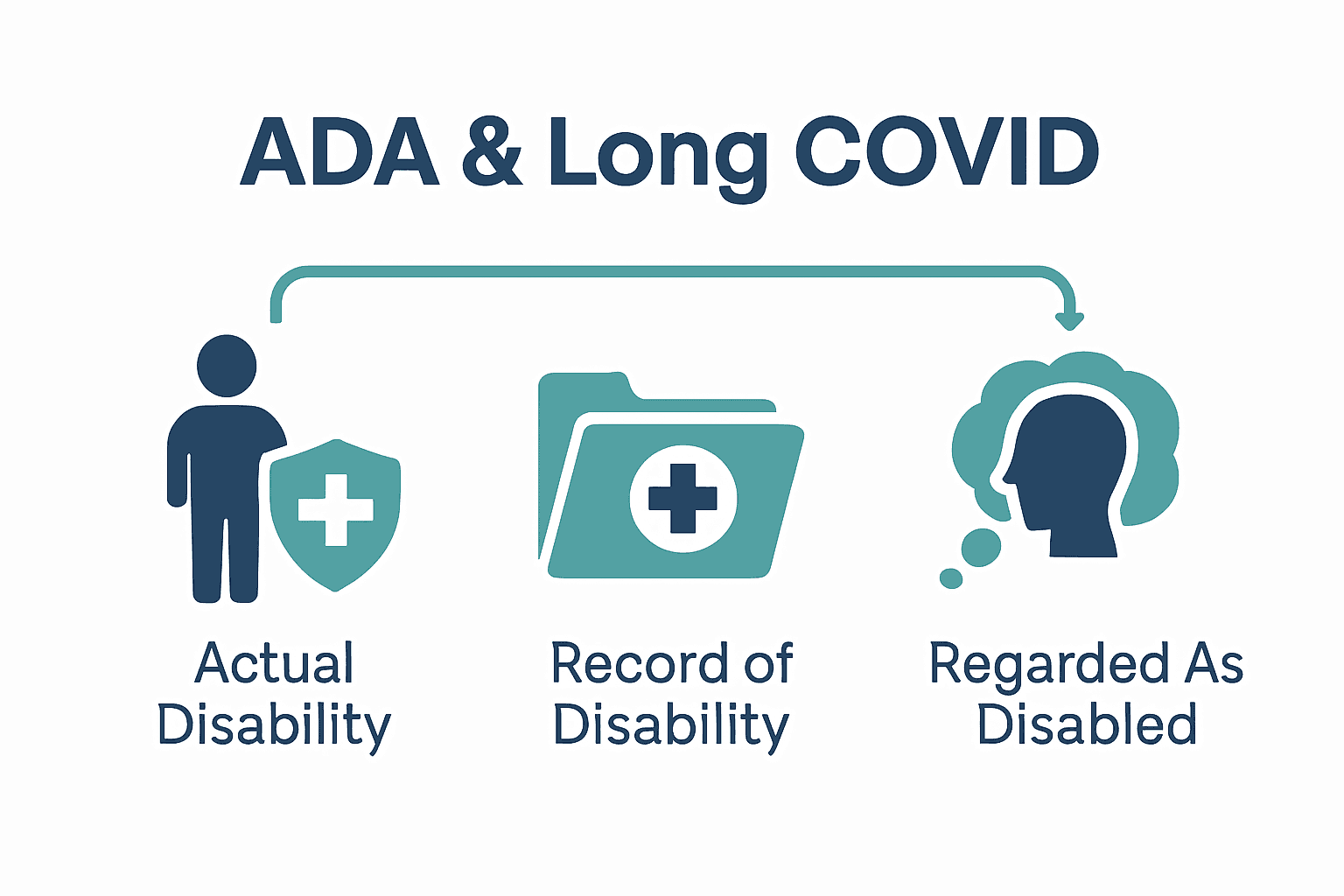
The disability determination isn’t straightforward. The Equal Employment Opportunity Commission (EEOC) clarifies that Long COVID may qualify under three specific ADA definitions:
- Actual Disability: Where the condition significantly restricts daily functioning
- Record of Disability: Documentation demonstrating past substantial limitations
- Regarded As Disabled: When an employer perceives the condition as disabling
Crucially, these limitations need not be permanent or severely debilitating to be considered substantially limiting. Each case requires careful evaluation of how the condition impacts an individual’s ability to perform essential job functions. This means two employees with Long COVID might receive different accommodation recommendations based on their unique medical circumstances.
The assessment involves examining specific symptoms like extreme fatigue, cognitive difficulties, respiratory challenges, or neurological impairments that meaningfully interfere with work performance. Employers must engage in an interactive process with employees, considering reasonable workplace modifications that enable continued productivity without causing undue organizational hardship.
Here’s a comparison of ADA disability definitions as they relate to Long COVID:
| ADA Definition | Description | How It Applies to Long COVID |
|---|---|---|
| Actual Disability | Condition substantially limits major life activity | Significant impact on daily job functions |
| Record of Disability | Documentation of past substantial limitations | Medical records of prior Long COVID effects |
| Regarded As Disabled | Employer perceives employee as disabled | Treated as disabled due to Long COVID |
Legal Protections for Long COVID Disabilities
In a landmark move, the U.S. Department of Justice and HHS issued joint guidance in July 2021 confirming legal protections for individuals with Long COVID. This comprehensive directive establishes that Long COVID can qualify as a disability under multiple federal laws, including the Americans with Disabilities Act (ADA), the Rehabilitation Act, and the Affordable Care Act.
The legal framework provides critical workplace safeguards for employees experiencing Long COVID. Read more about workplace disability protections that ensure employers must provide reasonable accommodations when the condition substantially limits major life activities. Key protections include:
- Mandatory workplace modifications
- Protection against discrimination
- Potential short-term accommodations even during diagnostic processes
- Preservation of employment rights
According to state-level legal summaries, employers covered by the ADA are required to offer accommodations that enable employees to perform essential job functions. These accommodations can range from flexible scheduling and remote work options to modified duties or specialized equipment. The critical requirement is that such adjustments do not impose an undue hardship on the employer’s operations.
Moreover, these protections recognize the complex and variable nature of Long COVID. The legal guidelines acknowledge that symptoms can fluctuate, and accommodations might need periodic reassessment. This flexible approach ensures that employees with Long COVID receive individualized support, promoting workplace inclusivity and protecting workers’ rights during challenging medical circumstances.
Reasonable Accommodations and Interactive Process
The interactive process is a critical mechanism for employees with Long COVID to secure appropriate workplace accommodations. According to the Equal Employment Opportunity Commission (EEOC), this collaborative dialogue involves both the employer and employee working together to identify effective modifications that enable job performance.
The EEOC provides specific examples of reasonable accommodations tailored to Long COVID symptoms:
- Quiet workspaces to manage brain fog
- Modified lighting to address headache challenges
- Scheduled rest breaks for employees experiencing shortness of breath
- Flexible scheduling or telework options for managing fatigue
- Temporary removal of physically demanding tasks
Successful accommodation requires open communication and mutual flexibility. Employees should be prepared to provide medical documentation explaining their specific limitations, while employers must approach the process with good faith and creativity. The goal is finding practical solutions that allow continued employment without creating undue hardship for the organization.

Key to this process is recognizing that Long COVID accommodations are not permanent or uniform. Symptoms can fluctuate, so accommodations might need periodic review and adjustment. This dynamic approach ensures that workplace support remains responsive to an employee’s changing medical needs, maintaining both productivity and individual well-being.
Employer and Employee Responsibilities in Disputes
In Long COVID accommodation disputes, both employers and employees bear specific legal responsibilities. The Equal Employment Opportunity Commission (EEOC) outlines clear guidelines for navigating these complex workplace interactions, emphasizing a collaborative and transparent approach to addressing disability-related challenges.
Employer responsibilities are multifaceted. Employers can request reasonable medical documentation when the disability is not immediately apparent, with support from experienced employment law attorneys who understand the nuanced legal landscape. Key obligations include:
- Exploring potential accommodations in good faith
- Avoiding discrimination based on disability
- Maintaining confidentiality of medical information
- Demonstrating that proposed accommodations would create undue hardship
Employees, conversely, must actively participate in the interactive process. According to legal guidance, failing to cooperate with providing necessary medical documentation can result in a lawful denial of accommodation requests. This means employees should be prepared to:
- Communicate specific functional limitations
- Provide appropriate medical documentation
- Engage constructively in finding workplace solutions
- Be flexible about potential accommodation options
Crucially, employers are not required to eliminate essential job functions, accept reduced productivity, or provide accommodations that would impose significant operational challenges. The goal is finding a reasonable middle ground that allows employees with Long COVID to continue performing their core job responsibilities while receiving appropriate support.
Resolving Accommodation Disputes and Legal Remedies
When workplace accommodations for Long COVID break down, employees have multiple avenues for seeking legal recourse. According to the Americans with Disabilities Act (ADA), individuals can pursue remedies if an employer fails to provide reasonable accommodations for a qualifying disability.
The primary legal remedies include:
- Filing a formal charge with the Equal Employment Opportunity Commission (EEOC)
- Exploring mediation options for employment disputes
- Pursuing litigation through federal or state court systems
- Seeking administrative relief through workplace tribunals
- Requesting administrative investigations into discrimination
Importantly, the EEOC emphasizes that the conclusion of the COVID-19 public health emergency does not automatically terminate existing accommodations. Employers must continue evaluating individual employee needs and maintain the interactive process for accommodation requests. This means workers with ongoing Long COVID symptoms retain their rights to workplace support, even as pandemic-related protocols evolve.
Navigating these disputes requires careful documentation, clear communication, and potentially professional legal guidance. Employees should maintain detailed records of their medical condition, accommodation requests, employer communications, and any adverse actions. Consulting with an employment law attorney can help assess the strength of a potential claim, understand procedural requirements, and determine the most effective strategy for protecting one’s workplace rights and securing appropriate accommodations.
Facing a Disability Accommodation Dispute Over Long COVID?
When your rights to reasonable accommodation for Long COVID are being ignored or denied, the process can feel overwhelming. You may be dealing with ongoing symptoms, workplace misunderstandings, or even discrimination. This guide highlights how important it is to understand legal protections and the interactive process for Long COVID disabilities. At Serendib Law Firm, we are deeply familiar with the complexities of both the ADA and California employment laws. If you are unsure how to move forward with your claim or your employer is not acting in good faith, our team can step in immediately.
You do not have to face these challenges alone. Explore our Disability Discrimination resources or learn more about your legal options with our Employment Law expertise. Take action now to protect your rights and secure the accommodations you deserve. Visit Serendib Law Firm today to schedule your free consultation and get help from attorneys who put your well-being first.
Frequently Asked Questions
What qualifies as a disability under the Americans with Disabilities Act (ADA) for Long COVID?
Long COVID qualifies as a disability under the ADA if it substantially limits one or more major life activities. The determination is based on an individualized assessment of how the condition restricts daily functioning.
What are reasonable accommodations for employees with Long COVID?
Reasonable accommodations may include flexible scheduling, remote work options, modifications to job duties, quiet workspaces, scheduled rest breaks, or removal of physically demanding tasks. The specific accommodations depend on the employee’s symptoms and individual situation.
How can employees initiate the interactive process for accommodations due to Long COVID?
Employees can initiate the interactive process by communicating their specific limitations to their employer and providing necessary medical documentation. Open communication is crucial for identifying effective modifications that allow for continued job performance.
What should employees do if their accommodation requests are denied?
If accommodation requests are denied, employees can file a formal charge with the Equal Employment Opportunity Commission (EEOC), explore mediation options, or seek legal advice for potential litigation. Maintaining records of medical conditions and communications can help strengthen their case.
Recommended
https://www.serendiblaw.com/disability-accommodation-long-covid/?fsp_sid=275


Comments
Post a Comment