Gig Workers Misclassification under California’s AB5 and Prop 22 Updates

Gig workers are changing the way Americans work, and digital platforms now connect millions to flexible jobs every day. More than one-third of US workers now take on gig jobs for extra income or as their main gig. You might expect this freedom to mean more rights and benefits for everyone. The surprise is many gig workers lose out on basics like minimum wage and health coverage because of how they are classified—and often, that classification is wrong.
Table of Contents
- What Are Gig Workers And Why Does Misclassification Matter?
- California’s AB5: Defining Employment Status And Its Impact
- Proposition 22: A Response To AB5 And Its Controversies
- Key Concepts In Misclassification: Factors And Consequences
- Real-World Examples: Misclassification Cases And Their Outcomes
Quick Summary
| Takeaway | Explanation |
|---|---|
| Gig workers need clear classification | Proper worker classification is essential for protecting rights and benefits. Misclassification impacts wages and protections significantly. |
| AB5 establishes stringent criteria for classification | California’s AB5 law requires a three-part test for companies to classify workers, ensuring better rights for many. |
| Proposition 22 aims for alternative worker classification | This initiative seeks to maintain the independent contractor model while offering limited benefits, leading to controversy. |
| Misclassification can lead to significant legal consequences | Companies face financial penalties and legal liabilities when workers are incorrectly classified, affecting their operations. |
| Understanding misclassification is critical for both workers and employers | Navigating worker classification helps protect rights and ensures compliant business practices in the gig economy. |
What Are Gig Workers and Why Does Misclassification Matter?
Gig workers represent a rapidly growing segment of the modern workforce, characterized by their flexible, project-based employment arrangements. These workers typically provide services through digital platforms and technology-driven marketplaces, performing tasks ranging from driving and delivery to freelance writing and professional consulting.
Understanding Gig Worker Classification
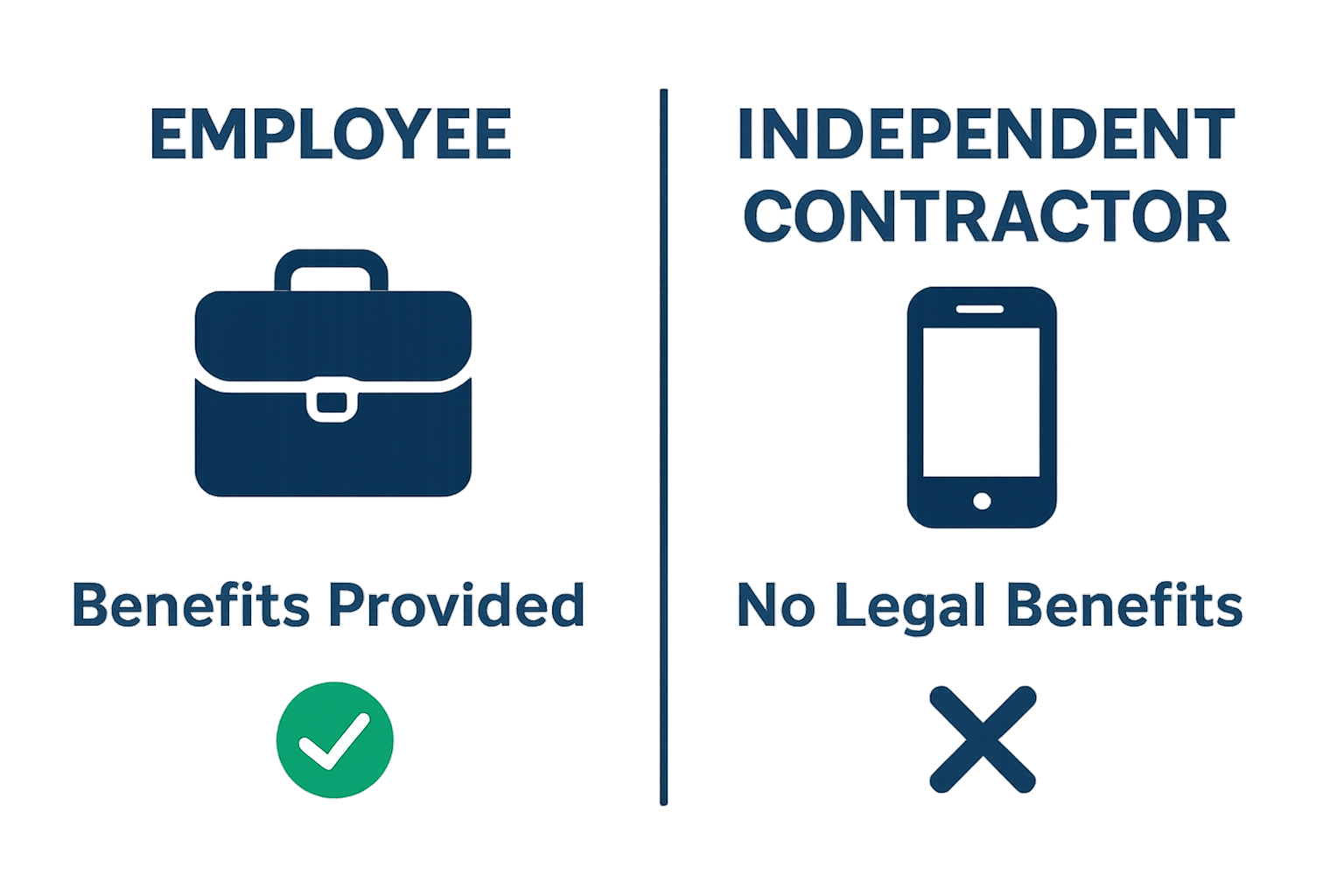
At the core of the gig worker landscape is the critical distinction between independent contractors and traditional employees. Independent contractors are self-employed individuals who provide services to businesses under specific contractual agreements, maintaining significant control over their work schedules, methods, and service delivery. Our experienced Orange employment law attorneys can help workers understand these nuanced classification challenges.
Key characteristics of gig workers include:
- Flexibility in work hours and location
- Use of digital platforms for job matching
- Multiple income sources
- Limited employer-provided benefits
- Self-management of work responsibilities
The Impact of Worker Misclassification
Misclassification occurs when companies improperly categorize workers as independent contractors instead of employees, which can significantly impact worker rights and protections. According to research from the Economic Policy Institute, worker misclassification can deprive workers of critical benefits such as:
- Minimum wage protections
- Overtime compensation
- Health insurance
- Workers’ compensation
- Unemployment insurance
- Collective bargaining rights
The consequences of misclassification extend beyond individual workers, affecting broader labor standards and social safety nets. By denying workers proper classification, companies can reduce labor costs while shifting significant financial and legal risks onto the workforce, creating systemic inequities in employment practices.
Understanding these complexities is crucial for both workers and businesses navigating the evolving landscape of modern employment relationships.
California’s AB5: Defining Employment Status and Its Impact
The California Assembly Bill 5 (AB5) represents a landmark legislative effort to address worker classification challenges in the gig economy. Signed into law in 2019, this legislation fundamentally transformed how businesses determine worker status, introducing a stringent three-part “ABC test” to differentiate between independent contractors and employees.
The ABC Test: A New Framework for Worker Classification
Under AB5, businesses must prove three critical conditions to classify a worker as an independent contractor. Our comprehensive guide on employee classification provides deeper insights into this complex legal landscape.
The ABC test requires employers to demonstrate that a worker:
- Is free from the company’s control and direction in performing work
- Performs work outside the usual course of the company’s business
- Is customarily engaged in an independently established trade or occupation related to the work performed
Implications for Gig Economy Platforms
AB5 dramatically impacted major gig economy platforms like Uber, Lyft, and DoorDash, challenging their long-standing independent contractor model. According to research from UC Berkeley Labor Center, the legislation could potentially reclassify hundreds of thousands of workers as employees, entitling them to:
- Minimum wage protections
- Overtime compensation
- Healthcare benefits
- Unemployment insurance
- Workers’ compensation coverage
- Collective bargaining rights
The legislation sparked intense legal debates and corporate resistance, with many platforms investing significant resources in challenging its implementation. Some companies pursued alternative strategies, such as ballot initiatives like Proposition 22, which sought to create a modified classification system specifically for app-based drivers.
By establishing clearer definitions of employment status, AB5 aimed to protect worker rights and ensure fair compensation in an increasingly digital and flexible workforce landscape.
The following table summarizes the main features and differences between California’s AB5 law and Proposition 22, as described in the article.
| Feature | AB5 | Proposition 22 |
|---|---|---|
| Worker Classification Approach | Uses the stringent three-part ABC test | Creates a unique category for app-based drivers |
| Benefits & Protections | Minimum wage, overtime, health insurance | Minimum earnings, limited healthcare, accident insurance |
| Impact on Gig Platforms | Challenges independent contractor model | Preserves contractor status with some benefits |
| Legal Controversies | Faced resistance from tech companies | Ruled unconstitutional; under ongoing appeals |
| Scope | Applies broadly to most employers | Applies specifically to app-based drivers |
Proposition 22: A Response to AB5 and Its Controversies
Proposition 22 emerged as a direct response to California’s AB5 legislation, representing a strategic effort by app-based technology companies to carve out a unique legal classification for their workers. Backed by major gig economy platforms like Uber, Lyft, DoorDash, and Instacart, this ballot initiative sought to maintain their existing independent contractor model while offering limited alternative benefits.
The Mechanics of Proposition 22
The proposition created a specialized category of workers for app-based drivers and delivery workers, establishing a compromise between traditional employee status and independent contractor classification. Our California employment law experts can provide deeper insights into the nuanced legal implications of this legislation.
Key provisions of Proposition 22 included:
- Guaranteed minimum earnings for active driving time
- Healthcare subsidies for drivers working over 15 hours per week
- Accident insurance and occupational accident insurance
- Vehicle maintenance and repair stipends
- Limitations on workplace protections compared to traditional employee benefits
Legal Challenges and Broader Implications
According to research from the University of California Berkeley Labor Center, Proposition 22 faced significant legal scrutiny. In August 2021, a California Superior Court judge ruled the proposition unconstitutional, arguing that it violated the state constitution by limiting the legislature’s power to grant workers’ compensation and unemployment benefits.
The key controversies surrounding Proposition 22 included:
- Limiting workers’ ability to unionize
- Restricting comprehensive employee protections
- Creating a separate and potentially unequal classification system
- Challenging traditional labor law frameworks
Despite the initial court ruling, the proposition remained in effect pending appeals, highlighting the complex and evolving legal landscape surrounding gig worker classification in California. The ongoing legal battles underscore the tension between technological innovation, labor rights, and traditional employment models.
Key Concepts in Misclassification: Factors and Consequences
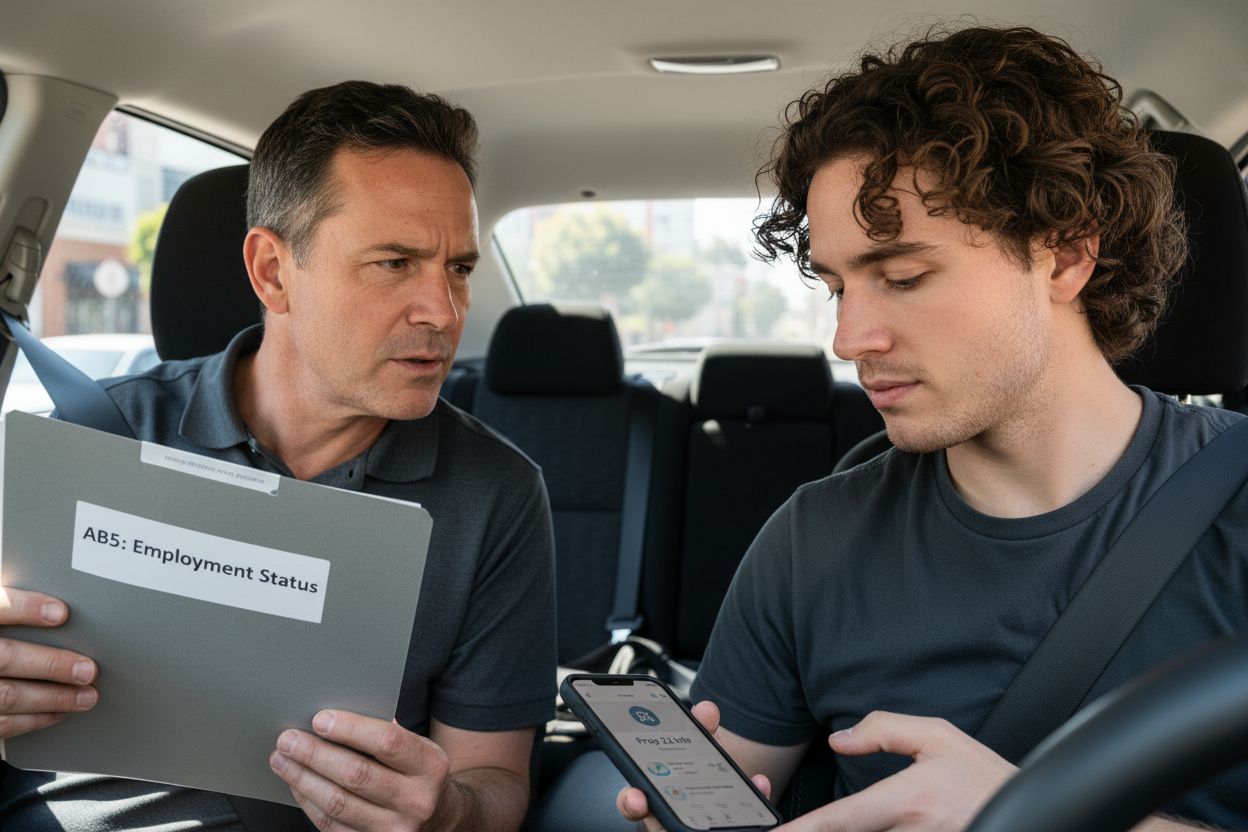
Worker misclassification represents a complex legal and economic challenge that extends far beyond simple employment categorization. This practice involves systematically mislabeling workers as independent contractors when they should be classified as employees, with profound implications for worker rights, business operations, and broader economic structures.
Defining Misclassification Criteria
Misclassification occurs when employers improperly categorize workers to avoid providing legally mandated benefits and protections. Our California employment law experts can help workers understand their rights in these nuanced situations.
Critical factors determining worker classification include:
- Degree of control over work performance
- Economic dependence on the employer
- Integration into the company’s core business operations
- Level of skill and independent judgment required
- Permanence of the working relationship
Economic and Legal Ramifications
According to research from the U.S. Department of Labor, worker misclassification creates significant systemic challenges. The practice can result in substantial financial and legal consequences for businesses, including:
- Retroactive payment of unpaid wages and benefits
- Substantial tax penalties and back taxes
- Potential civil and criminal legal liabilities
- Mandatory compensation for denied worker protections
- Potential invalidation of existing contractual arrangements
Moreover, misclassification undermines fundamental worker protections established by labor laws. By circumventing legal requirements, companies effectively transfer financial risks and operational expenses onto workers, creating precarious employment conditions that disproportionately impact vulnerable workforce segments.
Understanding these intricate classification dynamics is crucial for both workers and employers navigating the increasingly complex modern employment landscape.
This table outlines the main factors used to determine whether a worker is misclassified as an independent contractor rather than an employee under California law.
| Misclassification Factor | Explanation |
|---|---|
| Degree of Control | Extent to which the employer directs work performance |
| Economic Dependence | Level of financial reliance the worker has on the company |
| Integration with Core Business | Whether the worker’s role is central to company operations |
| Skill and Independent Judgment | Amount of specialized skills and autonomy demonstrated |
| Permanence of Working Relationship | Duration and continuity of the working arrangement |
Real-World Examples: Misclassification Cases and Their Outcomes
Misclassification cases have become increasingly prominent in recent years, revealing the complex legal challenges surrounding worker classification in the modern economy. These real-world scenarios demonstrate the significant financial and legal implications for businesses that improperly categorize their workforce.
Landmark Tech Industry Misclassification Cases
Technology companies have been at the forefront of worker misclassification disputes. Our employment law experts can provide deeper insights into these complex legal battles.
Notable cases include:
- Uber and Lyft’s prolonged legal battles in California
- DoorDash’s settlement of misclassification claims
- FedEx’s multimillion-dollar settlements across multiple states
- Microsoft’s historic contractor classification review
Financial and Legal Consequences
According to research from the Economic Policy Institute, misclassification cases have resulted in significant financial penalties. The most impactful outcomes demonstrate the substantial risks businesses face:
- Uber settled a class-action lawsuit for $20 million, agreeing to reclassify drivers in California and Massachusetts
- FedEx paid over $240 million in settlements across multiple states
- Microsoft paid $97 million to resolve a long-standing contractor classification dispute
- DoorDash agreed to a $100 million settlement for misclassification claims
These cases illustrate the complex legal landscape surrounding worker classification, highlighting the critical importance of properly understanding and applying employment classification standards. The financial and reputational risks of misclassification can be substantial, underscoring the need for businesses to carefully evaluate their workforce classification practices.
Protect Your Rights in California’s Evolving Gig Economy
Navigating gig worker misclassification in light of AB5 and Proposition 22 can be overwhelming. Misclassification can lead to lost wages, denied benefits, and confusion about your legal protections. Whether you are a gig worker questioning your employment status or a business struggling to meet compliance, the risks are too high to ignore. It is important to understand the criteria and consequences outlined in California law—your livelihood may depend on it. Explore more about your employment rights in the California Employment Law section to see how these laws impact you.
Do not let uncertainty or company missteps put your future in jeopardy. Learn how the experienced team at Serendib Law Firm can help resolve questions of worker classification and protect your interests. We offer dedicated guidance and free consultations for those facing workplace disputes. Contact us today to take the first step toward clarity and fair treatment.
Frequently Asked Questions
What is the ABC test for gig worker classification?
The ABC test is a three-part legal standard introduced by California’s AB5 that businesses must meet to classify a worker as an independent contractor. It requires proof that the worker is free from the company’s control, performs work outside the usual business activities, and is engaged in an independently established trade.
How does misclassification affect gig workers?
Misclassification deprives gig workers of essential rights and protections such as minimum wage, overtime compensation, health insurance, and unemployment benefits. It shifts financial risks and burdens onto the workers while allowing companies to reduce labor costs.
What impact did Proposition 22 have on gig workers?
Proposition 22 created a unique classification for app-based drivers, allowing them to retain some independent contractor benefits while limiting traditional employee protections. It guarantees minimum earnings and healthcare subsidies but restricts unionization and comprehensive benefits.
What are the potential consequences for companies that misclassify workers?
Companies that misclassify workers can face significant financial repercussions, including retroactive payments for unpaid wages, tax penalties, and legal liabilities. Landmark cases have seen businesses pay millions in settlements for misclassification disputes.
Recommended
- Experienced Orange Employment Law Attorneys
- Am I an Employee or Independent Contractor? | Serendib Law Firm
- Am I an Employee or Independent Contractor? | Serendib Law Firm
- PAGA Class Actions | Serendib Law Firm
https://www.serendiblaw.com/gig-workers-misclassification/?fsp_sid=299


Comments
Post a Comment