Meal and Rest Break Violations Impact Hospitality Workers

Missing out on legally required breaks is a reality for far too many american hospitality workers in Buena Park, California. When employers cut corners on meal or rest periods, workers not only lose time to recharge but also risk their health and wages. Studies show a large percentage of hospitality employees in California experience break violations each year. Understanding the rules around breaks and discovering your rights can open the door to legal solutions and better workplace conditions.
Table of Contents
- Defining Meal and Rest Break Violations
- California Laws Shaping Hospitality Breaks
- Types of Break Violations in Hospitality
- Employer Duties and Worker Rights Explained
- Legal Risks and Compensation for Violations
- Taking Action: Filing Claims and Seeking Support
Key Takeaways
| Point | Details |
|---|---|
| Meal and Rest Break Rights | Hospitality workers in California are entitled to specific meal and rest breaks under state law, which must be respected by employers to avoid legal repercussions. |
| Documentation is Essential | Workers should meticulously document any missed or interrupted breaks, as this evidence is vital for potential legal claims. |
| Employer Penalties | Noncompliance with break regulations can result in significant financial penalties for employers, creating an incentive for better adherence to labor laws. |
| Various Claim Channels | Hospitality workers can file claims through multiple channels, including the Labor Commissioner’s Office and civil litigation, to seek compensation for violations of break rights. |
Defining Meal and Rest Break Violations
Meal and rest break violations represent serious workplace infractions that significantly impact hospitality workers in California. These violations occur when employers fail to provide legally mandated breaks or compensate employees appropriately during designated break periods. Break time regulations establish clear guidelines about when and how workers should receive uninterrupted time away from work duties.
Under California labor laws, most hospitality employees are entitled to specific break protections. Meal break violations typically include scenarios where employers: prevent workers from taking full 30-minute unpaid meal breaks within the first five hours of their shift, require employees to remain on premises during breaks, or fail to provide a suitable break area. Rest break violations happen when workers are denied their right to a 10-minute paid rest period for every four hours worked, or when these breaks are interrupted by work responsibilities.
The legal implications of these violations can be substantial. Workplace break regulations outline potential penalties for noncompliant employers, including monetary compensation for missed breaks, additional hour-wage payments, and potential legal action. Hospitality workers experiencing consistent break violations may be entitled to back pay, penalties, and other forms of compensation through employment law claims.
Pro tip: Document every instance of a missed or interrupted break by recording the date, time, and specific circumstances to build a strong potential legal case against workplace violations.
California Laws Shaping Hospitality Breaks
California’s labor regulations provide robust protections for hospitality workers, establishing some of the most comprehensive break requirements in the United States. California meal and rest break laws mandate specific guidelines that employers must follow to ensure worker well-being and fair compensation. These laws recognize the demanding nature of hospitality work and aim to protect employees from excessive strain and potential exploitation.
Under California law, hospitality workers are entitled to specific break protections that go beyond federal standards. For employees working more than five hours, employers must provide an unpaid 30-minute meal break that allows workers to be completely relieved of all duties. Additionally, workers are guaranteed a 10-minute paid rest break for every four hours worked or substantial fraction thereof. Critical exceptions exist for certain industries and unique work arrangements, but the general rule remains designed to protect worker health and productivity.
State regulations outline strict penalties for employers who fail to comply with these break requirements. When meal or rest breaks are not provided as mandated, employers must pay additional compensation - typically one hour of pay at the employee’s regular rate for each violation. This penalty serves as a significant deterrent, encouraging hospitality businesses to respect worker break rights and maintain proper scheduling and staffing practices.
Pro tip: Keep a detailed personal log of your work shifts, breaks, and any instances where you were denied legally mandated rest or meal periods to support potential future legal claims.
Types of Break Violations in Hospitality
Hospitality workers frequently encounter multiple forms of break violations that can significantly impact their workplace rights and well-being. Common workplace break violations encompass a range of problematic practices that systematically undermine employee protections. These violations often manifest through subtle yet pervasive methods that prevent workers from receiving their legally mandated rest and meal periods.
The most prevalent break violations in the hospitality industry include scenarios where employers require workers to remain on-call during breaks, effectively preventing genuine rest. Workers might be asked to keep their communication devices active, remain within immediate work proximity, or be ready to respond to work emergencies during what should be uninterrupted break time. Department of Labor case studies reveal that being ‘engaged to wait’ constitutes a serious violation, where employees are technically on break but still expected to be immediately available for work responsibilities.
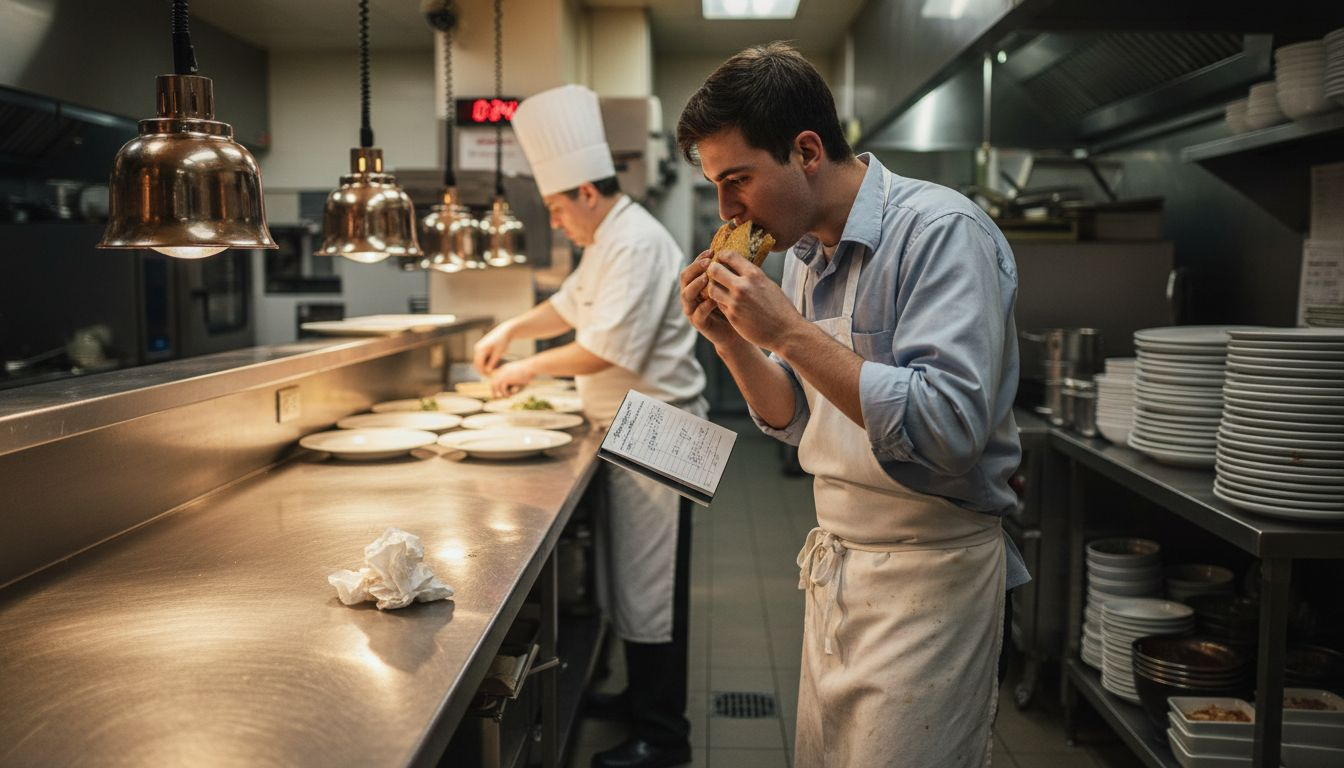
Additional break violations specific to hospitality workers include refusing to provide suitable break areas, interrupting meal breaks with work-related tasks, failing to provide full 30-minute meal breaks within the first five hours of a shift, and denying the mandatory 10-minute paid rest periods for every four hours worked. Some employers also attempt to circumvent break laws by pressuring workers to skip breaks, combining breaks improperly, or creating workplace cultures that subtly discourage employees from taking their legally guaranteed rest periods.
Here’s a summary of common break violations and their typical impact on hospitality workers:
| Violation Type | How It Occurs | Impact on Workers |
|---|---|---|
| On-call during breaks | Required to stay reachable or nearby | No genuine rest, increased stress |
| Interrupted meal periods | Breaks disrupted by work obligations | Reduced recovery, fatigue |
| Poor break environments | Lack of suitable or safe break areas | Lower morale, discomfort |
| Pressure to skip breaks | Supervisors discourage taking scheduled breaks | Rights undermined, burnout |
| Insufficient rest breaks | Not receiving 10-minute breaks per 4 hours | Mental exhaustion increases |
Pro tip: Photograph or digitally document any workplace communication or scheduling that suggests you are being denied proper break times, as this evidence can be crucial in potential legal proceedings.
Employer Duties and Worker Rights Explained
Hospitality workers possess specific legal protections that define the critical balance between employer obligations and employee rights regarding meal and rest breaks. Worker break rights establish clear guidelines that mandate employers provide structured opportunities for rest and recuperation during work shifts. These protections recognize the physically and mentally demanding nature of hospitality work and aim to prevent worker exploitation.
Employers have several fundamental duties under California law. They must provide uninterrupted breaks that allow workers to be completely relieved of work responsibilities, including ensuring employees can leave their immediate work area during designated break times. Legal classifications of worker rights reveal that employers must not only schedule appropriate breaks but also create workplace environments that genuinely support workers taking their legally mandated rest periods. This includes providing suitable break areas, avoiding scheduling practices that discourage break usage, and maintaining accurate documentation of break allocations.
The legal framework also establishes specific compensation requirements when break rights are violated. Employers who fail to provide mandated breaks must typically compensate workers with additional hour-wage payments, creating a financial incentive for compliance. Workers have the right to refuse work during designated break times, reject on-call requirements during breaks, and seek remedies if their break rights are systematically violated. These protections extend beyond mere scheduling, encompassing the broader goal of ensuring worker health, safety, and fair treatment in the demanding hospitality workplace.
Pro tip: Maintain a personal log of your work shifts, break times, and any instances of break denial to build a strong documentation trail if you need to pursue legal recourse.
Legal Risks and Compensation for Violations
Employers in the hospitality industry face substantial financial and legal consequences for meal and rest break violations. Comprehensive employer penalties can range from monetary fines to significant legal exposure, with potential penalties reaching up to $1,000 per individual violation. These financial risks create a powerful deterrent against systematic break time noncompliance, compelling businesses to take worker break rights seriously.
The legal framework provides multiple avenues for hospitality workers to recover compensation when their break rights are violated. Compensation mechanisms typically include premium pay for missed breaks, retroactive payment for interrupted meal periods, and potential additional damages for repeated or intentional violations. Legal recovery options demonstrate that workers can pursue claims through administrative complaints, wage board hearings, or direct civil litigation, with the potential to recover not just immediate financial losses but also punitive damages in cases of egregious misconduct.
Repeat violations can dramatically escalate an employer’s legal risk, potentially triggering more severe sanctions. Hospitality businesses found consistently violating break time regulations may face increased scrutiny from labor enforcement agencies, higher financial penalties, and potential loss of business licenses. The cumulative impact of these violations can result in substantial financial strain, reputational damage, and legal consequences that far exceed the initial cost of providing proper worker breaks.
Pro tip: Preserve all documentation related to work schedules, missed breaks, and communication with management to strengthen potential legal claims against break time violations.
Taking Action: Filing Claims and Seeking Support
Hospitality workers facing meal and rest break violations have multiple pathways to seek justice and compensation. Legal claim filing processes provide critical guidance for documenting and pursuing workplace violations. The process typically involves gathering comprehensive evidence, including work schedules, communication records, and detailed accounts of missed or interrupted breaks.
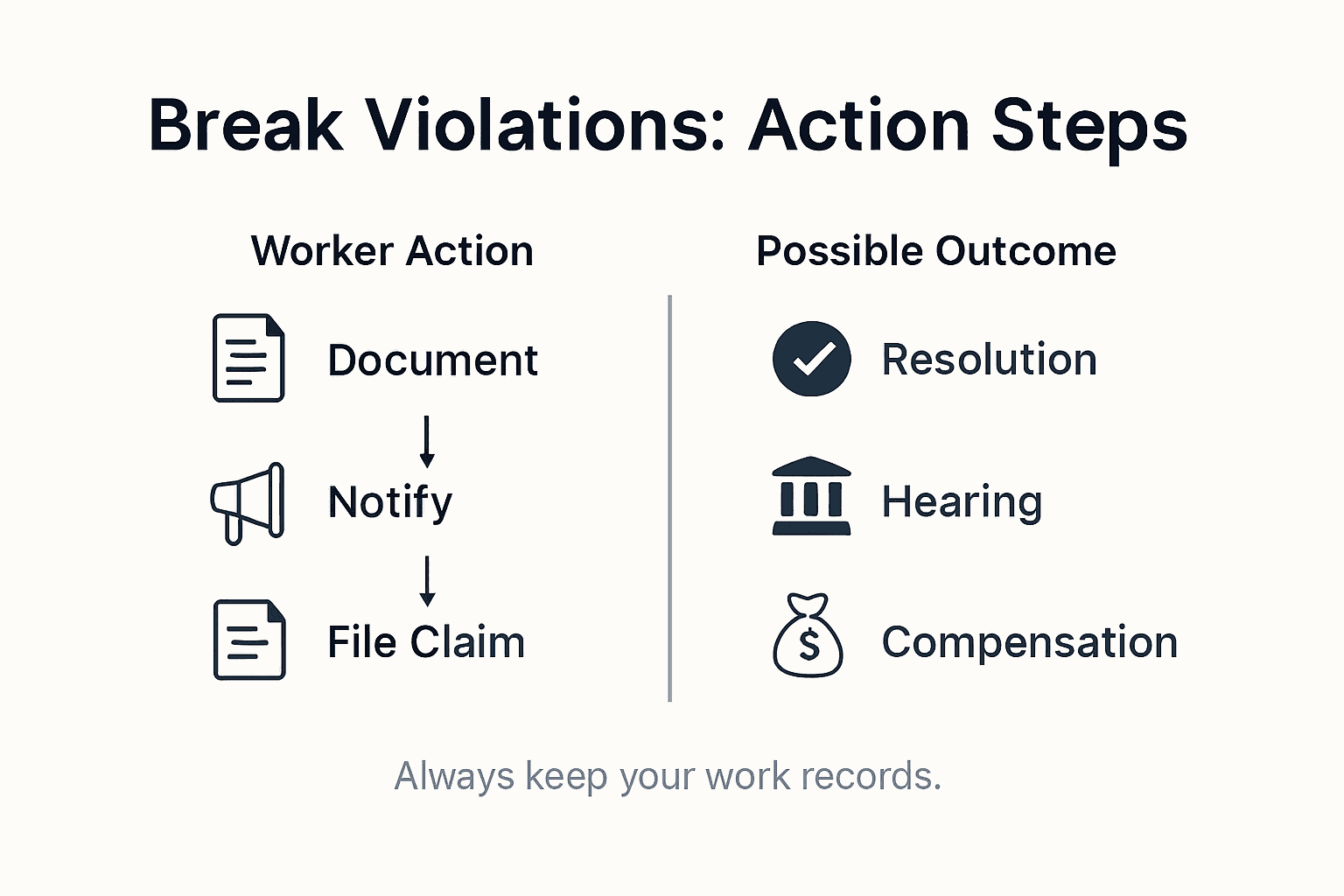
Workers can initiate claims through several channels, including filing complaints with the California Labor Commissioner’s Office, submitting wage claims, or pursuing civil litigation. Documentation strategies are crucial, requiring workers to maintain precise records of work hours, break times, and instances of break violations. Workforce support resources offer additional assistance, connecting hospitality workers with advocacy groups, legal support networks, and organizations specializing in labor rights enforcement.
The claims process involves multiple potential stages, from informal resolution attempts to administrative hearings and potential court proceedings. Workers may be entitled to recover premium wages for missed breaks, potential penalties against employers, and compensation for time worked during mandated break periods. Some workers also find support through union representation, workers’ advocacy groups, and specialized legal clinics that focus on employment rights in the hospitality sector.
Here is a quick reference on steps and channels for filing break violation claims:
| Claim Step | Main Channel | Description |
|---|---|---|
| Initial Evidence Gathering | Worker documentation | Collect schedules and break records |
| State Complaint Filing | Labor Commissioner’s Office | Submit formal complaints |
| Wage Claim Submission | Wage board or administrative hearing | Seek retroactive payments |
| Civil Litigation | Court system | Pursue damages and employer penalties |
| Support & Advocacy | Unions, legal clinics | Get assistance and representation |
Pro tip: Create a dedicated digital or physical folder to store all work-related documentation, including schedules, pay stubs, and written communications, which can serve as critical evidence in potential break violation claims.
Protect Your Rights Against Meal and Rest Break Violations in Hospitality
Hospitality workers facing meal and rest break violations deserve strong legal support to reclaim their rightful compensation and workplace protections. If you have experienced missed meal breaks, denied rest periods, or pressure to stay on-call during your breaks, these are serious issues affecting your health and earnings. Understanding your legal rights under California law is the first step toward holding employers accountable for wage violations and improper break practices.
Our experienced team at Serendib Law Firm is dedicated to fighting for hospitality employees who face these challenges every day. Explore our Meal and Rest Breaks Archives | Serendib Law Firm to learn more about your rights and connect with trusted attorneys ready to help. Don’t wait while violations continue. Contact us at https://www.serendiblaw.com/ today for a free consultation and start building the case you deserve. Protect yourself with knowledgeable advocates who understand California wage laws and the hospitality industry’s unique demands.
For broader information about wage issues, visit our Wage Violations Archives | Serendib Law Firm and take action now to secure fair treatment and rightful compensation.
Frequently Asked Questions
What are meal and rest break violations?
Meal and rest break violations occur when employers fail to provide legally mandated breaks or compensation during designated break periods for hospitality workers. These violations can significantly impact employee well-being and rights.
What are the specific break protections for hospitality workers?
Hospitality workers are entitled to a 30-minute unpaid meal break for shifts over five hours, as well as a 10-minute paid rest break for every four hours worked. Employers must provide breaks that allow workers to be fully relieved of their duties.
What should I do if my breaks are interrupted or denied?
You should document every instance of a missed or interrupted break, including date, time, and specific circumstances. This documentation will help build a strong case if you decide to pursue legal action against your employer.
What are the legal consequences for employers violating break laws?
Employers who fail to comply with break laws may face substantial penalties, including one hour of pay for each violation, increased scrutiny from labor enforcement agencies, and potential loss of business licenses.
Recommended
- Understanding Failure to Provide Meal and Rest Breaks in Restaurants | Serendib Law Firm
- Tustin Break-Time Law Violations Impact Restaurant Staff | Serendib Law Firm
- Complete Guide to Missed Rest Breaks in Santa Ana | Serendib Law Firm
- Meal and Rest Break Violations in Santa Ana Construction
https://www.serendiblaw.com/meal-and-rest-break-violations-in-buena-park/?fsp_sid=258


Comments
Post a Comment