Religious Dress Disputes: Complete Guide for Fountain Valley

Nearly one in five workplace discrimination charges last year involved religious bias, according to the EEOC. Many employees face challenges when their religious dress or grooming needs do not align with strict company policies. Understanding how these disputes arise and what protections exist can help both workers and employers navigate sensitive conversations, reduce misunderstandings, and support fair treatment for all faiths.
Table of Contents
- Defining Religious Dress And Grooming Disputes
- Types Of Religious Accommodation Requests
- Key Laws Governing Workplace Religious Rights
- Employer Obligations And Compliance Steps
- Employee Rights And Legal Remedies
Key Takeaways
| Point | Details |
|---|---|
| Religious Disputes | Conflicts between employee religious practices and workplace policies necessitate careful evaluation by employers. |
| Legal Protections | Title VII of the Civil Rights Act of 1964 prohibits religious discrimination and mandates reasonable accommodations in the workplace. |
| Employer Obligations | Employers must engage in a proactive process to assess and document accommodation requests, ensuring fairness and legal compliance. |
| Employee Rights | Employees have the right to request accommodations and can file complaints with the EEOC if their requests are improperly denied. |
Defining Religious Dress And Grooming Disputes
Religious dress and grooming disputes represent complex workplace challenges where an employee’s sincerely held religious beliefs conflict with established organizational policies. According to the EEOC, these disputes emerge when workers seek accommodations for religious practices that may differ from standard workplace dress or grooming expectations.
These disputes can encompass a wide range of religious expressions, including religious clothing, head coverings, specific hairstyles, and facial hair practices. The EEOC stipulates that employers must reasonably accommodate these religious practices unless doing so would create an undue hardship for the organization. This means businesses cannot arbitrarily reject religious dress or grooming requirements without demonstrating a substantial operational burden.
Key considerations in religious dress and grooming disputes typically involve:
- Sincerity of the employee’s religious belief
- Potential workplace safety implications
- Reasonable accommodation options
- Minimal disruption to business operations
- Demonstrable undue hardship standards
The legal framework protecting employees’ religious dress rights stems from Title VII of the Civil Rights Act of 1964, which prohibits workplace discrimination based on religious beliefs. Employers must engage in an interactive process with employees, carefully evaluating each accommodation request on its individual merits and potential workplace impact. Successful resolution often requires open communication, mutual respect, and a nuanced understanding of both organizational needs and employee religious practices.
Types Of Religious Accommodation Requests
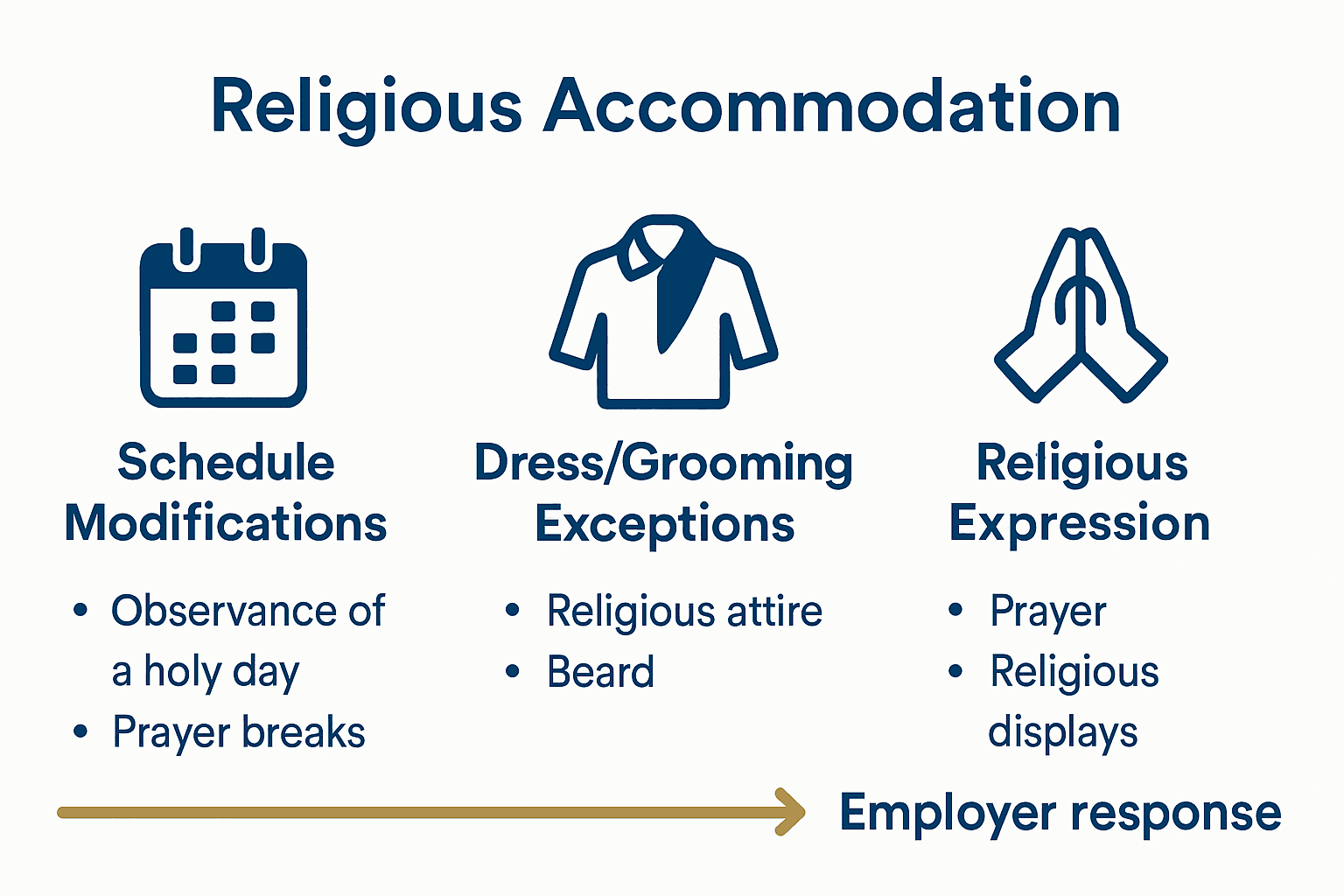
Workplace religious accommodation requests represent critical pathways for employees to practice their faith while maintaining professional roles. According to the EEOC, these requests typically encompass three primary categories: schedule modifications, dress and grooming policy exceptions, and provisions for religious expression.
Schedule Modifications are among the most common accommodation requests. These might include flexible work hours to observe religious holidays, time for daily prayer, or adjusted shift schedules that align with religious practices. Dress and Grooming Exceptions represent another significant area of accommodation, where employees seek permission to wear religious attire, maintain specific hairstyles, or grow facial hair consistent with their religious beliefs.
Additional types of religious accommodation requests often involve:
- Providing dedicated prayer or meditation spaces
- Allowing schedule adjustments for religious observances
- Permitting religious clothing or jewelry
- Creating exceptions to standard grooming policies
- Facilitating time for religious rituals during work hours
The EEOC emphasizes that employers must carefully evaluate these requests, considering both the employee’s religious needs and potential workplace impacts. Successful accommodations require open dialogue, mutual respect, and a commitment to creating an inclusive work environment that honors diverse religious practices while maintaining operational efficiency.
Here’s a summary of the main types of religious accommodation requests in the workplace:
| Accommodation Type | Examples | Key Considerations |
|---|---|---|
| Schedule Modifications | Flexible work hours Time for prayers Adjusted shifts | Impact on coverage Operational feasibility |
| Dress & Grooming Exceptions | Religious attire Head coverings Facial hair | Safety requirements Policy impact |
| Religious Expression | Prayer or meditation spaces Jewelry Religious rituals time | Disruption potential Inclusivity balance |
Key Laws Governing Workplace Religious Rights
Workplace religious rights are primarily protected under Title VII of the Civil Rights Act of 1964, a landmark federal legislation that establishes comprehensive protections for employees’ religious freedoms. According to the EEOC, this critical law prohibits employment discrimination based on religious beliefs and mandates that employers provide reasonable accommodations for employees’ religious practices.
The legal framework requires employers to make sincere efforts to accommodate employees’ religious observances, unless such accommodations would create an undue hardship for the organization. The Department of Labor emphasizes that these accommodations extend beyond scheduling and include critical areas such as dress codes, grooming standards, and religious expression in the workplace.
Key legal protections under Title VII include:
- Prohibiting discrimination in hiring, firing, promotions, and job assignments
- Requiring reasonable modifications to workplace policies
- Protecting employees from harassment based on religious beliefs
- Mandating employers engage in an interactive accommodation process
- Ensuring employees can practice their faith without workplace penalties
For employees in Religious Discrimination cases, understanding these legal protections is crucial. The law recognizes that religious rights are fundamental, requiring employers to balance operational needs with employees’ constitutional freedoms. Successful navigation of religious accommodation often depends on open communication, mutual respect, and a nuanced understanding of both legal requirements and workplace dynamics.
Employer Obligations And Compliance Steps
Employers face complex responsibilities when addressing religious accommodation requests in the workplace. According to the EEOC, they must engage in a proactive interactive process with employees to identify and implement reasonable accommodations for religious practices, carefully evaluating each request’s unique circumstances.
The compliance process involves several critical steps. The Department of Labor emphasizes the importance of documenting accommodation requests and decisions to ensure fairness and legal compliance. Employers must demonstrate that any denial of accommodation is based on genuine undue hardship, not arbitrary workplace preferences.
Key employer obligations include:
- Listening carefully to employee religious accommodation requests
- Engaging in good-faith dialogue about potential modifications
- Evaluating each request individually and objectively
- Documenting the entire accommodation process
- Providing reasonable alternatives when direct accommodations are challenging
For Experienced Orange Employment Law Attorneys, understanding these nuanced obligations is crucial. Successful compliance requires a delicate balance between respecting employee religious rights and maintaining workplace operational efficiency.
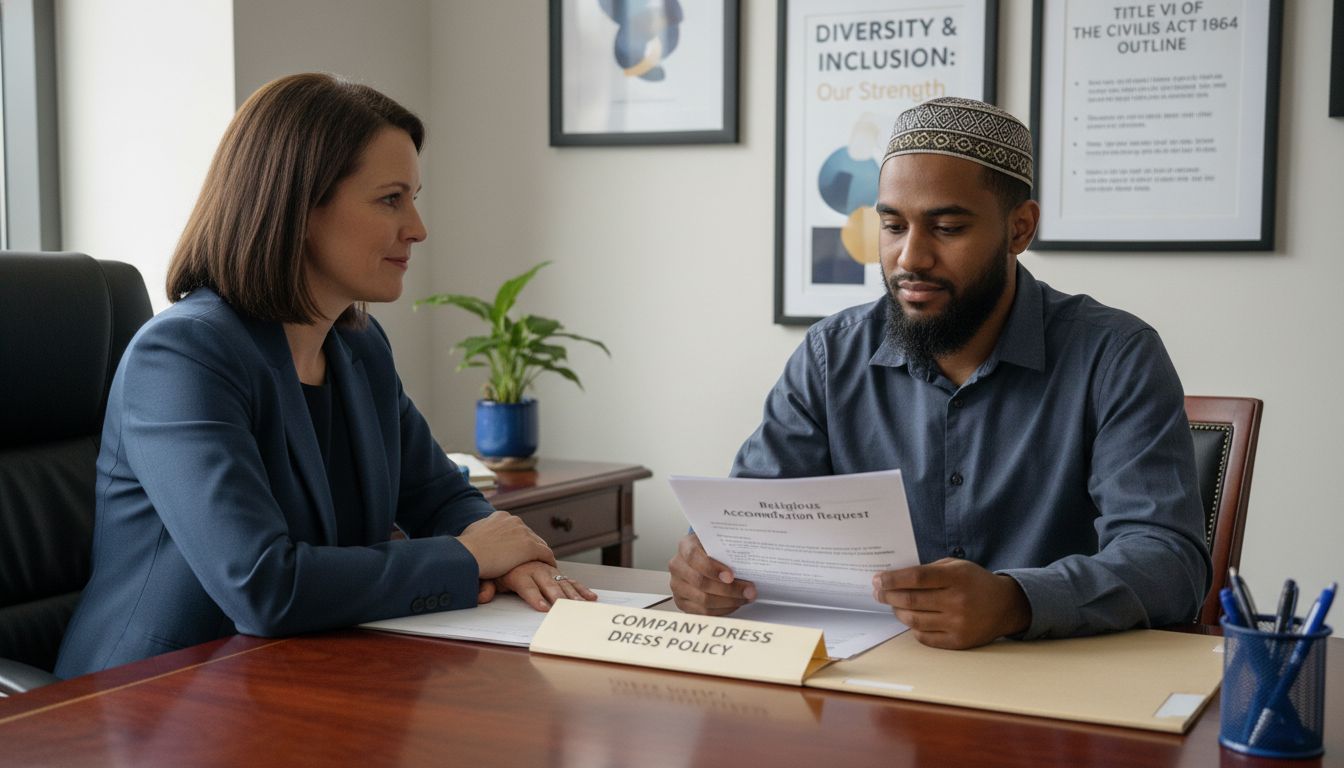 Employers must approach these situations with empathy, legal awareness, and a commitment to creating an inclusive work environment that honors diverse religious practices.
Employee Rights And Legal Remedies
Employees facing religious dress and grooming discrimination have robust legal protections and multiple avenues for seeking justice. According to the EEOC, workers have the fundamental right to request religious accommodations and can file formal complaints if their rights are violated or requests are improperly denied.
The legal remedy process involves several critical steps. The Department of Labor specifies that employees can contact an EEO Counselor within 45 days of experiencing discrimination, initiating a structured complaint resolution mechanism. This timeline is crucial for preserving the legal validity of potential claims and ensuring timely intervention.
Key employee rights and potential legal remedies include:
- Requesting reasonable religious accommodations
- Filing formal discrimination complaints with the EEOC
- Seeking monetary damages for workplace discrimination
- Pursuing reinstatement if wrongfully terminated
- Obtaining workplace policy modifications
If workplace discrimination escalates, employees might need to explore Wrongful Termination legal options. Understanding these rights empowers workers to protect themselves, challenge discriminatory practices, and create more inclusive work environments that respect individual religious beliefs and practices.
Protect Your Right to Religious Dress in the Workplace
Religious dress disputes create stressful barriers when personal faith clashes with workplace policies. If you face challenges like denied accommodations for religious attire, head coverings, or grooming practices, you are not alone. These disputes often involve navigating complex standards around safety, sincerity of belief, and undue hardship. Understanding your rights under Title VII is crucial to preserving your ability to express your faith without fear of discrimination or retaliation.
If you are experiencing religious discrimination at work or need guidance on enforcing your rights, our experienced team at Serendib Law Firm is here to help.
Explore our comprehensive resources on Religious Discrimination to learn how we protect employees just like you. Do not wait until your workplace conflict escalates. Contact us now through our website and take the first step toward a respectful, law-abiding solution tailored to your unique situation.
Frequently Asked Questions
What are religious dress and grooming disputes in the workplace?
Religious dress and grooming disputes occur when an employee’s sincerely held religious beliefs conflict with workplace dress or grooming policies, leading to requests for accommodations.
What types of religious accommodation requests can employees make?
Employees can request modifications that include schedule changes for religious observances, exceptions to dress and grooming policies, and provisions for religious expression like prayer spaces or specific attire.
What protections do employees have under the law regarding religious practices at work?
Employees are protected under Title VII of the Civil Rights Act of 1964, which prohibits discrimination based on religious beliefs and mandates reasonable accommodations unless they cause undue hardship to the employer.
What should employers do when they receive a religious accommodation request?
Employers should engage in an interactive process with the employee, evaluate the request thoughtfully, document the process, and provide reasonable accommodations while ensuring operational efficiency.
Recommended
- Experienced Fountain Valley Employment Law Attorneys
- 7 Essential Tips for Your Faith-Based Fashion Checklist – Walk In His Footsteps
https://www.serendiblaw.com/religious-dress-grooming-fountain-valley/?fsp_sid=215


Comments
Post a Comment