Sexual Harassment Settlements: High-Profile Executives Guide

More than 8,100 people benefited from sexual harassment settlements between 2018 and 2021, showing just how many lives are affected by workplace misconduct. Workplace harassment claims can disrupt careers and reputations, leaving both employers and employees searching for clear solutions. Understanding how these settlements work helps people protect their rights, seek fair outcomes, and foster safer environments for everyone involved.
Table of Contents
- Defining Sexual Harassment Settlements
- Unique Aspects Of High-Profile Executive Cases
- Legal Framework And Governing Laws
- Settlement Process And Key Terms
- Employer And Employee Rights And Risks
Key Takeaways
| Point | Details |
|---|---|
| Definition of Sexual Harassment Settlements | They are legal resolutions involving claims of inappropriate workplace behavior, providing both monetary and non-monetary relief. |
| High-Profile Executive Cases | These cases involve complex negotiations and often emphasize reputation management, resulting in larger financial settlements and stricter confidentiality agreements. |
| Legal Framework | Governed primarily by Title VII of the Civil Rights Act, these settlements uphold employee protections against workplace discrimination. |
| Employer and Employee Rights | Employers must proactively address harassment to mitigate legal risks, while employees are entitled to report without retaliation and seek compensation for violations. |
Defining Sexual Harassment Settlements
Sexual harassment settlements represent complex legal resolutions where employers address claims of inappropriate workplace behavior. Sexual harassment occurs when unwelcome sexual advances, requests for sexual favors, or verbal/physical conduct of a sexual nature create a hostile work environment or lead to adverse employment actions.
According to the Equal Employment Opportunity Commission (EEOC), these settlements typically resolve claims under Title VII of the Civil Rights Act of 1964, providing monetary and non-monetary relief to affected employees. The financial implications are substantial: between fiscal years 2018 and 2021, the EEOC recovered nearly $300 million through charge resolutions and litigation, benefiting over 8,100 individuals nationwide.
Key components of sexual harassment settlements often include:
- Financial compensation for emotional distress
- Back pay and potential reinstatement
- Mandatory workplace training
- Policy revisions to prevent future incidents
- Confidentiality agreements
For comprehensive insights into your legal rights and options, check out our sexual harassment FAQs. Understanding the nuances of these settlements is crucial for employees seeking justice and workplace dignity.

Unique Aspects of High-Profile Executive Cases
High-profile executive sexual harassment cases present unique legal challenges that distinguish them from typical workplace harassment claims. These cases often involve complex power dynamics, significant financial stakes, and intricate confidentiality considerations that require specialized legal strategies.
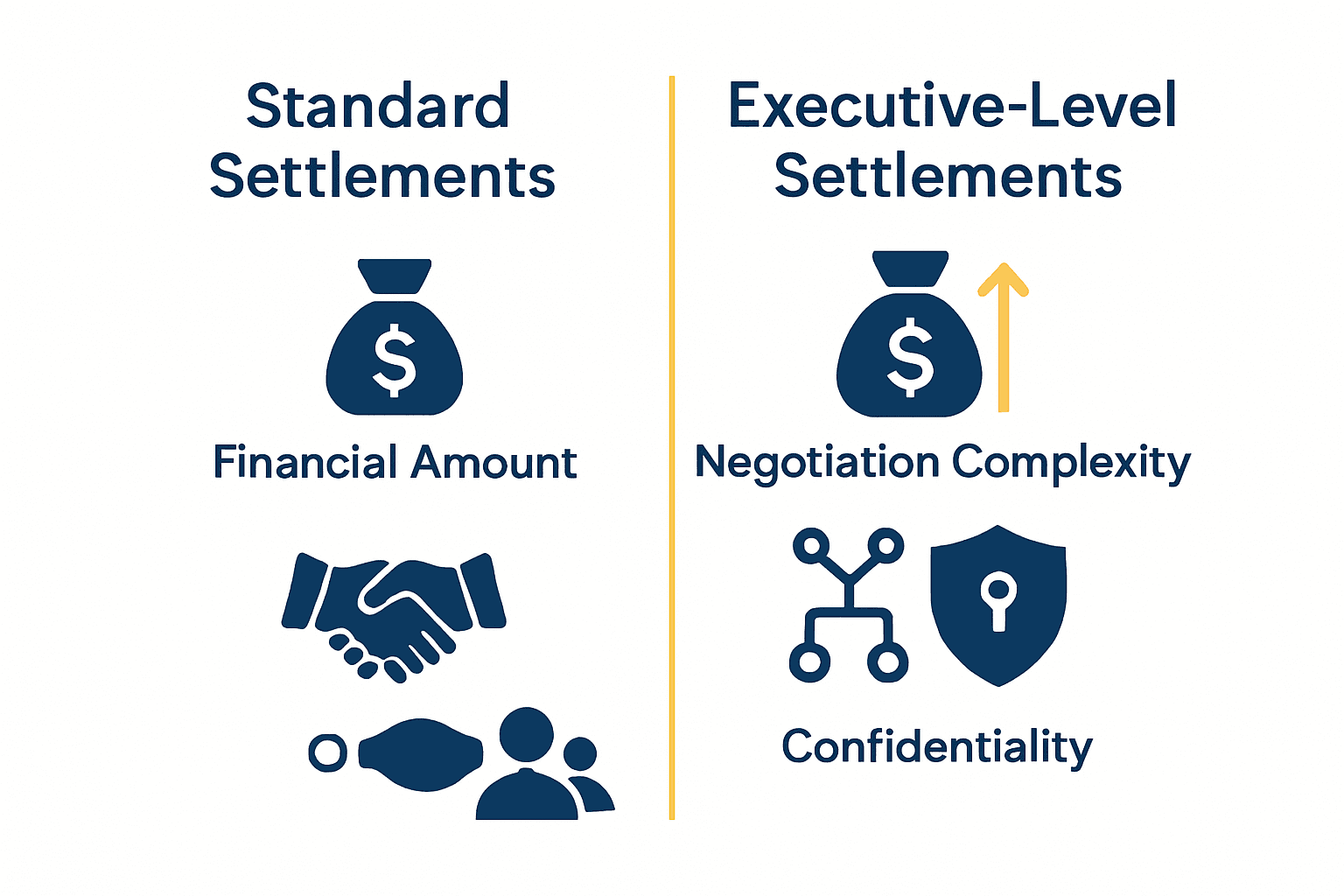
Executive-level sexual harassment settlements frequently involve more sophisticated negotiation processes. Unlike standard workplace claims, these cases might include nuanced compensation structures such as golden parachute provisions, non-disparagement agreements, and carefully crafted separation terms that protect both the executive’s professional reputation and the organization’s public image.
Key distinguishing features of high-profile executive sexual harassment settlements include:
Here’s a comparison of standard versus high-profile executive sexual harassment settlements:
| Feature | Standard Settlements | Executive-Level Settlements |
|---|---|---|
| Financial Amount | Moderate | Often substantial |
| Negotiation Complexity | Routine | Nuanced, multi-layered |
| Confidentiality | Standard NDA | Stricter, custom NDAs |
| Reputation Management | Limited focus | High priority |
| Decision Makers | HR, legal teams | Board-level, senior counsel |
| Settlement Terms | Typical clauses | Golden parachute Non-disparagement |
- Potentially larger financial settlements
- More complex non-disclosure agreements
- Greater emphasis on reputation management
- Potential board-level involvement in resolution
- Stricter confidentiality requirements
These settlements often extend beyond monetary compensation, addressing broader systemic issues within corporate environments. Executives facing such claims must navigate not just legal consequences, but also potential professional and reputational damage that can significantly impact their future career prospects.
Sexual harassment overview provides additional context for understanding these complex legal proceedings.
Legal Framework and Governing Laws
Sexual harassment settlements are governed by a complex legal framework primarily rooted in federal civil rights legislation. The cornerstone of these protections is Title VII of the Civil Rights Act of 1964, which prohibits workplace discrimination based on sex, including sexual harassment as a form of gender-based discrimination.
A pivotal moment in establishing legal standards came with the Supreme Court case Meritor Savings Bank v. Vinson (1986), which formally recognized hostile-environment sexual harassment as a serious form of workplace discrimination. This landmark decision established critical principles for employer liability and set the stage for how sexual harassment claims would be interpreted in legal settings.
Key legal provisions and frameworks include:
- Title VII of the Civil Rights Act: Primary federal law prohibiting workplace discrimination
- Equal Employment Opportunity Commission (EEOC) Guidance: Provides comprehensive interpretation of harassment standards
- State-level anti-discrimination laws: Additional protections beyond federal regulations
- Civil Rights Act of 1991: Enhanced monetary damages and legal remedies
The EEOC’s recent Enforcement Guidance on Harassment in the Workplace (2023–2025) consolidates legal analysis of harassment standards, covering critical aspects such as:
- Protected characteristics
- Hostile work environment definitions
- Employer vicarious liability
- Systemic harassment prevention strategies
For comprehensive insights into your legal rights, explore our sexual harassment FAQs that break down these complex legal frameworks in accessible language.
Settlement Process and Key Terms
Sexual harassment settlements represent complex legal negotiations involving multiple strategic steps and critical terminology. The process typically begins with a formal complaint filed through internal HR channels or directly with the Equal Employment Opportunity Commission (EEOC), initiating a comprehensive review of the alleged misconduct.
Based on documented cases like the HHS Environmental settlement, these agreements often encompass both monetary and non-monetary components. According to EEOC documentation, settlements can include financial compensation, policy revisions, mandatory training programs, external reporting mechanisms, and systemic organizational reforms designed to prevent future harassment.
Key terms and elements of sexual harassment settlements frequently include:
- Confidentiality agreements: Limiting public disclosure of settlement details
- Non-disparagement clauses: Restricting negative statements about involved parties
- Financial compensation: Covering emotional distress and potential lost wages
- Reinstatement or separation terms: Determining future employment status
- Mandatory training requirements: Implementing workplace harassment prevention programs
Drawing from the New York Executive Chamber settlement example, comprehensive agreements often extend beyond immediate financial resolution to include broader institutional changes. These may involve creating external reporting mechanisms, expanding human resources capabilities, and implementing systematic assessment measures to evaluate the effectiveness of organizational reforms. Sexual harassment overview can provide additional context for understanding these intricate legal processes.
Employer and Employee Rights and Risks
Sexual harassment litigation creates a complex legal landscape with distinct rights and potential consequences for both employers and employees. Under Title VII of the Civil Rights Act, employers are legally obligated to maintain a workplace free from harassment, while employees have critical protections against discriminatory behavior and potential retaliation.
According to EEOC guidance, employers face significant legal risks if they fail to address harassment complaints promptly and effectively. They can be held liable for harassment perpetrated by supervisors or co-workers, potentially facing enforcement actions, substantial financial penalties, and severe reputational damage. Employers must implement comprehensive prevention strategies, including clear reporting mechanisms, thorough investigations, and meaningful corrective actions.
Key rights and risks include:
Employer Risks:
- Financial liability for harassment claims
- Potential federal enforcement actions
- Reputation and brand damage
- Costly litigation and settlement expenses
Employee Rights:
- Protection from workplace harassment
- Right to file complaints without retaliation
- Access to internal and external reporting mechanisms
- Potential compensation for emotional distress
Navigating these complex dynamics requires strategic understanding and proactive measures. Workplace discrimination insights can provide additional context for understanding the nuanced legal landscape of workplace harassment and employee protections.
Expert Legal Support for High-Profile Sexual Harassment Settlements
Facing a sexual harassment claim as a high-profile executive can feel overwhelming. The stakes are higher with complex negotiations involving confidentiality, reputation management, and significant financial consequences. If you or your organization need guidance navigating these sensitive settlements or want to protect your rights amid challenging workplace disputes, understanding your options is critical.
At Serendib Law Firm, we specialize in Employment Law cases tailored to executives and businesses confronting harassment and discrimination issues. Our experienced attorneys provide personalized advocacy to help you address legal risks, negotiate fair settlements, and maintain your professional integrity. Discover how we can assist you by visiting our Employment Law Archives and learn more about our comprehensive services at https://www.serendiblaw.com/.
Don’t wait until the complexity grows. Protect your future and seek trusted legal advice today by exploring our Employment Law Archives or contacting us directly through Serendib Law Firm’s homepage. Your legal peace of mind is just one step away.
Frequently Asked Questions
What are sexual harassment settlements?
Sexual harassment settlements are legal agreements made to resolve claims of inappropriate workplace behavior, typically providing compensation and other forms of relief to affected employees.
How do high-profile executive sexual harassment cases differ from standard cases?
High-profile executive cases often involve more complex negotiations, larger financial stakes, and stricter confidentiality agreements due to the unique power dynamics and reputational concerns involved.
What key components are usually included in a sexual harassment settlement for executives?
Settlements for executives often include financial compensation, non-disclosure agreements, mandatory workplace training, reputation management terms, and provisions related to termination or reinstatement.
What legal frameworks govern sexual harassment settlements?
Sexual harassment settlements are primarily governed by Title VII of the Civil Rights Act of 1964 and further clarified by EEOC guidelines, state anti-discrimination laws, and landmark legal decisions like Meritor Savings Bank v. Vinson.
Recommended
https://www.serendiblaw.com/sexual-harassment-settlements-executives/?fsp_sid=294


Comments
Post a Comment