Wage Theft and Break Laws in Construction Jobs

Did you know construction workers in the United States lose nearly $50 billion every year to wage theft? This costly form of exploitation affects families and communities by stripping workers of fair pay and crucial benefits. Understanding how employers skirt the law is the first step to protecting your rights. Knowledge about wage theft can make a real difference in keeping workplaces honest and ensuring every paycheck reflects the hard work that went into earning it.
Key Takeaways
| Point | Details |
|---|---|
| Wage Theft Overview | Wage theft in construction includes practices like misclassifying workers and denying overtime, leading to approximately $50 billion in annual losses. |
| Legal Protections | Construction workers have specific rights, including accurate wage statements and safe working conditions, which are enforceable under labor laws. |
| Break Regulations | Break laws vary significantly by state, making it essential for workers to understand their specific rights regarding meal and rest periods. |
| Claim Filing Process | Workers have multiple avenues to file wage theft claims, including complaints to labor departments and class-action lawsuits, which can result in recovery of unpaid wages and penalties for employers. |
Table of Contents
- Defining Wage Theft In Construction Jobs
- Legally Required Breaks And Protections
- Common Forms Of Wage Theft And Violations
- Worker Rights And Employer Obligations
- Legal Consequences And Filing Claims
Defining Wage Theft in Construction Jobs
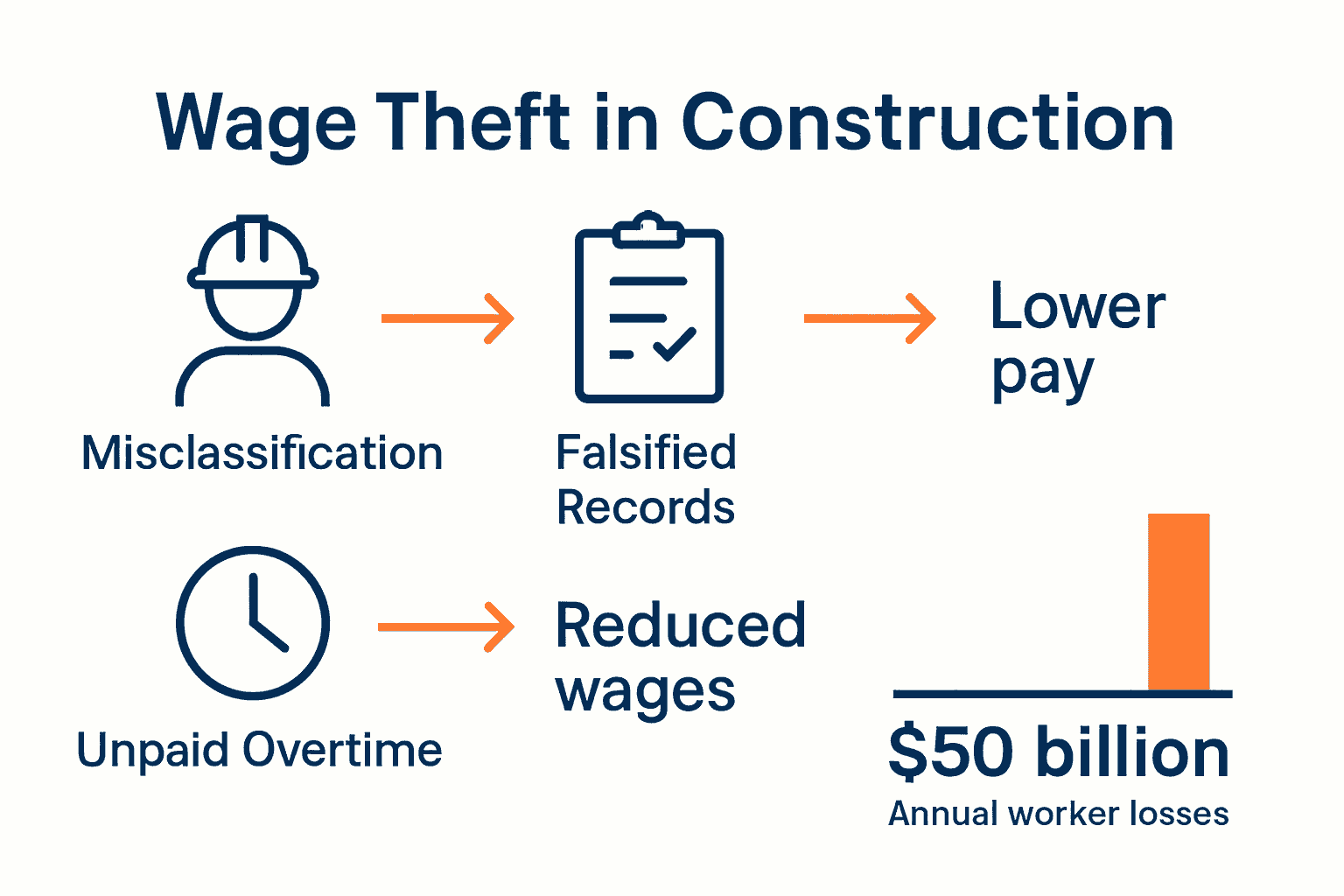
Wage theft represents a serious yet often overlooked problem plaguing construction workers across the United States. Wage theft occurs when employers intentionally deny workers their legally earned compensation through various manipulative practices. According to research from The Guardian, this systematic exploitation results in approximately $50 billion in annual losses for workers in the construction industry.
The most common forms of wage theft in construction include:
- Failing to pay legally mandated overtime rates
- Misclassifying employees as independent contractors
- Forcing workers to perform unpaid labor
- Falsifying work hour records
- Making illegal wage deductions
- Intimidating workers to prevent them from reporting violations
Construction workers are particularly vulnerable to these unethical practices due to the industry’s complex labor structures and power dynamics. As defined by Wikipedia, wage theft fundamentally involves denying workers wages or benefits they are legally entitled to receive under employment contracts or labor regulations. Employers might use sophisticated tactics like deliberately misclassifying workers or creating complex payment schemes to circumvent fair compensation laws.
Understanding these tactics is crucial for workers to protect their rights and recognize when they’re being systematically underpaid. Recognizing wage theft isn’t just about identifying missing dollars—it’s about fighting for fair treatment, respecting worker dignity, and maintaining ethical standards in one of America’s most critical industries.
Legally Required Breaks and Protections
Break laws in construction represent a complex landscape of worker protections that vary dramatically across different jurisdictions. Federal break regulations provide minimal guidance, with no universal mandate requiring employers to provide meal or rest breaks. According to Minimum Wage, break policies remain largely at employers’ discretion unless specific state laws dictate otherwise.
State-level break requirements demonstrate significant variation. For example:
- Colorado mandates a 30-minute unpaid meal break after 5 hours of work
- Colorado also requires a 10-minute paid rest break every 4 hours
- Illinois requires a 20-minute unpaid break after 7.5 hours of work
- Other states have unique and often complicated break regulations
Construction workers face unique challenges in break compliance due to the physically demanding nature of their work. Learn more about your employment rights with our experienced Orange employment law attorneys. Research from BuddyPunch highlights that while federal standards remain minimal, state-level protections aim to safeguard worker health and prevent exploitation. Workers should understand their specific state regulations, document their work hours meticulously, and be prepared to assert their legal rights to appropriate rest periods.
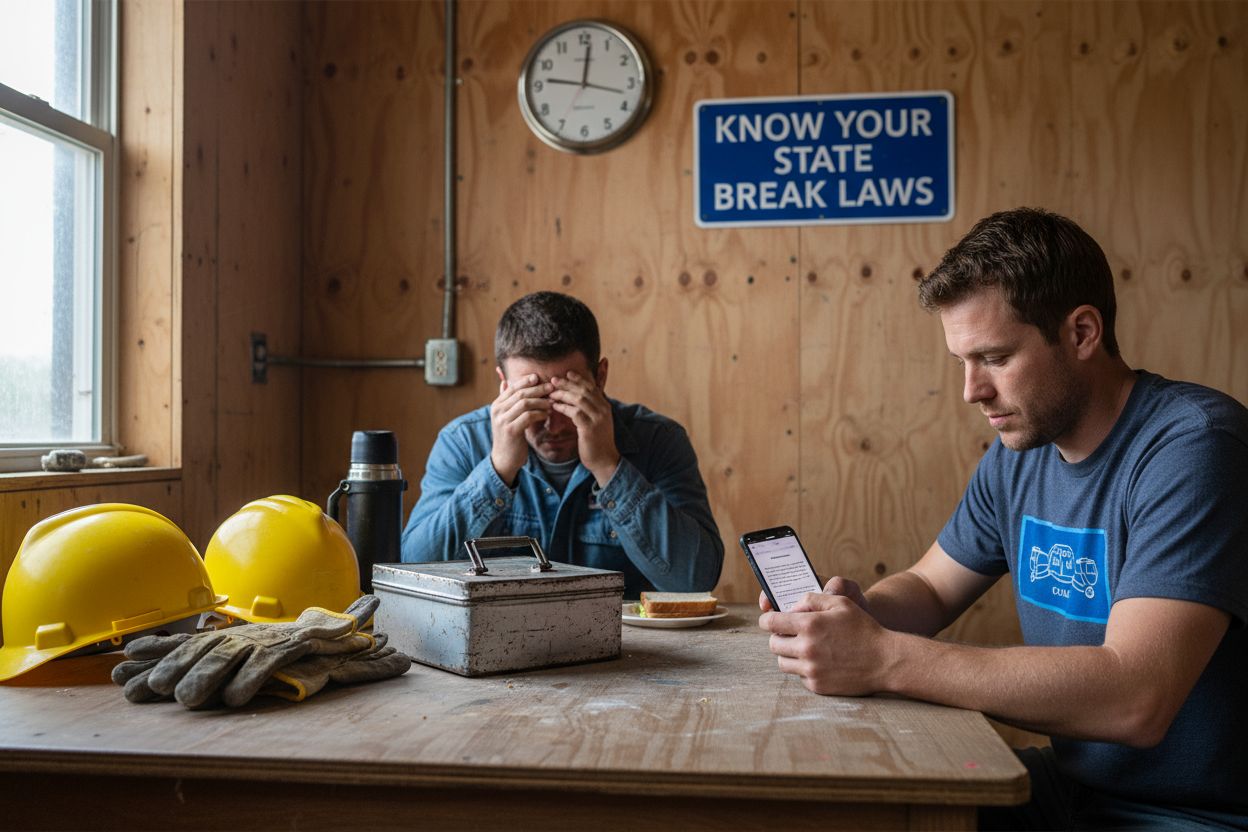
Ultimately, break protections are not just legal technicalities—they are critical safety measures that prevent worker fatigue, reduce workplace accidents, and maintain overall job site productivity. Knowing and enforcing these rights can make a significant difference in a construction worker’s daily experience and long-term well-being.
Common Forms of Wage Theft and Violations
Wage theft in construction is a pervasive problem that takes multiple sophisticated forms, systematically undermining workers’ financial security. Misclassification stands out as one of the most common and damaging tactics employers use to exploit workers. According to research from Construction Owners, this practice involves deliberately categorizing skilled workers incorrectly to avoid paying appropriate wages, benefits, and protections.
Key forms of wage theft in construction include:
- Misclassifying skilled workers as independent contractors
- Falsifying payroll records
- Deliberately underpaying workers by assigning lower-skill role classifications
- Withholding legally mandated fringe benefits
- Avoiding overtime compensation
- Manipulating work hours to reduce total compensation
The consequences of these violations extend far beyond simple wage discrepancies. Learn more about wage and hour claim rules and violations with our legal experts.
Here’s a comparison of common wage theft tactics and their impact on construction workers:
| Wage Theft Tactic | How It Works | Impact on Workers |
|---|---|---|
| Misclassification | Labeled as independent contractor | Loss of benefits No overtime |
| Falsified Work Records | Altered or reduced logged hours | Lower pay Denied overtime |
| Unpaid Labor | Forced to work off-the-clock | No compensation Overwork |
| Illegal Deductions | Unauthorized pay reductions | Reduced take-home pay |
| Intimidation/Retaliation | Threats for reporting violations | Job insecurity |
| Underpaid Overtime | Avoiding overtime rates | Less pay for extra hours |
Constructing a fair workplace requires vigilance from workers, unions, and regulatory bodies. By understanding these common violations, construction workers can better protect their rights, document potential misconduct, and seek appropriate legal recourse when their wages are unlawfully withheld.
Worker Rights and Employer Obligations
Construction workers possess critical legal protections that define the fundamental relationship between employees and employers. Worker rights encompass far more than simple wage expectations—they represent a comprehensive framework designed to ensure fair treatment and safe working conditions. According to the California Department of Industrial Relations, workers have multiple avenues for recovering unpaid wages, including potential mechanic’s liens and comprehensive legal remedies.
Key worker rights and employer obligations include:
- Transparent and accurate wage statements
- Timely payment of earned wages
- Overtime compensation at legally mandated rates
- Safe working environments
- Protection from retaliation when reporting violations
- Proper classification of employment status
The legal landscape becomes even more complex when considering contractor relationships. Learn more about employment law complexities with our experienced attorneys. Research from Construction Dive reveals that in states like New York, general contractors can be held liable for wage theft committed by subcontractors—meaning the responsibility for fair compensation extends beyond direct employers.
Employers face substantial consequences for violating worker rights, including liquidated damages, civil penalties, and potential legal action.
 These obligations are not mere suggestions but legally enforceable standards designed to protect workers from exploitation and ensure fair compensation across the construction industry. Workers who understand their rights and employers who respect them create a more equitable, productive workplace ecosystem.
Legal Consequences and Filing Claims
Wage theft in construction carries serious legal ramifications that can devastate employers who engage in systematic wage violations. Legal consequences extend far beyond simple monetary penalties, potentially destroying a company’s ability to operate in the industry. According to research from Construction Owners, employers can face substantial back-wage payments, fringe benefit restitution, significant financial penalties, and even debarment from federal and federally funded contracting projects.
Workers seeking to file wage theft claims have multiple potential avenues for legal recourse:
- Filing complaints with state labor departments
- Initiating individual lawsuits
- Pursuing class action litigation
- Reporting violations to federal agencies
- Requesting municipal enforcement interventions
- Seeking attorney representation for comprehensive claim management
Learn more about filing claims against public entities with our experienced legal team. Real-world examples, like the Philadelphia case documented by The Inquirer, demonstrate that workers can successfully recover not just unpaid wages, but also damages and attorney’s fees through strategic legal action.
The legal system provides robust protections for construction workers, but navigating these complex claims requires careful documentation, timely action, and often professional legal guidance. Successful wage theft claims not only compensate individual workers but also serve a broader purpose of holding employers accountable and deterring future systemic labor violations in the construction industry.
Put a Stop to Wage Theft and Break Violations in Construction
Are you losing sleep over missing wages, unpaid overtime, or denied break times on your construction job? This article makes it clear that wage theft and break law violations are not just common but often go unchallenged, leaving workers feeling powerless. Many construction workers face illegal misclassification and even intimidation when they try to stand up for their rights. If your paycheck does not reflect your hard work, if your breaks are skipped, or you suspect any form of payroll fraud, now is the time to get informed and act.
You deserve fair pay and protected working conditions. Our firm is deeply experienced in California Employment Law and knows how to tackle complicated issues such as misclassification. We provide personalized legal support so you can recover lost wages and defend your rights without fear. Do not wait until another payday goes by. Visit Serendib Law Firm and schedule a free consultation with our trusted legal team today.
Frequently Asked Questions
What is wage theft in construction jobs?
Wage theft in construction refers to illegal practices where employers deny workers their legally earned wages. Common forms include misclassification, unpaid labor, falsified work records, and intimidation to prevent reporting violations.
What are workers’ rights regarding breaks in construction?
Workers in construction have rights to breaks that vary by state. Many states require employers to provide paid and unpaid breaks to ensure worker health and safety, though federal regulations offer minimal guidance.
How can construction workers identify wage theft?
Construction workers can identify wage theft by monitoring their pay stubs, checking if they receive overtime pay for extra hours worked, noticing discrepancies in recorded work hours, and being aware of their legal rights regarding compensation and benefits.
What steps can workers take if they experience wage theft?
Workers experiencing wage theft should document the incidents, file complaints with state labor departments, initiate lawsuits, or seek legal representation to explore various avenues for recovering unpaid wages and legal claims.
Recommended
- Experienced Orange Employment Law Attorneys
- Wage and Hour Claims - General Rules and Violations | Serendib Law Firm
- Piece Rate Compensation | Serendib Law Firm
https://www.serendiblaw.com/wage-theft-construction-break-laws/?fsp_sid=250


Comments
Post a Comment