Workplace Harassment Claims in Entertainment

Nearly one in three workers in the entertainment industry report experiencing harassment at work, according to recent surveys. This troubling figure highlights a deep-rooted problem that affects talent, crew, and staff alike. Whether through power imbalance, discrimination, or repeated inappropriate behavior, harassment not only damages careers but also erodes workplace trust. Understanding these challenges is the first step to creating more respectful and secure environments in entertainment.
Key Takeaways
| Point | Details |
|---|---|
| Understanding Workplace Harassment | Workplace harassment in the entertainment industry includes a range of unwelcome behaviors that create a hostile environment, such as sexual harassment, power abuses, and discrimination. |
| Legal Protections | California law provides comprehensive protections for all entertainment industry workers, emphasizing preventive measures and thorough investigations of harassment claims. |
| Filing a Harassment Claim | Employees must document incidents, report them through appropriate channels, and adhere to legal timelines to ensure their rights are protected when filing harassment claims. |
| Employer Responsibilities | Employers are mandated to implement proactive harassment prevention training, maintain reporting mechanisms, and take immediate corrective actions against harassment claims to ensure a safe workplace. |
Table of Contents
- Defining Workplace Harassment In Entertainment
- Common Types And Examples Of Harassment
- Legal Standards And Case Law In California
- How To File A Workplace Harassment Claim
- Employee Rights And Employer Obligations
- Risks, Protections, And Preventative Measures
Defining Workplace Harassment in Entertainment
Workplace harassment in the entertainment industry is a complex and pervasive issue that goes far beyond simple misconduct. Workplace harassment represents any unwelcome verbal, visual, or physical behavior that creates a hostile, intimidating, or offensive work environment. According to the Hollywood Commission’s Entertainment Industry Helpline, this definition encompasses a broad range of inappropriate interactions affecting performers, crew members, support staff, and other professionals across entertainment settings.
In the entertainment world, harassment can manifest in multiple forms:
- Sexual harassment involving unwanted advances or inappropriate comments
- Power dynamic abuse from directors, producers, or supervisors
- Discriminatory behaviors targeting gender, race, age, or other protected characteristics
- Persistent bullying or intimidation tactics
As the Writers Guild of America explains, California law provides robust protections for entertainment industry workers. These protections extend comprehensively to employees, job applicants, interns, and contractors, recognizing the unique vulnerability of individuals in creative professional environments. The legal framework understands that harassment isn’t just about isolated incidents but about creating systemic patterns of misconduct that undermine professional dignity and psychological safety.
Recognizing workplace harassment requires understanding its subtle and overt manifestations. It’s not just about dramatic confrontations but often involves persistent, insidious behaviors that gradually erode a professional’s sense of safety and respect. Learn more about identifying hostile work environments to better protect yourself and your colleagues in the entertainment industry.
Common Types and Examples of HarassmentWorkplace harassment in entertainment takes multiple complex and damaging forms, extending far beyond stereotypical scenarios. According to the Writers Guild of America, harassment encompasses a wide range of destructive behaviors that systematically undermine professional dignity and create toxic work environments.
Several critical types of harassment frequently emerge in entertainment settings:
- Sexual Harassment: Unwelcome sexual advances, inappropriate comments, physical touching without consent
- Power Dynamic Abuse: Supervisors leveraging professional positions to manipulate or intimidate subordinates
- Gender-Based Discrimination: Unequal treatment, disparaging comments, or professional opportunities blocked based on gender
- Verbal Harassment: Offensive jokes, derogatory language, persistent belittling commentary
The notorious Activision Blizzard case provides a stark real-world example of systemic harassment. Reports revealed a “frat-boy” workplace culture characterized by sexist behaviors, inappropriate social events like “cube crawls,” and persistent gender-based discrimination that created a fundamentally hostile work environment. These incidents demonstrate how harassment can become institutionalized when inappropriate behaviors are normalized and left unchecked.

Here’s a comparison of common types of workplace harassment in the entertainment industry:
| Type of Harassment | Key Behaviors | Typical Perpetrators | Example Scenarios |
|---|---|---|---|
| Sexual Harassment | Unwanted advances Inappropriate comments Non-consensual touching | Co-workers Supervisors Producers | Inappropriate remarks Unwanted touching |
| Power Dynamic Abuse | Manipulation Intimidation Threats to career | Directors Producers Supervisors | Threatening job loss Coercing favors |
| Gender-Based Discrimination | Unequal treatment Blocked opportunities Disparaging jokes | Supervisors Managers Peers | Blocking promotions Sexist jokes |
| Verbal Harassment | Offensive jokes Derogatory language Belittling | Any employee Supervisors | Repeated insults Mocking comments |
Explore our comprehensive guide on sexual harassment to understand your rights and recognize warning signs. Recognizing these behaviors is the first critical step in creating safer, more respectful professional spaces in the entertainment industry.
Legal Standards and Case Law in California
California has established robust legal protections against workplace harassment, creating some of the most comprehensive employment safeguards in the United States. California’s Fair Employment and Housing Act (FEHA) stands as the cornerstone of these legal standards, providing extensive protection for workers across all industries, including the entertainment sector. This landmark legislation covers employers of all sizes and creates a comprehensive framework that prohibits discrimination and harassment in all its forms.
Key legal principles in California harassment cases emphasize both preventive measures and appropriate investigative responses:
- Protection for all employees, regardless of company size
- Broad definition of harassment covering verbal, physical, and visual misconduct
- Requirement for employers to take proactive steps in preventing workplace harassment
- Legal recourse for employees experiencing discriminatory treatment
The landmark Cotran v. Rollins Hudig Hall case significantly shaped how California courts evaluate workplace harassment claims. This critical legal precedent established that employers do not need to definitively prove misconduct occurred. Instead, they must demonstrate that they conducted a fair, thorough investigation and honestly believed wrongdoing had taken place. This standard provides a nuanced approach to evaluating workplace harassment claims, recognizing the complex nature of such sensitive workplace interactions.
Explore our detailed resources on California employment law to understand how these legal standards protect workers and hold employers accountable. The intricate legal landscape of workplace harassment requires comprehensive understanding and strategic approach to protect professional rights and dignity.
How to File a Workplace Harassment ClaimFiling a workplace harassment claim requires strategic documentation and understanding of legal procedures. According to Shouse Law, the process involves several critical steps that protect your professional rights and create a formal record of misconduct.
Step-by-step process for filing a harassment claim in California:
- Document Everything
- Keep detailed records of harassment incidents
- Note dates, times, locations, and specific behaviors
- Save emails, messages, or other communication evidence
- Identify potential witnesses
- Formal Reporting Channels
- Report internally to HR or supervisors
- File an official complaint with the California Civil Rights Department (CRD)
- Request a right-to-sue notice
The California Labor Commissioner’s Office recommends multiple filing methods:
- Online submission through official portals
- Mail-in complaint forms
- In-person filing at local offices
Important legal timelines to remember:
- Initial complaint must be filed within three years of the harassment incident
- After receiving right-to-sue notice, you have one year to file a civil lawsuit
Learn more about workplace harassment legal procedures to ensure you protect your rights and pursue appropriate legal action. Understanding these processes can make a significant difference in addressing workplace misconduct effectively.
Employee Rights and Employer Obligations
Workplace rights in the entertainment industry represent a complex legal landscape that protects employees while establishing clear expectations for employers. According to the Writers Guild of America, employees are afforded comprehensive protections that extend far beyond basic workplace interactions.
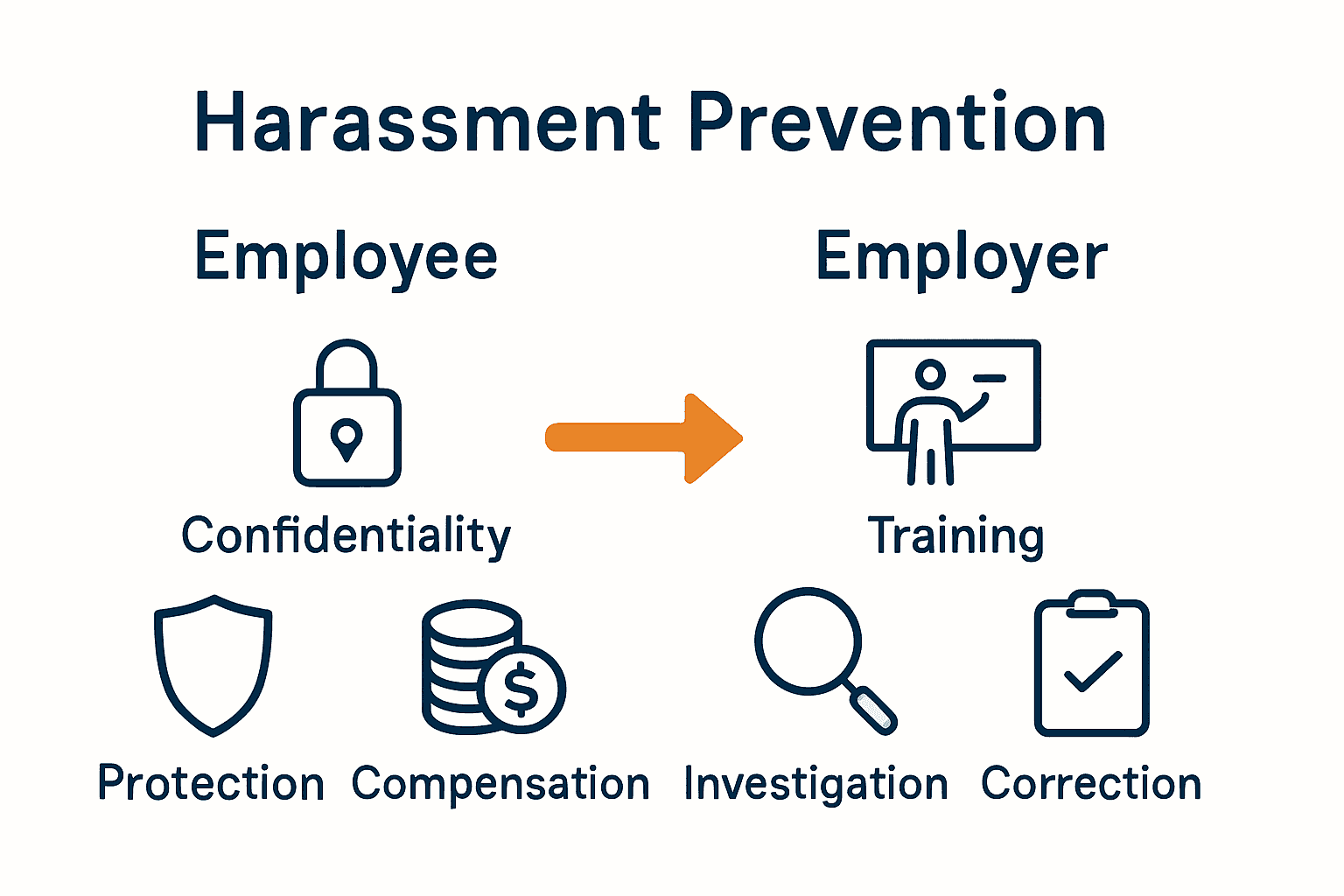
Employee Rights Include:
- Protection from retaliatory actions
- Right to representation during investigative interviews
- Ability to seek compensatory and punitive damages
- Confidential reporting mechanisms
- Protection against discriminatory practices
The Heidari Law Group highlights critical employer obligations that create accountability:
- Mandatory harassment investigation protocols
- Strict liability for supervisory misconduct
- Required workplace harassment training
- Prohibition of any retaliatory actions against complainants
- Immediate corrective measures when harassment is substantiated
Employers face significant legal consequences for failing to address workplace harassment. They are strictly liable if management was aware of harassment and did not take appropriate action. This legal standard underscores the importance of proactive workplace policies and swift, comprehensive responses to any misconduct allegations.
Learn more about your rights with our experienced employment law attorneys who can provide personalized guidance through these complex legal challenges. Understanding your rights is the first step in creating a safe, respectful professional environment.
Risks, Protections, and Preventative Measures
Workplace harassment in the entertainment industry involves complex risks that demand strategic, proactive approaches. The Hollywood Commission’s helpline serves as a critical protective resource, offering comprehensive support mechanisms for workers navigating potentially traumatic professional environments.
Key Risks in Entertainment Workplaces:
- Power dynamic exploitation
- Career retaliation
- Professional reputation damage
- Psychological and emotional trauma
- Financial and career instability
Preventative Strategies Include:
- Comprehensive Training Programs
- Clear Reporting Mechanisms
- Transparent Investigation Protocols
- Regular workplace culture assessments
According to the Writers Guild of America, employers have affirmative obligations to prevent harassment. This includes mandatory training for supervisors in larger workplaces and a strict liability framework that incentivizes proactive workplace management.
Protective Measures Employers Should Implement:
- Establish confidential reporting channels
- Conduct impartial, thorough investigations
- Provide trauma-informed support resources
- Create transparent disciplinary procedures
- Regularly update anti-harassment policies
Explore our comprehensive workplace protection strategies to understand how legal professionals can help safeguard your professional rights and create safer work environments.
Protect Your Career in Entertainment with the Right Legal Partner
When workplace harassment creates a hostile environment in the entertainment industry, the emotional and professional fallout can be severe. Experiencing intimidation, retaliation, or persistent discrimination not only threatens your peace of mind but can also jeopardize your career. If you are uncertain about your rights or worried about employer retaliation, you are not alone. The path to relief often involves navigating complex laws, understanding employer obligations, and ensuring your voice is truly heard.
The attorneys at Serendib Law Firm offer focused, compassionate support for entertainment professionals facing these exact challenges. Our Employment Law resources help you take the first step in identifying and documenting misconduct, while our California Employment Law pages guide you through the legal protections available to you. Do not wait for toxic patterns to take root. Take advantage of a free consultation today and let our team fight for your rights and your future. Visit Serendib Law Firm now to start your confidential conversation.
Frequently Asked Questions
What types of behaviors constitute workplace harassment in the entertainment industry?
Workplace harassment can manifest as sexual harassment, power dynamic abuse, gender-based discrimination, and verbal harassment. These behaviors create hostile, intimidating, or offensive work environments.
How can I file a workplace harassment claim?
To file a workplace harassment claim, document all incidents of harassment, report the issue to HR or supervisors, and consider filing a complaint with the California Civil Rights Department (CRD). Ensure to keep all evidence and notes ready for the process.
What legal protections do employees have against workplace harassment?
Employees are protected under California’s Fair Employment and Housing Act (FEHA), which prohibits various forms of discrimination and harassment, ensuring that all employees can work in a safe environment without fear of retaliation or bias.
What are the key steps employers should take to prevent workplace harassment?
Employers should implement comprehensive training programs, establish clear reporting mechanisms, conduct transparent investigations, and regularly assess workplace culture to prevent harassment and ensure a safe working environment.
Recommended
- Sexual Harassment | Serendib Law Firm
- Hostile Work Environment | Serendib Law Firm
- Workplace Harassment | Serendib Law Firm
- Understanding Workplace Harassment Laws in California
https://www.serendiblaw.com/workplace-harassment-entertainment-industry/?fsp_sid=287


Comments
Post a Comment