Executive Employment Contracts—Villa Park Wrongful Termination Risks

Most American executives working in California face a stunning reality—contract disputes or wrongful termination claims impact almost one in four senior professionals. In Southern California’s corporate world, even high-level employment agreements can leave you open to risk if key terms are overlooked. This article helps clarify what defines an executive contract under California law, highlights critical clauses for protection, and explains how you can better safeguard your career against costly misunderstandings.
Table of Contents
- Defining Executive Employment Contracts in California
- Essential Clauses and Terms for Executives
- Legal Protections Against Wrongful Termination
- Risks and Liabilities for Executives and Employers
- Navigating Disputes and Enforcement Options
Key Takeaways
| Point | Details |
|---|---|
| Critical Components | Executive employment contracts in California encompass detailed terms, including compensation structures and termination conditions. These agreements ensure protection for both executives and employers while aligning with state regulations. |
| Legal Protections | California law offers robust protections against wrongful termination for executives, emphasizing the necessity of clearly defined contractual terms. Executives should understand their rights regarding discrimination and retaliation. |
| Dispute Resolution Strategies | Effective dispute resolution methods, such as mediation and arbitration, provide avenues for executives to resolve conflicts while minimizing reputational damage. Early intervention is key to protecting professional interests. |
| Importance of Legal Counsel | Engaging an employment law specialist during contract negotiation is crucial to identify risks and protect long-term career opportunities. Thorough legal review can help executives navigate complex terms effectively. |
Defining Executive Employment Contracts in California
Executive employment contracts represent complex legal agreements that establish comprehensive working relationships between senior professionals and their employers in California. These specialized documents go far beyond standard employment paperwork by defining intricate terms specific to executive roles that protect both organizational interests and individual career trajectories.
In California, executive employment contracts must address several critical components that reflect state-specific legal requirements. These typically include detailed job descriptions, compensation structures, performance expectations, termination conditions, and provisions for potential disputes. Unlike standard employment agreements, executive contracts account for unique variables such as stock options, bonus structures, severance arrangements, and potential relocation support. The agreements are carefully crafted to balance employer protection with executive mobility and professional development.
California law places particular emphasis on transparency and fairness within these contracts. Specific legal standards govern how employment terms can be structured, with notable restrictions on non-compete clauses and mandatory arbitration provisions. Executives should understand that while these contracts provide significant protections, they also require meticulous negotiation and comprehensive legal review to ensure all terms align with both state regulations and individual career goals.
Here’s a summary of common and unique clauses in executive versus standard employment contracts in California:
| Clause Type | Executive Contracts Feature | Standard Contracts Feature |
|---|---|---|
| Compensation Structure | Base salary, bonuses, stock options | Base wage, limited bonuses |
| Termination Provisions | Specific cause and severance provisions | Typically at-will, simple notice |
| Relocation Support | Often includes detailed assistance | Rarely addressed |
| Non-Compete Clauses | Strongly restricted in California | Generally not used |
| Dispute Resolution | Mediation/arbitration often outlined | Basic legal rights stated |
Pro tip: Always engage an employment law specialist to review your executive contract before signing, as subtle language variations can significantly impact your long-term professional rights and compensation potential.
Essential Clauses and Terms for Executives
Executive employment contracts are sophisticated legal documents that require careful consideration of multiple complex components. Essential clauses in these agreements establish comprehensive frameworks for professional relationships that protect both the employer and executive’s interests. These terms go far beyond standard employment documentation, creating intricate guidelines that define performance expectations, compensation structures, and potential exit strategies.
The most critical clauses typically include compensation details, which encompass base salary, performance bonuses, stock options, and potential equity arrangements. Workplace location and relocation provisions are equally important aspects of executive contracts, particularly in California where professional mobility can significantly impact career trajectories. These clauses often outline specific expectations regarding work environment, potential geographic transfers, and associated financial support for relocating executives.
Confidentiality and intellectual property provisions represent another crucial element of executive employment agreements. These sections protect organizational interests by establishing clear boundaries around proprietary information, trade secrets, and potential competitive restrictions. Executives must carefully review these terms to understand their obligations during employment and potential limitations after separation from the company. The language in these clauses can significantly impact future career opportunities and professional flexibility.

Pro tip: Engage an experienced employment law attorney to conduct a comprehensive review of your contract, paying special attention to nuanced language that could restrict your future professional opportunities.
Legal Protections Against Wrongful Termination
California provides robust legal safeguards designed to protect executives from unjust employment termination. Recent legislative developments have significantly strengthened employee rights and protections against discriminatory dismissal practices. These protections extend beyond simple contractual agreements, establishing comprehensive frameworks that shield professionals from arbitrary or retaliatory workplace actions.
The state’s legal system recognizes multiple grounds for challenging wrongful termination, including discrimination, retaliation, and violations of public policy. Contractual protections play a critical role in defining permissible termination conditions, especially for executive-level employees. Written employment agreements that specify precise cause requirements offer additional legal safeguards, creating clear standards for potential dismissal scenarios. These contracts typically outline specific circumstances under which termination can occur, providing executives with a structured defense against arbitrary dismissal.
Executives facing potential termination should understand the nuanced legal landscape of employment protection. California law recognizes several key exceptions to the standard at-will employment doctrine, including protections for employees who report illegal activities, refuse to participate in unlawful conduct, or exercise fundamental workplace rights. This means employers cannot terminate an executive for whistleblowing, challenging discriminatory practices, or asserting legally protected workplace rights. The complexity of these protections underscores the importance of maintaining comprehensive documentation and seeking professional legal counsel when confronting potential wrongful termination situations.
Pro tip: Maintain a detailed record of all workplace interactions, performance evaluations, and potential incidents of misconduct, as documentation can be crucial evidence in challenging wrongful termination claims.
Risks and Liabilities for Executives and Employers
Executive employment relationships are fraught with complex legal risks that demand careful navigation from both parties. Increasingly stringent legislative requirements in California create significant compliance challenges for employers and executives alike, with potential financial and professional consequences for misunderstandings or contract breaches.
For executives, the primary risks center around contractual ambiguities that can expose them to unexpected professional vulnerabilities. Poorly defined compensation structures, vague performance expectations, or imprecise termination clauses can leave senior professionals susceptible to sudden dismissal or reduced compensation. Employers similarly face substantial risks, including potential litigation from wrongful termination claims, allegations of discriminatory practices, or breaches of implied contractual obligations. The legal landscape demands meticulous drafting of employment agreements to minimize potential disputes and protect both organizational interests and individual professional rights.
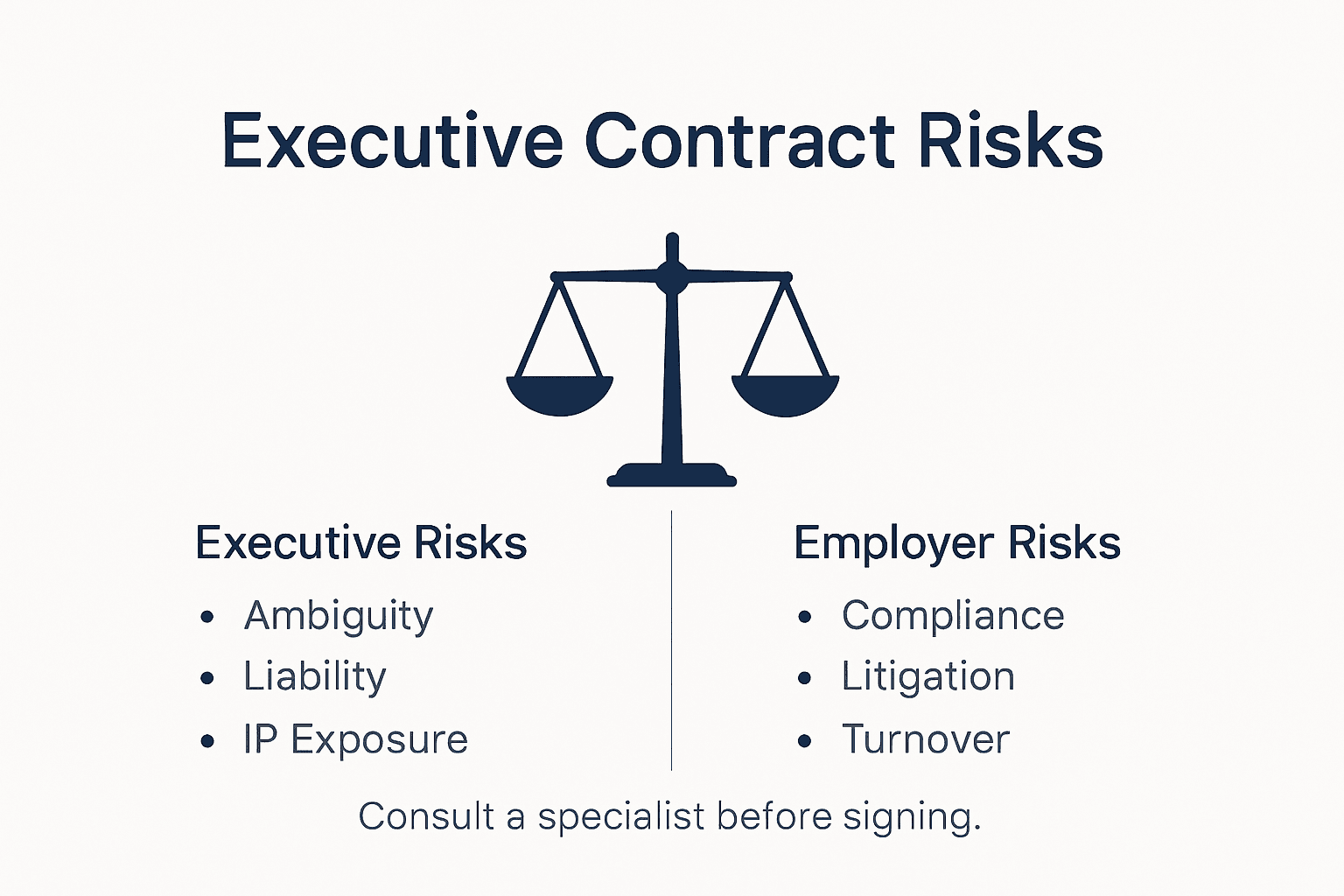
Confidentiality and intellectual property represent another critical area of potential liability. Executives often have access to sensitive company information, trade secrets, and strategic plans. Misunderstandings about ownership, usage, or disclosure of such information can trigger expensive legal battles, reputational damage, and potential financial penalties. Both parties must establish clear, comprehensive guidelines about information handling, post-employment restrictions, and the boundaries of proprietary knowledge. This requires a nuanced approach that balances protecting organizational assets with maintaining fair professional opportunities for executives.
Pro tip: Consult with an employment law specialist before signing any executive contract to identify potential hidden risks and negotiate more favorable, protective terms.
Navigating Disputes and Enforcement Options
Executive employment disputes require strategic approaches that balance legal precision with professional discretion. Arbitration represents a critical mechanism for resolving complex employment conflicts without resorting to prolonged and potentially reputation-damaging litigation. Sophisticated executives understand that early intervention and carefully structured dispute resolution strategies can protect both professional standing and potential financial interests.
Legal enforcement options in executive employment disputes encompass multiple potential pathways, each with distinct strategic implications. Formal litigation through California courts remains an option, but often proves costly and time-consuming. Alternative dispute resolution methods like mediation and arbitration offer more nuanced approaches that can preserve professional relationships while providing structured mechanisms for addressing contractual disagreements. These approaches allow parties to negotiate settlements with greater flexibility than traditional court proceedings, potentially mitigating the financial and reputational risks associated with protracted legal battles.
Navigating these complex legal landscapes requires a comprehensive understanding of contractual provisions, state employment regulations, and potential enforcement mechanisms. Executives must carefully document all interactions, maintain clear communication records, and be prepared to articulate specific contractual breaches or violations. The most successful dispute resolution strategies typically involve proactive communication, thorough documentation, and a willingness to explore mutually beneficial resolution frameworks that protect the interests of both the executive and the employing organization.
The following table compares major dispute resolution methods for executive contract conflicts in California:
| Method | Cost | Time to Resolution | Impact on Reputation |
|---|---|---|---|
| Court Lawsuit | High expenses | Several months/years | Public process, higher risk |
| Mediation | Moderate costs | Weeks to months | Private, preserves image |
| Arbitration | Moderate costs | Months | Private, confidential |
Pro tip: Consult with an employment law specialist immediately upon identifying potential contractual disputes to develop a strategic approach before taking formal legal action.
Protect Your Executive Rights Against Wrongful Termination in Villa Park
Navigating the complexities of executive employment contracts in California can be overwhelming especially when wrongful termination risks threaten your career stability. This article highlights the importance of understanding key contract clauses, legal protections, and dispute resolution options that shield executives in Villa Park. If you are facing challenges related to unfair dismissal or unclear termination conditions, it is critical to act decisively.
At Serendib Law Firm, we specialize in employment law cases tailored to executives like you who require personalized and aggressive advocacy. Our team knows how to dissect intricate contract terms and protect your professional rights against wrongful termination claims. Learn more about how we assist clients in the Villa Park area by browsing our Villa Park Archives. To understand broader wage and employment rights protections, explore our Wage Violations Archives and Leaves Archives.
Do not let ambiguous executive contract terms or unlawful termination jeopardize your career and income. Contact Serendib Law Firm today at https://www.serendiblaw.com/ for a free consultation with experienced California employment attorneys. The sooner you secure expert legal guidance the better you can protect your rights and workplace future.
Frequently Asked Questions
What are the key components of an executive employment contract?
Executive employment contracts typically include detailed compensation structures, job descriptions, performance expectations, and termination provisions among other clauses that address unique aspects of executive roles.
How do California laws protect executives from wrongful termination?
California law provides robust protections against wrongful termination, recognizing grounds for challenging dismissals related to discrimination, retaliation, and public policy violations, often supported by well-defined contractual agreements.
Why is it important for executives to seek legal counsel before signing contracts?
Engaging an employment law specialist can help executives identify potential hidden risks, ensure compliance with state regulations, and negotiate terms that protect their professional rights and interests.
What are the dispute resolution options for executives in case of contractual conflicts?
Executives can resolve disputes through various methods including formal litigation, mediation, and arbitration, each offering different advantages in terms of cost, time to resolution, and impact on professional reputation.
Recommended
- Experienced Villa Park Employment Law Attorneys
- Experienced Villa Park Workplace Retaliation Lawyers
- Experienced Villa Park Workplace Harassment Lawyers
- Experienced Villa Park Workplace Discrimination Lawyers
https://www.serendiblaw.com/executive-employment-contracts-villa-park/?fsp_sid=341


Comments
Post a Comment