Pregnancy Discrimination in Fullerton Schools: How the FEHA Protects Educators

Pregnancy discrimination remains a challenge for many American educators, with more than one in five female teachers reporting unfair treatment due to pregnancy or related conditions. In Fullerton, California, these issues can seriously impact both your career and well-being. Understanding your protections under the Fair Employment and Housing Act empowers you to address discrimination, secure necessary accommodations, and pursue remedies that protect your rights as an educator.
Table of Contents
- Defining Pregnancy Discrimination in Schools
- Recognizing Actions Prohibited by the FEHA
- Accommodations and Leave for Pregnant Educators
- Legal Rights, Employer Duties, and Filing Claims
- Examples and Remedies for Affected Teachers
Key Takeaways
| Point | Details |
|---|---|
| Understanding Pregnancy Discrimination | Educational institutions must not treat pregnant educators unfairly or differently, as it constitutes a violation of the Fair Employment and Housing Act (FEHA). |
| Rights to Accommodations | Pregnant educators are entitled to reasonable workplace accommodations, such as modified duties and adjusted schedules, to support their health and professional responsibilities. |
| Legal Recourse for Discrimination | Affected educators can file complaints with the California Civil Rights Department within three years of the discriminatory incident, relying on thorough documentation of their experiences. |
| Employer Responsibilities | Schools are mandated to engage with pregnant educators to address their needs, ensuring no unjust treatment occurs during their pregnancy. |
Defining Pregnancy Discrimination in Schools
Pregnancy discrimination in schools represents a serious legal violation that undermines educators’ professional rights and opportunities. Under California law, specifically the Fair Employment and Housing Act (FEHA), pregnancy discrimination occurs when an educational institution treats a pregnant educator differently or unfairly based on her pregnancy status, potentially impacting her employment, professional advancement, or working conditions.
The legal framework defines pregnancy discrimination broadly, encompassing multiple forms of harmful treatment. This can include refusing to hire a pregnant teacher, denying reasonable workplace accommodations, forcing unnecessary medical examinations, reducing work hours without justification, excluding pregnant educators from professional development opportunities, or creating a hostile work environment. Pregnancy discrimination protections extend beyond simple hiring practices to ensure comprehensive workplace fairness.
In Fullerton schools, educators experiencing pregnancy discrimination have robust legal protections. The FEHA mandates that schools provide reasonable accommodations, such as modified job duties, adjusted work schedules, or temporary transfers that do not cause undue hardship to the employer. These protections recognize pregnancy as a temporary medical condition requiring supportive, equitable treatment. Educational institutions cannot treat pregnancy as a disability but must provide similar considerations they would offer employees with temporary medical limitations.
Pro Tip for Educators: Document every interaction, accommodation request, and potential discriminatory action meticulously. Creating a detailed record can become critical evidence if you need to pursue legal action or file a complaint with the California Department of Fair Employment and Housing.
Recognizing Actions Prohibited by the FEHA
The Fair Employment and Housing Act (FEHA) provides comprehensive protections for pregnant educators by explicitly defining and prohibiting a wide range of discriminatory actions in Fullerton schools. Pregnancy discrimination encompasses far more than simple termination, extending to subtle and overt forms of workplace mistreatment that can undermine an educator’s professional standing and opportunities.
Prohibited employment actions under FEHA include a comprehensive range of potential workplace violations. These include refusing to hire a pregnant teacher, denying promotions, reducing work hours, excluding from professional development opportunities, forcing unnecessary medical examinations, creating hostile work environments, and imposing punitive job assignments. Importantly, these protections cover not just direct actions but also indirect or systemic practices that could disadvantage pregnant educators.
The legal framework mandates that schools must engage in an interactive process with pregnant employees, providing reasonable accommodations without causing undue hardship. This means Fullerton school districts cannot simply ignore pregnancy-related workplace needs or implement blanket policies that disproportionately impact pregnant educators. Accommodations might include modified duties, adjusted schedules, temporary transfers, or ergonomic workplace adjustments that enable pregnant teachers to continue performing their professional responsibilities effectively.
Pro Tip for Educators: Create a written record of all workplace interactions, accommodation requests, and potential discriminatory incidents. Contemporaneous documentation serves as critical evidence if you need to file a complaint with the California Department of Fair Employment and Housing.
Accommodations and Leave for Pregnant Educators
The Fair Employment and Housing Act (FEHA) provides robust protections for pregnant educators in Fullerton schools, ensuring they receive comprehensive workplace accommodations and job-protected leave. These legal safeguards recognize pregnancy as a temporary medical condition that requires flexible and supportive workplace policies, protecting educators from potential professional disadvantages during their pregnancy.

Pregnancy-related workplace accommodations can take multiple forms, tailored to individual medical needs and job requirements. These may include schedule modifications, more frequent rest breaks, ergonomic workplace adjustments, temporary reassignments to less physically demanding roles, access to larger workstations, and the option for remote work when medically appropriate. The key principle is ensuring pregnant educators can continue performing their professional responsibilities effectively while maintaining their health and safety.
Under California law, pregnant educators are entitled to up to four months of pregnancy disability leave, which can be taken continuously or intermittently based on medical recommendations. During this leave, educators may utilize accrued paid time off and potentially qualify for State Disability Insurance or Paid Family Leave benefits. Critically, employers must reinstate the educator to the same or an equivalent position upon return, with identical pay, benefits, and working conditions, thereby protecting their career trajectory and professional standing.
Pro Tip for Educators: Consult with your healthcare provider to obtain detailed medical documentation specifying your accommodation needs. Clear, comprehensive medical guidance will strengthen your request and help ensure your workplace makes appropriate adjustments.
Legal Rights, Employer Duties, and Filing Claims
The Fair Employment and Housing Act (FEHA) establishes clear legal rights and employer responsibilities regarding pregnancy discrimination in Fullerton schools. These protections are designed to ensure pregnant educators are treated fairly, with comprehensive safeguards against workplace mistreatment and professional disadvantage during pregnancy and related medical conditions.
Pregnancy discrimination legal protections mandate specific employer duties that go beyond basic non-discrimination. School districts must provide reasonable workplace accommodations, transfer pregnant educators to less strenuous duties if medically necessary, and guarantee job reinstatement after pregnancy-related leave. Employers cannot interfere with these rights, create obstacles to accommodation requests, or take retaliatory actions against pregnant educators seeking their legal protections.
When discrimination occurs, pregnant educators have multiple avenues for legal recourse. The primary mechanism involves filing a formal complaint with the California Civil Rights Department, typically within one year of the last discriminatory incident. This process requires detailed documentation of the discrimination, including specific instances of unfair treatment, denied accommodations, or professional opportunities withheld due to pregnancy status. Educators should compile comprehensive evidence, including performance records, communication logs, medical documentation, and witness statements to support their claims.
Pro Tip for Educators: Maintain a contemporaneous, detailed record of all workplace interactions related to your pregnancy, including emails, performance evaluations, and accommodation requests. Thorough documentation can become crucial evidence if you need to pursue legal action.
Here’s how key rights and employer responsibilities compare under California’s FEHA for pregnant educators:
| Right/Responsibility | What It Means | Business Impact for Schools |
|---|---|---|
| Reasonable Accommodation | Adjustments to job duties or schedules | Improves retention and morale |
| Interactive Process | Dialogue on needed work adjustments | Reduces legal complaints |
| Job-Protected Leave | Up to 4 months, reinstatement guaranteed | Ensures compliance with state law |
| Non-Retaliation | No adverse action for exercising rights | Fosters trust and equitable culture |
| Equal Opportunity | Cannot deny advancement or training opportunities | Promotes professionalism and diversity |
Examples and Remedies for Affected Teachers
Pregnancy discrimination in Fullerton schools can manifest through various subtle and overt actions that compromise an educator’s professional standing and career trajectory. Discriminatory behaviors might include passing over pregnant teachers for promotions, reducing work responsibilities without justification, creating hostile work environments, or implementing unreasonable performance expectations during pregnancy.
Potential examples of pregnancy discrimination range from explicit actions to more nuanced workplace behaviors. These could involve denying reasonable accommodations like ergonomic seating or additional restroom breaks, reassigning challenging classes exclusively to pregnant educators, excluding them from professional development opportunities, making derogatory comments about pregnancy, or suggesting that pregnancy will negatively impact job performance. School administrators might also illegally attempt to pressure pregnant educators into taking extended unpaid leave or suggesting early retirement.
Legal remedies for affected teachers are comprehensive and designed to provide meaningful compensation and workplace restoration. Potential outcomes might include reinstatement to previous positions, back pay, compensation for emotional distress, punitive damages against the school district, mandatory workplace anti-discrimination training, and potential administrative sanctions. Educators can seek relief through administrative complaints with the California Civil Rights Department, filing federal Title IX complaints, or pursuing civil litigation to address systemic workplace discrimination.
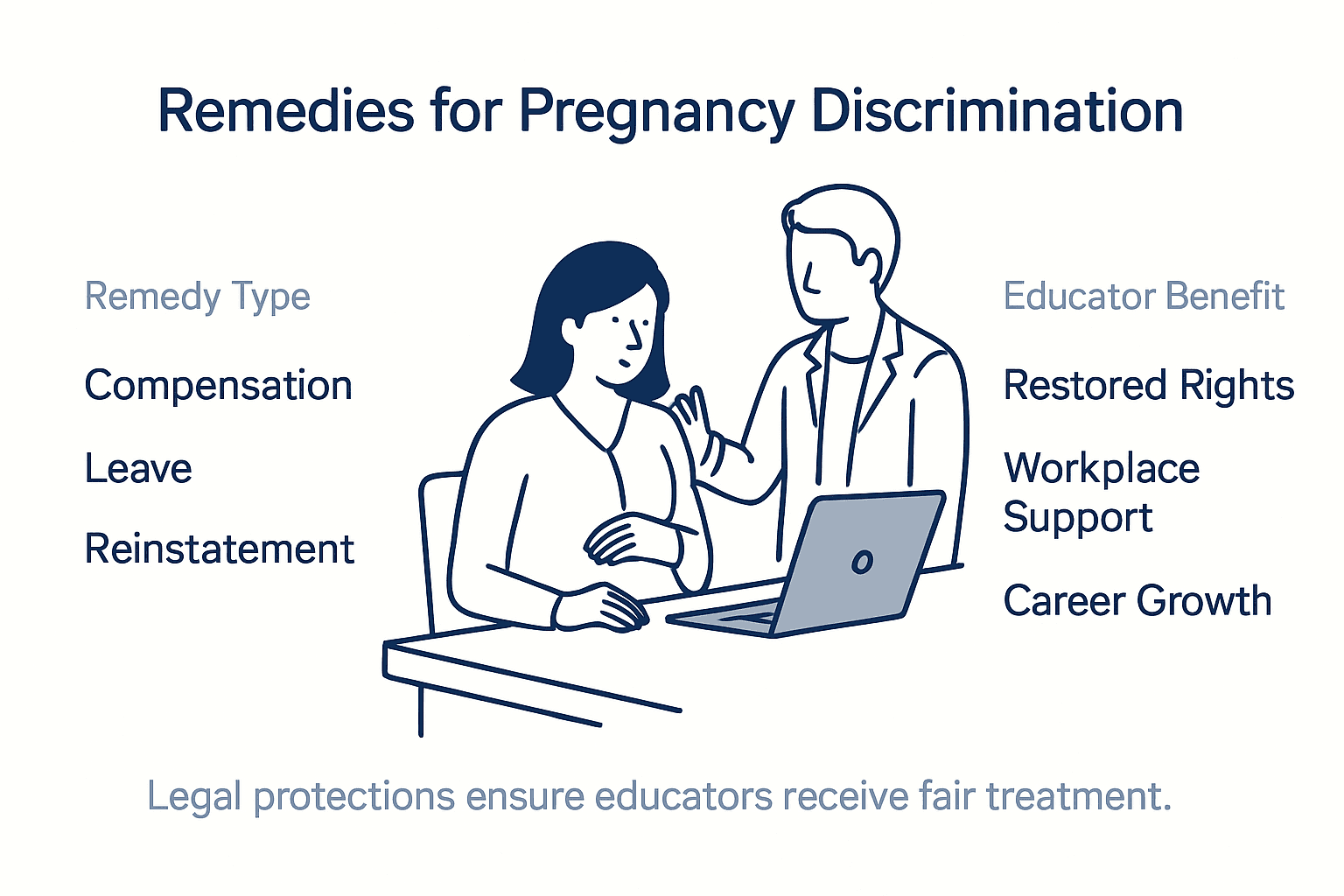
The following table summarizes types of legal remedies available for educators facing pregnancy discrimination:
| Remedy Type | Example Outcome | Benefit to Educator |
|---|---|---|
| Reinstatement | Return to former position | Restores career path |
| Monetary Compensation | Back pay and damages | Financial security |
| Policy Changes | Mandatory anti-bias training | Improves future workplace fairness |
| Administrative Action | Sanctions or oversight | Prevents repeat discrimination |
Pro Tip for Educators: Consult with an employment law specialist who understands educational workplace dynamics before initiating a formal complaint. Professional legal guidance can help strategically document and pursue your discrimination claim while protecting your professional reputation.
Protect Your Rights Against Pregnancy Discrimination in Schools
Pregnancy discrimination undermines your professional dignity and career growth. If you are facing unfair treatment, denied accommodations, or retaliation because of your pregnancy while working in Fullerton schools, you deserve strong legal support. The Fair Employment and Housing Act (FEHA) protects you from these violations, but navigating your rights and employer obligations can be challenging without expert guidance.
At Serendib Law Firm, we understand the stress and uncertainty that pregnancy discrimination creates. Our experienced team advocates zealously for pregnant educators to secure reasonable accommodations, job-protected leave, and equitable treatment. Learn more about how to protect yourself by visiting our Pregnancy Discrimination Archives. Act now to safeguard your career and well-being by contacting us through our official website. We offer personalized consultations to help you take immediate and effective action. To explore additional leave rights and options, visit Leaves Archives. Don’t wait for discrimination to undermine your future. Reach out today and secure the legal support you need.
Frequently Asked Questions
What is pregnancy discrimination in schools?
Pregnancy discrimination in schools occurs when an educational institution treats a pregnant educator unfairly or differently due to her pregnancy status, impacting her employment, advancement, or working conditions.
What protections does the Fair Employment and Housing Act (FEHA) provide for pregnant educators?
FEHA mandates that educational institutions provide reasonable accommodations, such as modified duties or adjusted schedules, and protects pregnant educators from discrimination in hiring, promotion, and other employment actions.
How long is the job-protected leave for pregnant educators under FEHA?
Pregnant educators are entitled to up to four months of pregnancy disability leave, which can be taken continuously or intermittently based on medical recommendations and must guarantee job reinstatement upon return.
What should I do if I experience pregnancy discrimination at work?
If you experience pregnancy discrimination, document all interactions and incidents, then file a complaint with the California Civil Rights Department within one year of the last discriminatory event to seek legal recourse.
Recommended
- Pregnancy Discrimination and Light Duty Denials: Santa Ana Guide | Serendib Law Firm
- Orange Pregnancy Retaliation: CFRA Leave Rights Defended
- Pregnancy Discrimination in Villa Park Businesses | Serendib Law Firm
- Complete Guide to Pregnancy Discrimination in Airlines: Orange, CA | Serendib Law Firm
- Employment Law – Law Office of Brian Y. Shirazi, PC
https://www.serendiblaw.com/pregnancy-discrimination-feha-fullerton/?fsp_sid=306


Comments
Post a Comment