Sexual Harassment Claims and Arbitration in Orange CA

More than half of chain store employees report experiencing some form of workplace harassment in their careers. This reality shapes not only daily life on the job but can also undermine safety and trust at every level. Understanding the real definition of sexual harassment, its many forms, and the rights each worker holds is key to building a safer, more respectful work environment for everyone.
Table of Contents
- Defining Sexual Harassment In Chain Stores
- Types Of Sexual Harassment And Common Scenarios
- Understanding Arbitration Agreements In Employment
- Legal Framework In California Workplace Disputes
- Employee Rights And Responsibilities Explained
- Risks Of Arbitration Versus Court Litigation
Key Takeaways
| Point | Details |
|---|---|
| Understanding Sexual Harassment | Sexual harassment includes unwelcome sexual advances and creates a hostile work environment, legally prohibited in workplaces. |
| Types of Harassment | Recognize the two main types: quid pro quo and hostile work environment, to understand rights and reporting procedures. |
| Arbitration Implications | Arbitration agreements limit legal recourse and confidentiality can shield employers, requiring careful review by employees before signing. |
| Employee Rights | Employees must document incidents and report misconduct without fear of retaliation, maintaining professionalism throughout the process. |
Defining Sexual Harassment in Chain Stores
Sexual harassment in chain stores represents a serious workplace issue that impacts employee safety, dignity, and professional environment. According to the EEOC, sexual harassment involves unwelcome sexual advances, requests for sexual favors, and verbal or physical conduct of a sexual nature that negatively affects an individual’s employment conditions.
In chain store settings, sexual harassment can manifest through various inappropriate behaviors. These might include inappropriate comments about physical appearance, unwanted touching, suggestive gestures, displaying sexually explicit materials, or making persistent romantic or sexual propositions. The key distinguishing factor is that these actions create a hostile work environment or interfere with an employee’s professional performance.
The California Department of Industrial Relations emphasizes that sexual harassment is not just about explicit sexual advances. It encompasses a broad range of behaviors that can make employees feel uncomfortable, intimidated, or unsafe. This can include repeated inappropriate jokes, suggestive emails, unwelcome physical contact, or creating an environment that feels sexually charged or threatening.
Chain store employees should understand that sexual harassment is legally prohibited and they have rights. Behaviors that constitute harassment can occur between employees, managers and subordinates, or even involve customers. Documentation, reporting through proper channels, and seeking legal guidance are critical steps for workers experiencing such misconduct.
Types of Sexual Harassment and Common Scenarios
Sexual harassment in workplace settings can manifest in two primary forms, as identified by the U.S. Department of Justice. Quid pro quo harassment occurs when job benefits, promotions, or continued employment are directly conditioned on providing sexual favors. In chain store environments, this might involve a manager suggesting a worker will receive better shifts or avoid scheduling conflicts in exchange for sexual cooperation.
The second type is hostile work environment harassment, which creates an intimidating, offensive, or sexually charged workplace atmosphere. According to Civil Rights resources, this can include repeated inappropriate behaviors such as sexually oriented jokes, unwelcome physical contact, persistent requests for dates, or displaying sexually suggestive materials in shared workplace areas.
Common scenarios in chain store settings might involve persistent unwanted romantic advances, inappropriate comments about physical appearance, suggestive gestures, or creating an environment where sexual tension feels pervasive. These behaviors can occur between coworkers, involve supervisory staff targeting subordinates, or even include interactions with customers that make employees feel uncomfortable or threatened.

Recognizing these harassment types is crucial for employees to understand their rights and take appropriate action.
Here’s a comparison of the main types of sexual harassment in chain store workplaces:
| Type of Harassment | Key Characteristics | Typical Scenarios |
|---|---|---|
| Quid Pro Quo | Job benefits tied to sexual favors | Manager offers better shifts for compliance |
| Hostile Work Environment | Intimidating or offensive workplace atmosphere | Repeated jokes Unwanted contact |
| Customer-Employee | Harassment initiated by non-employees | Customer makes persistent advances |
| Peer-to-Peer | Occurs between coworkers | Coworkers make comments or gestures |
Understanding Arbitration Agreements in Employment
Arbitration agreements are legal contracts that require employees to resolve workplace disputes through private arbitration instead of pursuing traditional court litigation. These agreements typically mandate that any conflicts, including sexual harassment claims, be settled by a neutral third-party arbitrator rather than going through the court system.
In employment settings, arbitration agreements often include specific provisions that can significantly impact an employee’s ability to seek justice. Workers may be required to waive their right to a jury trial, limit potential damages, or follow strict procedural guidelines that can make pursuing claims more challenging. Some agreements even include confidentiality clauses that prevent employees from publicly discussing their cases, which can potentially shield employers from broader accountability.
The potential drawbacks of arbitration for employees are substantial. Arbitration proceedings are typically private, which means sexual harassment claims remain confidential and do not create public records that could expose systemic workplace misconduct. Additionally, arbitrators are often hired and paid by employers, which can create an inherent bias that may disadvantage employees seeking fair resolution of their claims.
Employees facing sexual harassment should carefully review any arbitration agreements before signing and understand their potential implications.
Understanding the nuances of arbitration agreements can be crucial in protecting workplace rights and determining the most effective strategy for addressing misconduct. While these agreements can seem intimidating, employees still have legal protections and options for challenging unfair or overly restrictive terms.
Legal Framework in California Workplace Disputes
California’s legal framework for workplace disputes provides robust protections for employees experiencing harassment, discrimination, or unfair treatment. State laws go beyond federal regulations, offering more comprehensive safeguards that empower workers to challenge misconduct and seek justice through multiple legal channels.
Key legislative protections in California include the Fair Employment and Housing Act (FEHA), which explicitly prohibits discrimination and harassment based on protected characteristics. This law covers a wide range of workplace interactions, including those between employees, supervisors, and even non-employee contacts like customers or vendors. Employees have the right to file complaints with the California Civil Rights Department, pursue internal grievance procedures, or initiate legal action against employers who fail to prevent or address workplace harassment.
The state’s legal framework also recognizes the complexities of workplace power dynamics. California courts have consistently interpreted employment laws to prioritize employee rights, often requiring employers to take proactive measures to prevent harassment and discrimination. This includes mandatory sexual harassment training, implementing clear reporting mechanisms, and maintaining workplace environments free from intimidation or hostile behavior.
Navigating these legal protections can be challenging, which is why understanding your rights is crucial. Arbitration strategies in employment law cases can provide critical insights into how employees can effectively protect themselves and seek resolution when workplace misconduct occurs. Whether through administrative complaints, civil litigation, or negotiated settlements, California’s legal framework offers multiple avenues for workers to assert their rights and challenge inappropriate workplace behavior.
Employee Rights and Responsibilities Explained
Employees have a complex set of legal rights and responsibilities when addressing workplace harassment, as outlined by the Equal Employment Opportunity Commission. Employee rights fundamentally include protection from discriminatory treatment, the ability to report misconduct without fear of retaliation, and access to formal complaint mechanisms within their workplace.
According to the U.S. Department of Labor, employees have specific responsibilities when experiencing or witnessing workplace harassment. These include documenting incidents in detail, reporting harassment through appropriate channels, cooperating with internal investigations, and maintaining professional conduct throughout the process. Workers must communicate concerns clearly, follow established workplace reporting procedures, and preserve evidence that might support their claims.
Key responsibilities for employees facing potential harassment include maintaining a contemporaneous record of incidents, including dates, times, locations, specific behaviors, and any potential witnesses. This documentation can prove critical if formal legal action becomes necessary. Employees should also understand their company’s specific harassment policies, report incidents to human resources or designated management representatives, and seek support from trusted colleagues or workplace advocates.
Navigating workplace rights can be challenging, which is why understanding the full scope of your legal protections is crucial. Exploring comprehensive employee rights resources can provide invaluable guidance in protecting yourself and understanding the intricate legal landscape of workplace harassment and discrimination. Remember, while the process might seem intimidating, you have multiple legal avenues to address and remedy inappropriate workplace behavior.
Risks of Arbitration Versus Court Litigation
Arbitration and court litigation represent two distinctly different paths for resolving workplace sexual harassment claims, each with significant implications for employees seeking justice. According to Nolo, while arbitration offers privacy and potentially faster resolution, it often lacks the procedural protections and comprehensive appeal rights available in traditional court systems.
Arbitration risks are particularly pronounced in sexual harassment cases. Unlike court proceedings, arbitration typically occurs in private settings, which can shield employers from public accountability. Arbitrators are frequently hired and paid by employers, creating an inherent potential for bias. Additionally, arbitration agreements often limit damages, restrict discovery processes, and may require employees to waive their right to a jury trial.
Traditional court litigation, by contrast, provides more robust legal protections. Employees can benefit from comprehensive discovery processes, the ability to present evidence before a jury, and potential public record of misconduct. Court proceedings allow for broader legal discovery, potentially uncovering systemic workplace harassment patterns that might remain hidden in private arbitration settings.
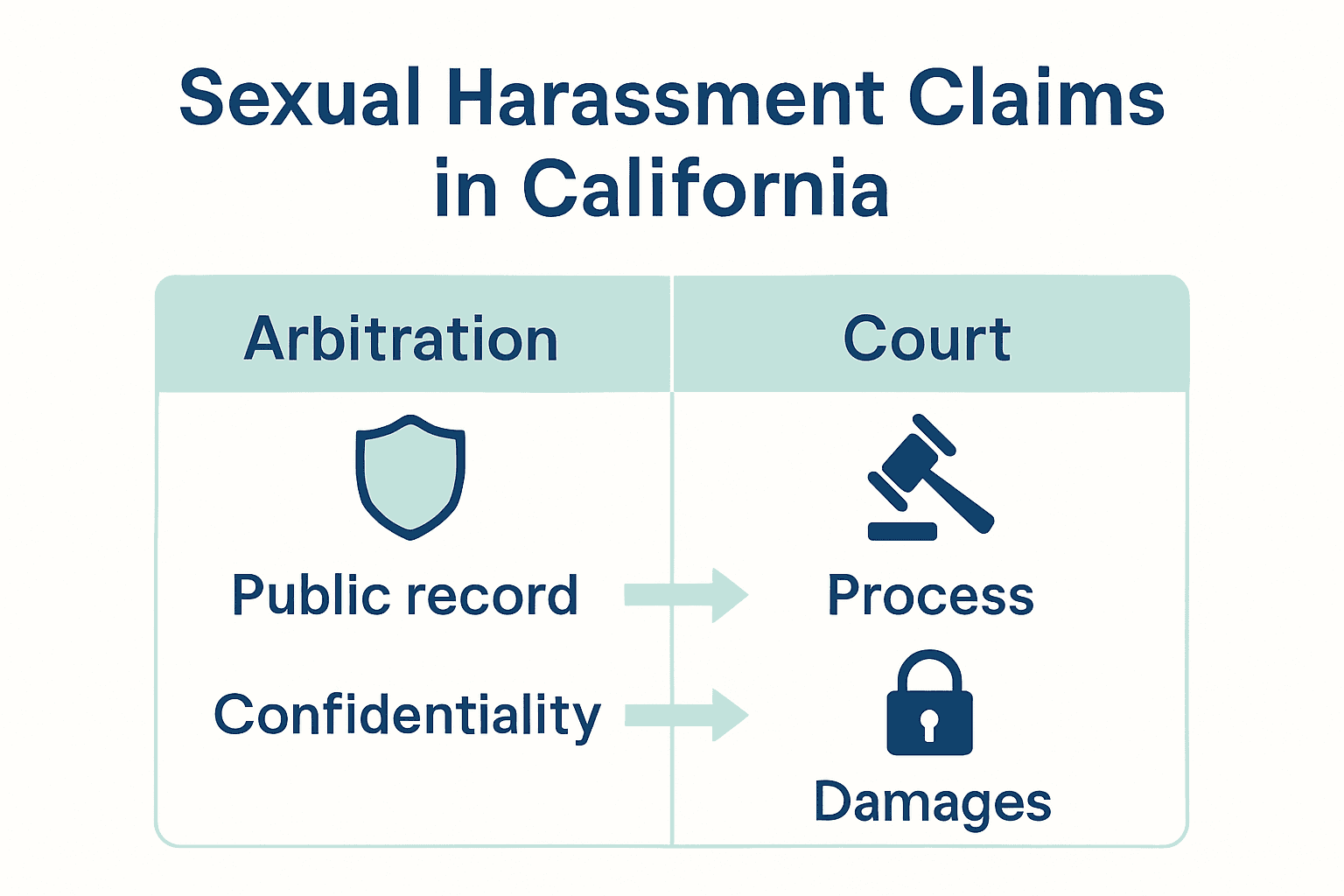
Understanding arbitration complexities in employment law cases becomes crucial for employees navigating sexual harassment claims. While arbitration might seem expedient, the long-term consequences of limited legal recourse can significantly impact an individual’s ability to seek comprehensive justice and workplace accountability.
Protect Your Rights Against Sexual Harassment and Unfair Arbitration in Orange CA
Facing sexual harassment in the workplace can feel overwhelming, especially when arbitration agreements complicate your path to justice. The challenges of navigating private arbitration, understanding your rights, and confronting workplace hostility demand experienced legal support. At Serendib Law Firm, we recognize the emotional toll and legal hurdles involved. Our team is committed to providing personalized advocacy that empowers you every step of the way.
If you are in Orange County and seeking a trusted advocate to help you unravel the complexities of sexual harassment claims and arbitration, explore our Sexual Harassment Archives and Orange Archives. Act now to protect your rights with skilled legal representation. Contact us today at Serendib Law Firm to schedule your free consultation and take the crucial first step towards justice.
Frequently Asked Questions
What constitutes sexual harassment in the workplace?
Sexual harassment involves unwelcome sexual advances, requests for sexual favors, and any verbal or physical conduct of a sexual nature that negatively affects an individual’s employment conditions.
What are the types of sexual harassment?
There are two primary types: quid pro quo harassment, which involves job benefits tied to sexual favors, and hostile work environment harassment, which creates an intimidating or offensive workplace atmosphere due to inappropriate behaviors.
What should I do if I experience sexual harassment at work?
If you experience sexual harassment, document specific incidents, report them through your company’s established channels, and seek legal guidance if necessary to understand your rights and options.
How does arbitration differ from court litigation in handling sexual harassment claims?
Arbitration typically occurs in a private setting without the same procedural protections as court litigation, often limiting damages and appeal rights, which can disadvantage employees seeking justice for sexual harassment claims.
Recommended
- Understanding Arbitration Agreements and Their Impact on Sexual Harassment Claims | Serendib Law Firm
- Orange County Sexual Harassment | Serendib Law Firm
https://www.serendiblaw.com/sexual-harassment-arbitration-orange-ca/?fsp_sid=366


Comments
Post a Comment