Understanding Disability Discrimination Lawsuits Involving Mental Health

Mental health conditions like depression, anxiety, and PTSD are now recognized as disabilities that can legally protect employees at work. About one in five adults in the US experience a mental health issue each year, yet most never realize their rights on the job. Surprising as it seems, some of the biggest threats have nothing to do with diagnosis or symptoms but with subtle discrimination hiding behind workplace policies and decisions.
Table of Contents
- What Is Disability Discrimination In Relation To Mental Health?
- Understanding Mental Health As A Protected Disability
- Forms Of Mental Health Discrimination In Employment
- Why Is Mental Health Disability Discrimination Important?
- How Disability Discrimination Laws Work For Mental Health Conditions
- Legal Protections And Definitions
- Reasonable Accommodations And Employer Obligations
- Legal Recourse And Enforcement Mechanisms
- Key Concepts In Disability Discrimination Lawsuits Involving Mental Health
- Establishing Legal Standing And Burden Of Proof
- Types Of Compensable Damages
- Strategic Litigation Considerations
Quick Summary
| Takeaway | Explanation |
|---|---|
| Mental health qualifies as a disability under ADA | Conditions like depression and PTSD are protected, requiring fair treatment. |
| Employers must provide reasonable accommodations | Adjustments like modified schedules are necessary for employees with mental health issues. |
| Discrimination can lead to legal action | Employees can file complaints or lawsuits against discriminatory practices in the workplace. |
| Workplace stigma affects employee well-being | Discrimination may cause emotional distress, impacting both personal and professional growth. |
| Preventing discrimination enhances organizational success | Inclusive environments boost productivity and help attract diverse talents. |
What is Disability Discrimination in Relation to Mental Health?
Disability discrimination involving mental health conditions represents a serious violation of an individual’s legal rights in workplace settings. These discriminatory practices occur when employers treat employees or job applicants unfairly based on their diagnosed mental health conditions, which are legally protected under the Americans with Disabilities Act (ADA).
Understanding Mental Health as a Protected Disability
Mental health conditions qualify as disabilities when they substantially limit one or more major life activities. This means that conditions such as depression, anxiety disorders, bipolar disorder, post-traumatic stress disorder (PTSD), and schizophrenia are recognized as protected disabilities under federal law. According to the Job Accommodation Network, these conditions can significantly impact an individual’s ability to perform work tasks, interact with colleagues, or manage professional responsibilities.
Key characteristics that define mental health conditions as disabilities include:
- Documented medical diagnosis by a qualified professional
- Substantial limitation of major life activities
- Potential need for reasonable workplace accommodations
- Ongoing medical treatment or management
Forms of Mental Health Discrimination in Employment
Employment-related disability discrimination involving mental health can manifest in various harmful ways. These discriminatory practices might include refusing to hire a qualified candidate, denying promotions, implementing unfair performance evaluations, or creating a hostile work environment based on an individual’s mental health status.
Employers are legally prohibited from making employment decisions solely based on an employee’s mental health condition. This means they cannot:
- Terminate employment because of a diagnosed mental health condition
- Refuse to provide reasonable workplace accommodations
- Treat employees differently because of their mental health history
- Disclose an employee’s mental health information without consent
Understanding these protections is crucial for employees experiencing workplace discrimination related to mental health conditions. Individuals who experience such treatment have legal recourse to challenge discriminatory practices and seek appropriate remedies through disability discrimination lawsuits.
Why is Mental Health Disability Discrimination Important?
Mental health disability discrimination represents a critical issue that impacts individual well-being, workplace dynamics, and broader societal inclusivity. By addressing these discriminatory practices, we protect fundamental human rights and create environments that value diverse professional contributions.
Individual Psychological and Professional Impact
Discrimination against individuals with mental health conditions can cause profound psychological harm. When employees experience workplace stigma or unfair treatment, they often encounter significant emotional distress, reduced self-esteem, and increased anxiety. According to the National Alliance on Mental Illness, these experiences can exacerbate existing mental health challenges and create barriers to professional advancement.
Key psychological consequences of workplace mental health discrimination include:
- Increased risk of depression and anxiety
- Reduced workplace confidence and motivation
- Potential long-term career trajectory disruption
- Emotional trauma from persistent stigmatization
Economic and Organizational Implications
Mental health disability discrimination carries substantial economic consequences for both individuals and organizations. Discriminatory practices can lead to reduced workforce productivity, higher employee turnover, and potential legal expenses. Employers who fail to create inclusive environments not only risk legal challenges but also lose talented professionals who could contribute significantly to organizational success.
The broader implications of mental health discrimination extend beyond individual workplaces, reflecting systemic challenges in professional environments. By recognizing and addressing these issues, organizations can:
- Develop more comprehensive and supportive workplace cultures
- Attract diverse talent across different mental health experiences
- Demonstrate corporate social responsibility
- Improve overall organizational performance and employee satisfaction
Ultimately, combating mental health disability discrimination requires ongoing commitment from employers, legal frameworks, and societal attitudes to create genuinely inclusive professional environments that respect individual differences and potential.
How Disability Discrimination Laws Work for Mental Health Conditions
Disability discrimination laws provide critical legal protections for individuals with mental health conditions, establishing a comprehensive framework that safeguards employees from unfair treatment in the workplace. These laws mandate specific responsibilities for employers and outline clear mechanisms for addressing potential discriminatory practices.
Below is a table summarizing the primary forms of legal protection under the Americans with Disabilities Act (ADA) for mental health conditions and what each entails.
| Legal Protection | Explanation |
|---|---|
| Prohibition of Discrimination | Employers cannot make adverse decisions based on mental health status. |
| Requirement for Reasonable Accommodations | Must provide necessary adjustments for employees to perform essential functions. |
| Protection Against Retaliation | Safeguards employees from negative actions for requesting accommodations. |
| Confidentiality of Medical Information | Ensures employer maintains employee medical details in strict confidence. |
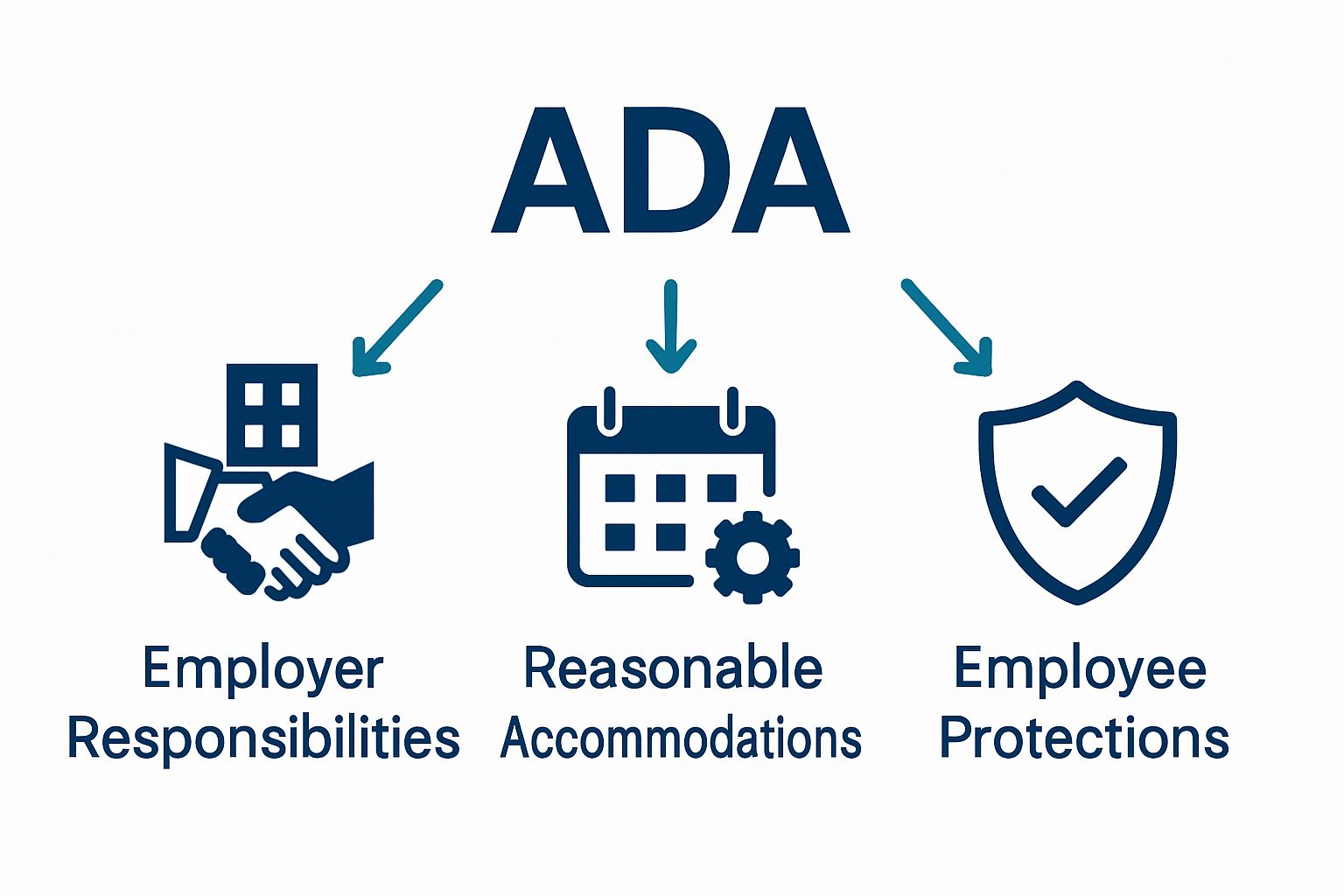
Legal Protections and Definitions
The Americans with Disabilities Act (ADA) serves as the primary federal legislation protecting individuals with mental health conditions. According to the Equal Employment Opportunity Commission, the law defines a disability as a physical or mental impairment that substantially limits one or more major life activities. This definition encompasses a wide range of mental health conditions, ensuring broad legal coverage for employees.
Key legal protections include:
- Prohibition of discrimination based on mental health status
- Requirement for reasonable workplace accommodations
- Protection against retaliation for requesting accommodations
- Confidentiality of medical information
Reasonable Accommodations and Employer Obligations
Employers must provide reasonable accommodations for employees with mental health disabilities, which can include flexible scheduling, modified work environments, or adjusted job responsibilities. These accommodations must enable the employee to perform essential job functions without causing undue hardship to the employer. Learn more about workplace disability discrimination and your legal rights.
Important considerations for reasonable accommodations involve:
- Individualized assessment of employee needs
- Interactive dialogue between employer and employee
- Documented medical recommendations
- Practical implementation of support measures
Legal Recourse and Enforcement Mechanisms
Employees who experience mental health disability discrimination have multiple avenues for legal recourse. They can file complaints with the Equal Employment Opportunity Commission (EEOC) or pursue civil lawsuits seeking remedies such as reinstatement, back pay, compensatory damages, and legal fees. The legal system recognizes the profound impact of workplace discrimination and provides robust mechanisms to protect employees’ rights and dignity.
Key Concepts in Disability Discrimination Lawsuits Involving Mental Health
Disability discrimination lawsuits involving mental health conditions represent complex legal proceedings that require sophisticated understanding of legal protections, medical evidence, and workplace dynamics. These legal actions aim to challenge systemic discrimination and secure justice for individuals experiencing unfair treatment based on their mental health status.
Establishing Legal Standing and Burden of Proof
To successfully pursue a disability discrimination lawsuit, plaintiffs must demonstrate specific legal elements that prove discriminatory treatment. According to the Job Accommodation Network, this involves providing comprehensive evidence showing how mental health conditions substantially limit major life activities and how employers responded to accommodation requests.
This table outlines the critical components needed to establish legal standing in a mental health disability discrimination lawsuit and what each component means for a plaintiff.
| Component | Description |
|---|---|
| Medical Diagnosis | Documentation from a qualified healthcare professional confirming condition |
| Evidence of Discrimination | Proof of unfair treatment or adverse actions due to mental health status |
| Substantial Limitation in Job Performance | Demonstration that condition impacts ability to perform major job duties |
| Failure of Employer to Accommodate | Proof employer declined or ignored reasonable accommodation requests |
Critical components for establishing legal standing include:
- Documented medical diagnosis from qualified healthcare professionals
- Clear evidence of workplace discrimination
- Demonstration of substantial limitation in job performance
- Proof of employer’s failure to provide reasonable accommodations
Types of Compensable Damages
Mental health disability discrimination lawsuits can seek various forms of compensatory and punitive damages. Potential legal remedies may encompass financial compensation for lost wages, emotional distress, legal expenses, and potential reinstatement. Learn more about workplace disability discrimination and understand your rights in these complex legal scenarios.
Key categories of potential damages include:
- Back pay and lost future earnings
- Medical expenses related to discrimination-induced stress
- Emotional distress compensation
- Punitive damages for egregious misconduct
- Legal fees and court costs
Strategic Litigation Considerations
Successful disability discrimination lawsuits require meticulous documentation, strategic legal planning, and understanding of complex medical and employment regulations. Plaintiffs must work closely with legal professionals who specialize in employment discrimination and possess deep knowledge of mental health disability protections.

Navigating these legal challenges demands comprehensive preparation, including gathering medical documentation, maintaining detailed workplace communication records, and demonstrating a clear connection between mental health conditions and discriminatory workplace practices.
Protect Your Rights Against Mental Health Disability Discrimination
If you are facing unfair treatment at work because of a mental health condition, you are not alone. Many employees struggle with discrimination that affects their well-being and career, especially when employers fail to provide reasonable accommodations or act on stigma. Understanding how mental health fits into disability discrimination laws is the first step toward reclaiming your voice and dignity. Our firm’s Disability Discrimination Archives page has valuable resources designed to clarify your options and address your unique challenges.
You do not have to accept workplace injustice or let it derail your future. Contact our team today for a free consultation and learn how we can support you in filing a disability discrimination lawsuit. Our experienced attorneys are ready to fight for your rights, provide compassionate guidance, and help you pursue fair compensation. Visit our main site or explore Employment Law to take your next step toward resolution now.
Frequently Asked Questions
What qualifies as a mental health disability under disability discrimination laws?
Mental health disabilities are defined as conditions that substantially limit one or more major life activities. This includes diagnosed conditions such as depression, anxiety disorders, bipolar disorder, PTSD, and schizophrenia.
What are my rights regarding reasonable accommodations for mental health conditions at work?
Employees with mental health disabilities have the right to request reasonable accommodations that enable them to perform their job responsibilities. This may include flexible work hours, modified duties, or adjustments to the work environment.
How can I prove that I experienced mental health discrimination at work?
To prove mental health discrimination, you must gather evidence including medical documentation of your condition, records of discriminatory actions taken against you, and proof of your employer’s failure to provide reasonable accommodations.
What remedies can I seek if I win a lawsuit for mental health discrimination?
If you win a lawsuit for mental health discrimination, potential remedies may include financial compensation for lost wages, emotional distress damages, medical expenses related to discrimination, and payment of legal fees.
Recommended
- Disability Discrimination | Serendib Law Firm
- Workplace Disability Discrimination- Common Violations by Employers | Serendib Law Firm
- Workplace Disability Discrimination- Common Violations by Employers | Serendib Law Firm
- Disability Discrimination Archives | Serendib Law Firm
https://www.serendiblaw.com/understanding-disability-discrimination-lawsuits-involving-mental-health/?fsp_sid=324


Comments
Post a Comment