Whistleblower Retaliation in Government Employment Explained

Nearly 70 percent of government whistleblowers report some form of retaliation after exposing misconduct. These numbers reveal just how high the stakes are when employees challenge wrongdoing in public agencies. Facing threats like termination, demotion, or a hostile work atmosphere, individuals who speak out often risk both their jobs and reputations. Learning how whistleblower protections work, what retaliation looks like, and the steps for seeking recourse can make all the difference for those safeguarding public trust.
Key Takeaways
| Point | Details |
|---|---|
| Whistleblower Retaliation Definition | Government employees can face serious consequences for reporting misconduct, including termination or harassment, which are considered illegal. |
| Legal Protections | Laws like the Whistleblower Protection Act safeguard federal employees, ensuring they can report without fear of retaliation. |
| Documentation is Key | Employees suspecting retaliation should meticulously document incidents and seek legal counsel to protect their rights. |
| Timely Reporting | Promptly reporting misconduct is crucial, as there are strict deadlines for filing complaints regarding retaliation. |
Table of Contents
- Defining Whistleblower Retaliation In Government Employment
- Common Forms And Examples Of Retaliation
- Legal Protections For Government Whistleblowers
- Reporting Procedures And Investigation Process
- Employee Rights And Employer Obligations
- Risks, Remedies, And Legal Recourse
Defining Whistleblower Retaliation in Government Employment
Whistleblower retaliation represents a serious legal violation where government employers punish employees for exposing misconduct, illegal activities, or potential threats to public safety. According to Whistleblower Retaliation FAQ, these actions can include termination, demotion, harassment, or creating a hostile work environment designed to discourage future reporting.
In the federal civil service, whistleblower protections are critical safeguards. As defined by federal statutes, retaliation occurs when personnel actions are taken against an employee who has reasonably disclosed information showing:
- Violations of law
- Gross mismanagement
- Substantial waste
- Abuse of authority
- Specific dangers to public health or safety
The legal framework surrounding whistleblower protections aims to encourage transparency and accountability within government institutions. When employees report genuine concerns through proper channels, they should be shielded from adverse professional consequences. Proving retaliation requires demonstrating a direct connection between the protected disclosure and the subsequent negative employment action, making these cases complex but essential for maintaining ethical governance.
Understanding your rights is crucial. Government employees who suspect they’ve experienced whistleblower retaliation should document everything meticulously and seek legal counsel to evaluate potential claims and protect their professional interests.
Common Forms and Examples of Retaliation
Whistleblower retaliation manifests through numerous harmful workplace actions designed to punish employees who expose misconduct. According to Whistleblower Protection, these retaliatory tactics can be both direct and subtle, creating significant professional challenges for employees who choose to speak out.
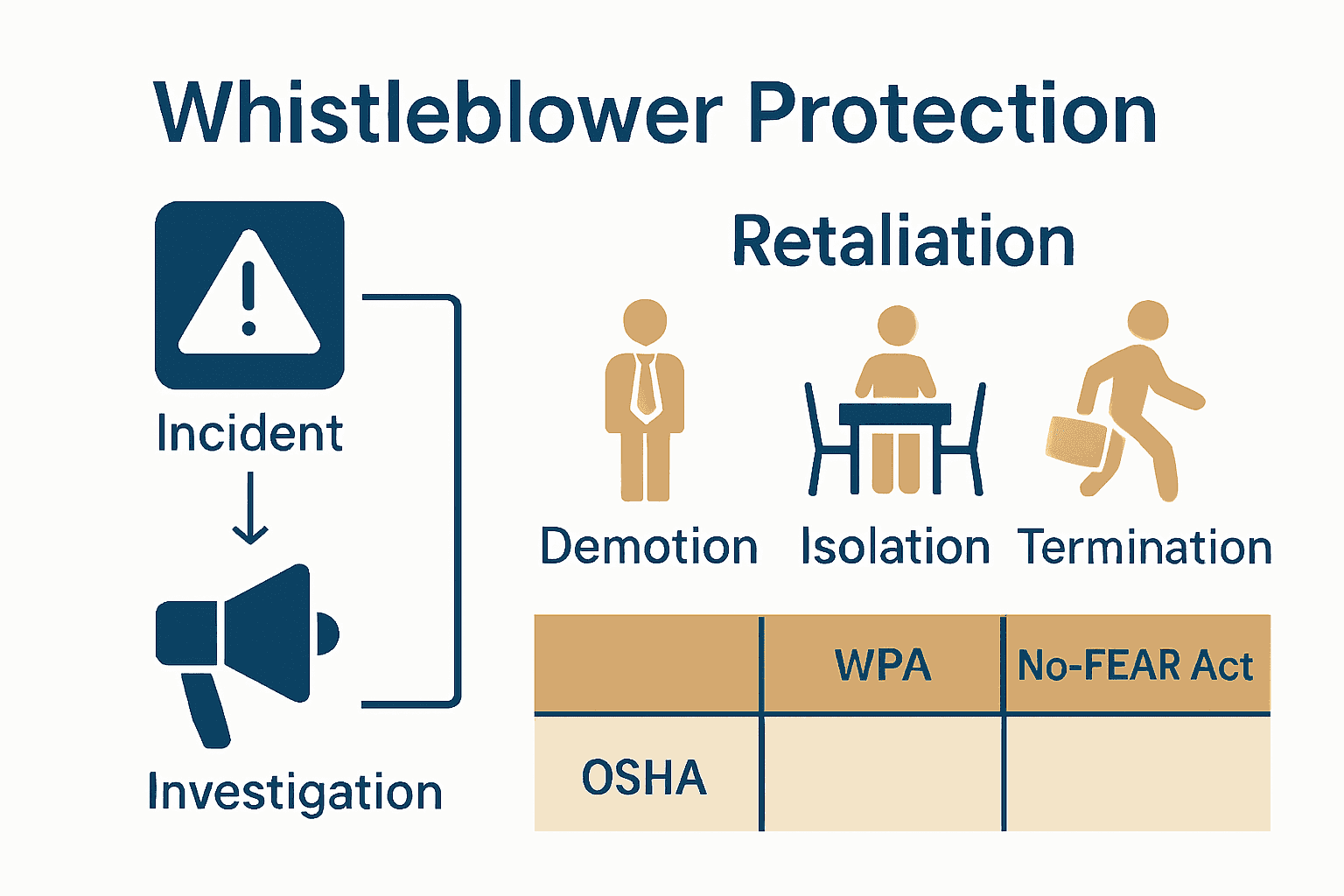
According to the U.S. Department of Labor, retaliation can take multiple forms, including:
- Termination or layoff
- Demotion to less prestigious positions
- Denial of promotions or overtime
- Reduction in pay or work hours
- Reassignment to less desirable work locations
- Professional isolation or social ostracism
- Ongoing harassment or intimidation
More insidious forms of retaliation involve constructive discharge, where employers intentionally create such hostile work environments that employees feel compelled to resign. These actions might include systematic exclusion from important meetings, impossible performance expectations, or creating working conditions so unbearable that continuing employment becomes untenable.
Government employees facing potential retaliation should meticulously document every incident, maintain detailed records of communications, and seek legal counsel immediately. Understanding the nuanced ways retaliation can manifest is crucial for protecting one’s professional rights and maintaining workplace integrity.

Legal Protections for Government Whistleblowers
The Whistleblower Protection Act provides crucial safeguards for federal employees who expose government misconduct. By investigating potential cases of retaliation, government workers can challenge adverse actions taken against them for reporting legitimate concerns about organizational wrongdoing.
Two landmark legislative protections define the legal landscape for government whistleblowers:
Here’s a summary of major federal whistleblower protection laws:
| Law/Act | Year Enacted | Key Protections | Who is Covered |
|---|---|---|---|
| Whistleblower Protection Act | 1989 | Shields disclosures of law violations, mismanagement, waste, abuse, or public safety risks | Federal employees |
| No-FEAR Act | 2002 | Mandates agency accountability, enhances transparency and enforcement | Federal employees |
| OSHA Whistleblower Programs | Various | Protects against employer retaliation for reporting violations | Federal & some state/local employees |
- The Whistleblower Protection Act of 1989: Shields federal employees who report violations of law, gross mismanagement, substantial waste, abuse of authority, or substantial dangers to public health and safety
- The No-FEAR Act of 2002: Mandates federal agency accountability for whistleblower and anti-discrimination law violations, enhancing transparency and enforcement mechanisms
These legal frameworks empower employees to report misconduct without fear of professional retaliation. The Merit Systems Protection Board and federal courts play critical roles in enforcing these protections, providing multiple avenues for whistleblowers to challenge unfair treatment. Government employees considering reporting violations should understand their rights, document all interactions meticulously, and consider consulting legal professionals who specialize in whistleblower protection to navigate these complex legal protections effectively.
Reporting Procedures and Investigation Process
When government employees discover potential misconduct, they have several critical reporting channels to protect their rights. Understanding the whistleblower reporting process is essential for ensuring proper documentation and legal protection.
Employees can report suspected misconduct through multiple official routes:
- Agency-specific internal hotlines
- U.S. Office of Special Counsel (OSC)
- Agency Inspector General offices
- Federal OSHA whistleblower protection programs
- State-level whistleblower protection agencies
The investigation process typically involves several key steps. After filing a complaint, the relevant agency will conduct a preliminary review to assess the credibility of the allegations. This may include gathering documentation, interviewing witnesses, and examining potential evidence of misconduct or retaliation. Employees should meticulously document all interactions, preserve communications, and maintain a detailed timeline of events.
Timely reporting is crucial. Most whistleblower protection laws have strict filing deadlines, often ranging from 30 to 180 days depending on the specific agency and type of complaint. Government employees should act quickly, seek legal counsel to understand their rights, and ensure their disclosures meet the specific requirements for protected whistleblower communications.
Employee Rights and Employer Obligations
Government employees possess critical legal protections that safeguard their right to report workplace misconduct without fear of professional repercussions. Experienced Orange Employment Law Attorneys can help workers understand the nuanced landscape of whistleblower rights and employer responsibilities.
Employees are legally protected when engaging in several key activities:
- Reporting safety violations or workplace hazards
- Initiating or participating in official workplace investigations
- Testifying about potential misconduct
- Filing complaints about legal or ethical violations
- Cooperating with regulatory agency inquiries
Employers bear substantial obligations to maintain a work environment free from retaliation. This includes implementing robust anti-retaliation programs, ensuring transparent communication channels, and providing clear mechanisms for employees to report concerns without fear of professional consequences. Employers must not only refrain from direct punitive actions but also prevent subtle forms of workplace marginalization or professional isolation.
Violations of these rights can result in significant legal consequences, including potential financial penalties, mandatory corrective actions, and potential civil litigation. Government employees who believe their rights have been compromised should document all interactions, preserve relevant communications, and consider consulting legal professionals who specialize in employment law and whistleblower protections.
Risks, Remedies, and Legal Recourse
Whistleblowers face significant professional and personal risks when exposing government misconduct, making understanding potential legal remedies crucial. Filing claims against a public entity requires careful navigation of complex legal landscapes and strategic documentation.
The potential risks for government whistleblowers include:
- Professional retaliation and career damage
- Potential blacklisting within government agencies
- Personal and financial stress
- Emotional and psychological strain
- Potential legal challenges and prolonged disputes
Legal recourse options for whistleblowers vary depending on the specific circumstances but typically involve:
- Administrative hearings through the Merit Systems Protection Board
- Filing formal complaints with the Office of Special Counsel
- Pursuing civil litigation for damages
- Requesting reinstatement or compensation
- Seeking protection under specific whistleblower protection statutes
Specialized legal support becomes critical in these scenarios. Experienced employment attorneys can help whistleblowers document evidence, understand their rights, evaluate potential claims, and develop comprehensive strategies to protect their professional interests while seeking appropriate remedies for unfair treatment.
Take Action Against Government Whistleblower Retaliation
Facing retaliation for reporting misconduct in government employment can feel overwhelming and isolating. If you are dealing with sudden demotions, unfair terminations, or a hostile work environment after exposing workplace violations, you do not have to confront this challenge alone. Our detailed Whistleblower Retaliation resources explain your rights and outline real steps you can take to safeguard your career and reputation. These protections are complicated but essential for securing justice and preventing further harm.
Stand up for your rights with support from experienced attorneys who understand the risks and remedies discussed in this article. Visit Serendib Law Firm now and receive a personalized consultation. Your future and peace of mind deserve immediate protection from workplace retaliation — find the help you need today.
Frequently Asked Questions
What constitutes whistleblower retaliation in government employment?
Whistleblower retaliation occurs when government employers punish employees for exposing misconduct, illegal activities, or threats to public safety. This can include actions like termination, demotion, harassment, or creating a hostile work environment.
What legal protections are available for government whistleblowers?
The Whistleblower Protection Act and the No-FEAR Act provide essential safeguards for federal employees, protecting them from retaliation when they report violations of law, gross mismanagement, or dangers to public health and safety.
How can government employees report misconduct effectively?
Employees can report misconduct through internal hotlines, the U.S. Office of Special Counsel, agency Inspector General offices, and federal OSHA whistleblower programs. Timely reporting is crucial, as many laws have strict filing deadlines.
What should I do if I believe I have experienced whistleblower retaliation?
If you suspect retaliation, it’s important to document every incident meticulously, maintain detailed records of communications, and seek legal counsel specialized in whistleblower protections to evaluate potential claims.
https://www.serendiblaw.com/whistleblower-retaliation-government/?fsp_sid=311


Comments
Post a Comment